
Explore creative ways to cook pulses for a tasty, nutritious vegetarian diet. You can soak and pressure cook them for quick, digestible meals or roast them with spices for crunchy snacks. Incorporate cooked pulses into salads, blend chickpeas into creamy hummus, or swap them into classic dishes like shepherd’s pie. Experiment with textures by baking or adding pulses to stews, soups, and veggie burgers. Keep discovering new ideas to elevate your plant-based cooking skills.
Key Takeaways
- Incorporate cooked pulses into salads with fresh vegetables, herbs, and flavorful dressings for a nutritious, versatile meal.
- Roast or spiced pulses like chickpeas for crunchy snacks or toppings to add texture and flavor.
- Use blended cooked pulses to create creamy hummus, veggie burgers, or dips that enhance vegetarian dishes.
- Replace meat with pulses in hearty recipes like shepherd’s pie or stews for plant-based protein.
- Prepare pulses using eco-friendly methods like soaking and pressure cooking to maximize nutrition and sustainability.
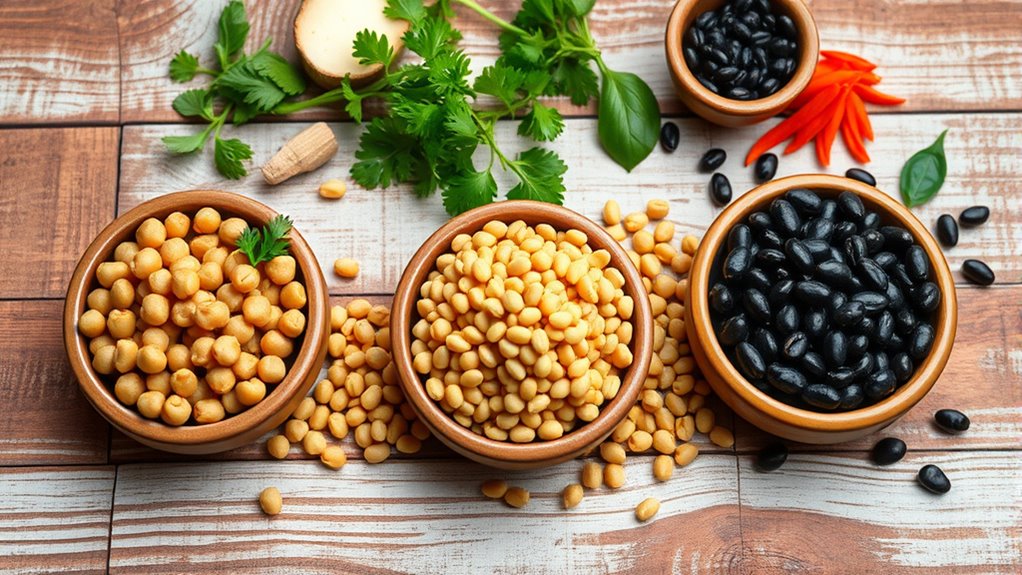
Pulses are a versatile and nutritious staple that every vegetarian should incorporate into their meals. They’re packed with pulses’ nutritional benefits, including high-quality protein, fiber, vitamins, and minerals, making them an excellent foundation for healthy eating. Plus, pulses are environmentally friendly, often grown with sustainable cooking methods that help reduce your carbon footprint. When you include pulses in your diet, you’re not only nourishing your body but also supporting eco-conscious practices. Their adaptability means you can transform them into countless delicious dishes, from hearty stews to vibrant salads, ensuring your meals stay exciting and nutritious.
Pulses are nutritious, eco-friendly staples perfect for diverse, delicious vegetarian meals.
To make the most of pulses’ nutritional benefits, consider exploring different cooking techniques. Soaking your pulses before cooking reduces cooking time and enhances digestibility, helping you maximize their health benefits. Pressure cooking is another sustainable cooking method that preserves more nutrients while minimizing energy use. This method speeds up the cooking process, making weeknight dinners quick without sacrificing flavor or nutrition. You can also experiment with baked pulses—like roasted chickpeas or spiced lentils—to add crunchy textures and savory flavors to your dishes. Using these methods not only boosts the nutritional value but also aligns with eco-friendly cooking practices, helping conserve water and energy.
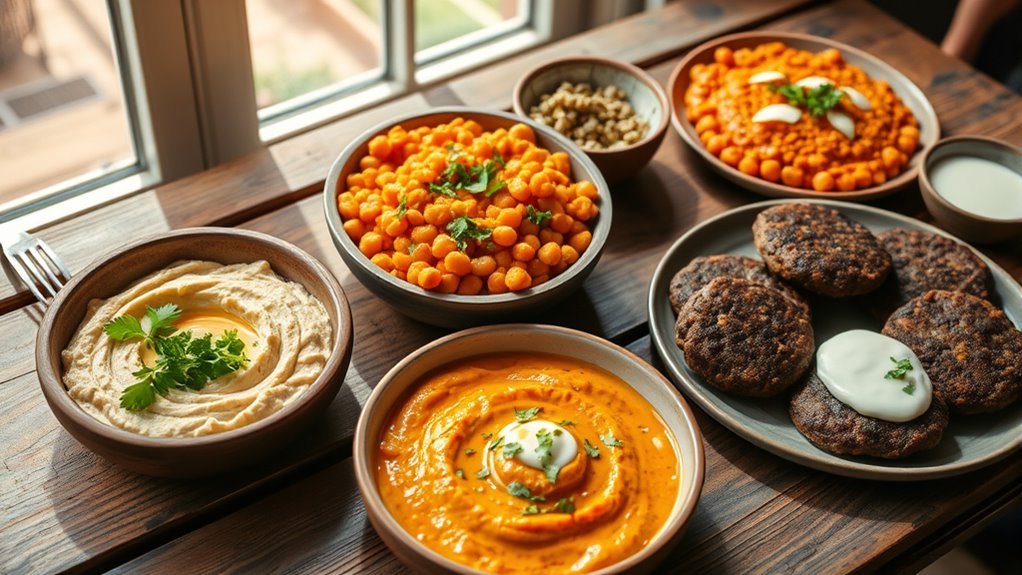
Mixing pulses into your meals can be both creative and healthful. For example, prepare a lentil-based shepherd’s pie, replacing traditional meat with protein-rich lentils topped with mashed vegetables. Or, blend cooked chickpeas into a creamy hummus or veggie burger for added protein and fiber. Pulses also work beautifully in soups and stews, where their hearty texture provides substance without relying on animal products. Incorporate pulses into salads for extra protein—toss cooked, cooled beans with fresh vegetables, herbs, and a tangy vinaigrette to create a filling yet light meal. You can even use pulses as a base for dips or spreads, making them more appealing and versatile.
Incorporating pulses into your vegetarian diet doesn’t mean sacrificing flavor or variety. Instead, it’s an opportunity to get creative with your cooking methods and ingredient combinations. By embracing sustainable cooking methods like soaking, pressure cooking, or roasting, you can access the full potential of pulses while respecting the environment. With a little experimentation, you’ll discover that pulses are not only nutritious but also an exciting ingredient to elevate your everyday meals. Their versatility ensures you won’t run out of ideas, and your body will thank you for the nourishing, eco-friendly choices you make.
Frequently Asked Questions
How Can I Reduce the Cooking Time for Pulses?
To reduce cooking time for pulses, use pressure cooking, which considerably cuts down on time and preserves nutrients. Soaking techniques also help; soak pulses overnight or for a few hours before cooking, which softens them and shortens boiling time. Combining both methods—soaking beforehand and pressure cooking—ensures your pulses cook faster and more evenly, saving you time and effort in the kitchen.
Are There Gluten-Free Pulse Recipes?
Yes, you can make gluten-free pulse recipes easily. Try creating pulse-based salads with chickpeas or lentils, seasoned with herbs and lemon for a fresh taste. For snacks, prepare roasted chickpeas or spiced lentils, which are both crunchy and satisfying. These recipes are naturally gluten-free, nutritious, and versatile, perfect for quick meals or snacks. You’ll enjoy healthy, delicious options that fit your dietary needs without sacrificing flavor or texture.
How to Store Cooked Pulses Safely?
To store cooked pulses safely, you should first let them cool quickly and then transfer them to airtight containers. Keep the containers in the fridge if you’ll eat them within 3-4 days, or freeze for longer storage. Proper pulse storage guarantees food safety by preventing bacterial growth. Always label your containers with dates, and reheat thoroughly before eating to enjoy your pulses safely and deliciously later.
Can Pulses Be Used in Desserts?
Yes, pulses can be used in desserts to create delicious sweet pulse desserts and pulse-based sweet treats. You might blend cooked lentils or chickpeas into smoothies, make sweet puddings, or incorporate them into baked goods like cakes and energy bites. Their natural sweetness and creamy texture add depth to desserts, offering a nutritious twist. Experiment with spices, honey, or cocoa to enhance the flavor and develop unique, satisfying sweet pulse creations.
What Are Some Kid-Friendly Pulse Dishes?
You can make fun kid-friendly snacks like sweetened hummus with fruit or mini pulse patties shaped like animals. Colorful pulse salads, combining cooked lentils or chickpeas with vibrant veggies and a tasty dressing, are appealing and nutritious. These dishes are easy to prepare, visually appealing, and taste great, encouraging kids to enjoy pulses in playful, healthy ways that they’ll love to eat and share.
Conclusion
By experimenting with different spices and cooking methods, you can transform simple pulses into exciting, hearty meals. For instance, imagine a busy mom who starts adding roasted chickpeas to her salads for extra crunch and flavor. This small change not only boosts her family’s nutrition but also makes mealtime more enjoyable. So, don’t be afraid to get creative—your taste buds and health will thank you for it!