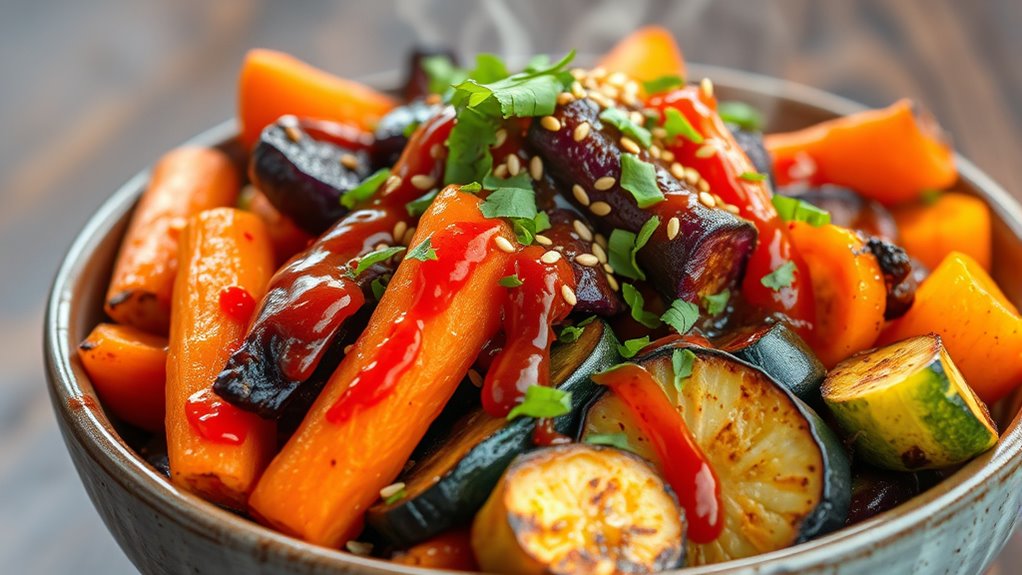
To cook with harissa and gochujang in vegan dishes, mix them into sauces, marinades, or glazes for added depth and smoky spice. Use them to flavor roasted vegetables, stir-fries, grain bowls, or even dips like hummus and guacamole. Combine their bold flavors to create vibrant fusion recipes or enhance traditional ones with an unexpected twist. Keep experimenting with these ingredients, and you’ll discover exciting ways to elevate your plant-based meals. If you want to access more flavor ideas, stay tuned for tips and tricks.
Key Takeaways
- Use harissa and gochujang as marinades or sauces to add smoky, spicy depth to vegetables, tofu, and grains.
- Combine both pastes in dressings or dips with olive oil, lemon, and sweeteners for vibrant vegan flavors.
- Incorporate into roasted vegetables, stews, or grain bowls for complex, fusion-inspired dishes.
- Blend into hummus, guacamole, or broths to create smoky, umami-rich vegan snacks and soups.
- Experiment with flavor pairings to elevate vegan burgers, wraps, and global-inspired meals.
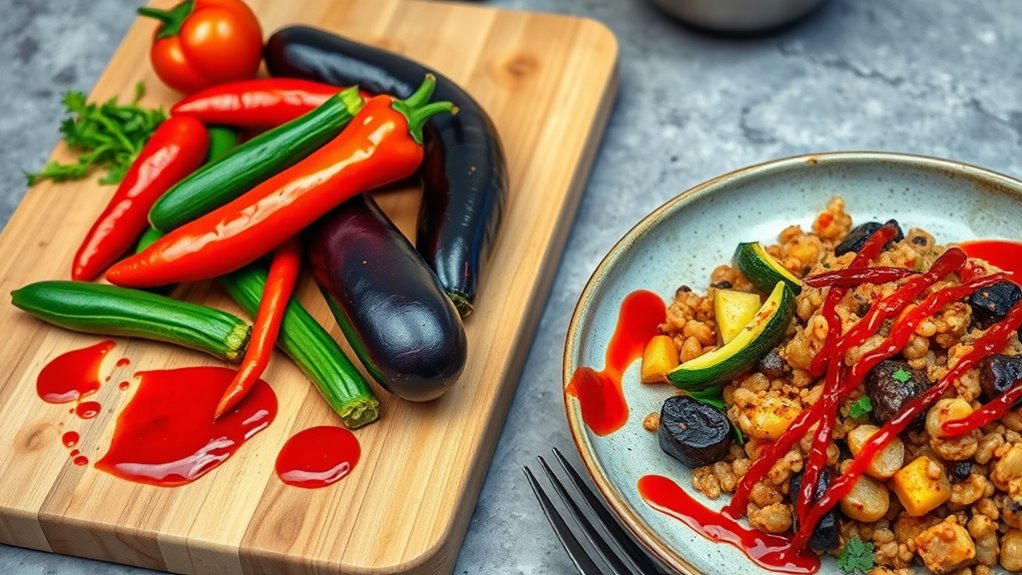
If you’re looking to elevate your vegan cooking, combining the bold flavors of harissa and gochujang offers an exciting way to do so. These ingredients bring a unique blend of heat, smokiness, and depth that can transform simple dishes into memorable meals. When you incorporate harissa, you’re adding a touch of Mediterranean flavors—earthy, aromatic spices with a hint of chili that evoke the warmth of North African and Middle Eastern cuisines. Gochujang, on the other hand, introduces a savory, slightly sweet, and spicy element characteristic of Korean fusion. Together, they create a vibrant, complex flavor profile that adds excitement to vegan dishes.
Start by thinking of how these condiments can serve as marinades or sauces. For instance, a simple vegetable stir-fry benefits from a dollop of gochujang mixed with harissa, which coats the veggies in a rich, spicy glaze. The heat from both provides a layered warmth, while the smoky undertones of harissa complement the umami depth of gochujang. This combination works beautifully with tofu, tempeh, or hearty root vegetables, giving them an irresistible flavor punch. You can also blend these pastes into dressings or dips, combining olive oil, lemon juice, and a touch of maple syrup for balance. Such dressings brighten salads or serve as flavorful accompaniments to roasted vegetables.
Combine harissa and gochujang for vibrant vegan stir-fries and dressings with smoky, spicy, and umami flavors.
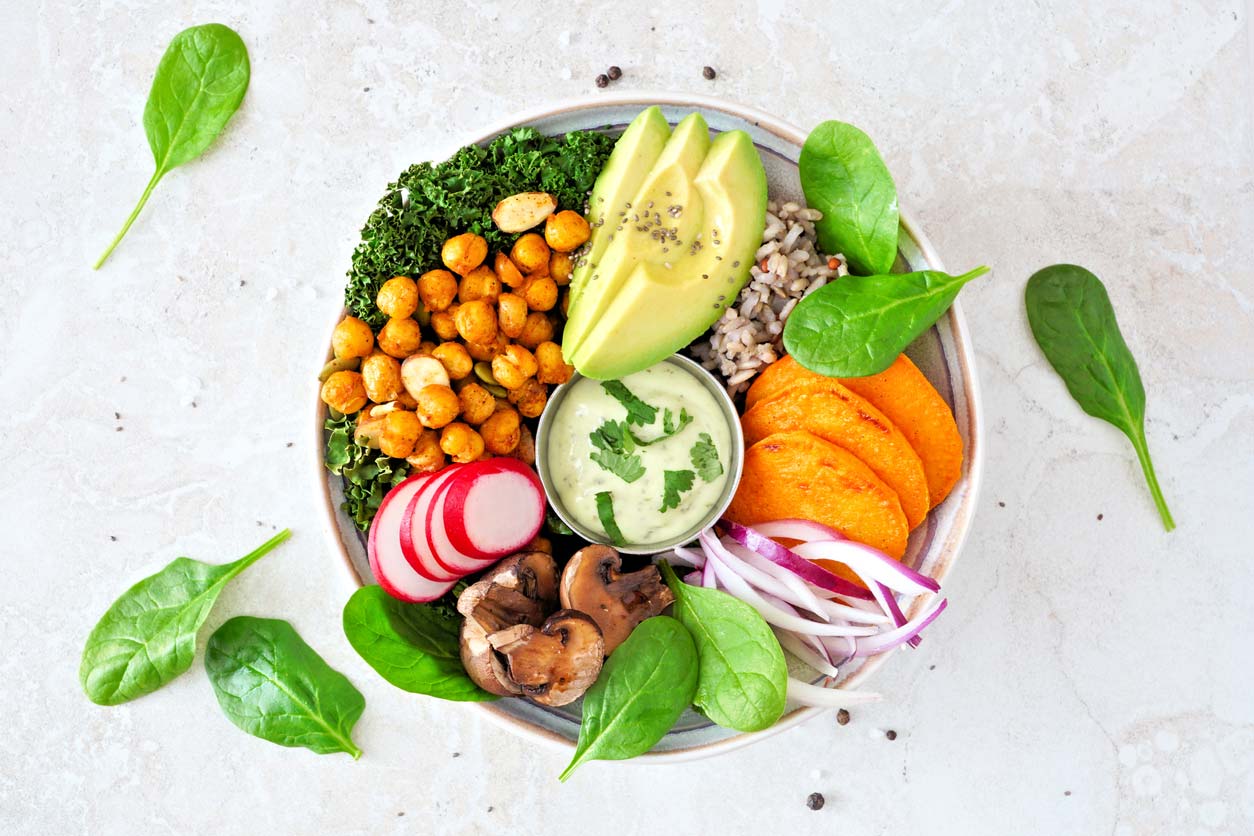
Using harissa and gochujang together allows you to experiment with flavor pairings that bridge continents. Imagine a vegan bowl filled with roasted Mediterranean vegetables—eggplant, zucchini, peppers—draped in a harissa and gochujang sauce. The dish becomes a lively synthesis of Mediterranean flavors and Korean fusion, showcasing how well these ingredients complement each other. They also work well in grain-based dishes like quinoa or rice bowls, adding depth and spice that turn everyday meals into culinary adventures. Mixing these pastes into soups or stews can create hearty, flavorful broths that satisfy even the most discerning palate. Additionally, incorporating wooden utensils can help blend these pastes smoothly into your recipes without losing their smoky essence.
The versatility of harissa and gochujang means you don’t have to limit yourself to traditional uses. Adding a spoonful to hummus or guacamole introduces a smoky, spicy kick, while incorporating them into vegan burger patties or wraps enhances flavor without overpowering. Their boldness encourages you to think creatively—push boundaries and combine global influences to craft dishes that are both nourishing and exciting. With a little experimentation, you’ll discover how these ingredients can become staples in your vegan kitchen, bringing a fusion of Mediterranean and Korean flavors that delight the senses and elevate your culinary repertoire.
Frequently Asked Questions
Can Harissa and Gochujang Replace Each Other in Recipes?
Yes, you can substitute harissa and gochujang in recipes, but keep in mind their flavor intensity and heat level differ. Gochujang offers a sweeter, milder heat with a deep umami flavor, while harissa provides a smoky, spicy kick. Adjust quantities accordingly to match your desired spice and flavor profile. You might need to tweak other ingredients to balance the dish since they bring distinct tastes and heat levels.
Are Harissa and Gochujang Suitable for All Vegan Diets?
Harissa and gochujang are generally suitable for vegan diets, but you should check for vegan certification and ingredient variations. Some brands may use animal-derived ingredients or non-vegan additives, so always read labels closely. If you’re vegan, opt for certified vegan versions to guarantee no hidden animal products. Both condiments add flavor and spice, making them versatile choices, but verifying their vegan status helps you stay aligned with your dietary commitments.
How Long Do Homemade Harissa and Gochujang Last?
You’ll want to keep your homemade harissa and gochujang in the fridge, where they’ll happily last about 2-3 weeks, or up to a month if you’re lucky. Use airtight containers for storage, and always double-check for signs of spoilage before diving in. Remember, proper storage tips and knowing their shelf life helps prevent a fiery surprise—nobody wants a tangy, moldy mishap on their hands!
What Are the Best Vegan Pairings With These Sauces?
You should pair these sauces with spicy marinades and grilled vegetables for a flavorful vegan meal. Harissa adds a smoky, spicy kick that complements roasted eggplant or zucchini, while gochujang offers a sweet and spicy depth perfect for tofu or tempeh. Use them as dips, drizzles, or marinade bases to elevate your dishes, creating bold, vibrant flavors that satisfy your taste buds.
Can They Be Used in Desserts or Sweet Dishes?
Ever wondered if you can use harissa and gochujang in desserts? Absolutely! Their spicy, smoky flavors can create exciting dessert innovations when paired with sweet flavor pairings like coconut, chocolate, or fruit. You might try adding a touch to vegan ice creams, fruit compotes, or even spicy chocolate sauces. Embrace the unexpected, and turn these sauces into unique, flavorful elements that elevate your vegan sweet dishes.
Conclusion
By embracing harissa and gochujang, you open a world of vibrant flavors that transform simple vegan dishes into extraordinary experiences. These fiery pastes aren’t just ingredients; they’re catalysts for creativity, igniting your culinary passion. As you experiment, remember that spice isn’t just heat—it’s a reminder that life’s greatest moments often come from a little daring. So, let your kitchen be a canvas, and don’t shy away from turning up the heat—your masterpiece awaits.