
When choosing between cold-press and centrifugal juicers, you’re paying for more than just speed. Cold-press models use gentle, slow processes that preserve nutrients, enzymes, and flavor better, but come with higher costs and longer clean-up times. Centrifugal juicers work quickly and are budget-friendly but tend to degrade nutrients and require more maintenance. Understanding these differences helps you select the right one based on your priorities—more benefits await if you explore further.
Key Takeaways
- Cold-press juicers have higher upfront costs but offer better nutrient preservation, durability, and longer juice freshness.
- Centrifugal juicers are less expensive initially, prioritizing speed and convenience over nutrient retention and long-term value.
- Cold-press models are quieter, easier to clean, and produce drier pulp, reducing waste and maintenance costs.
- Centrifugal juicers operate faster, making them ideal for quick, occasional use but may degrade nutrients and require more frequent replacement.
- Overall value depends on your budget, usage frequency, and preference for juice quality versus convenience.
What Are Cold-Press and Centrifugal Juicers?
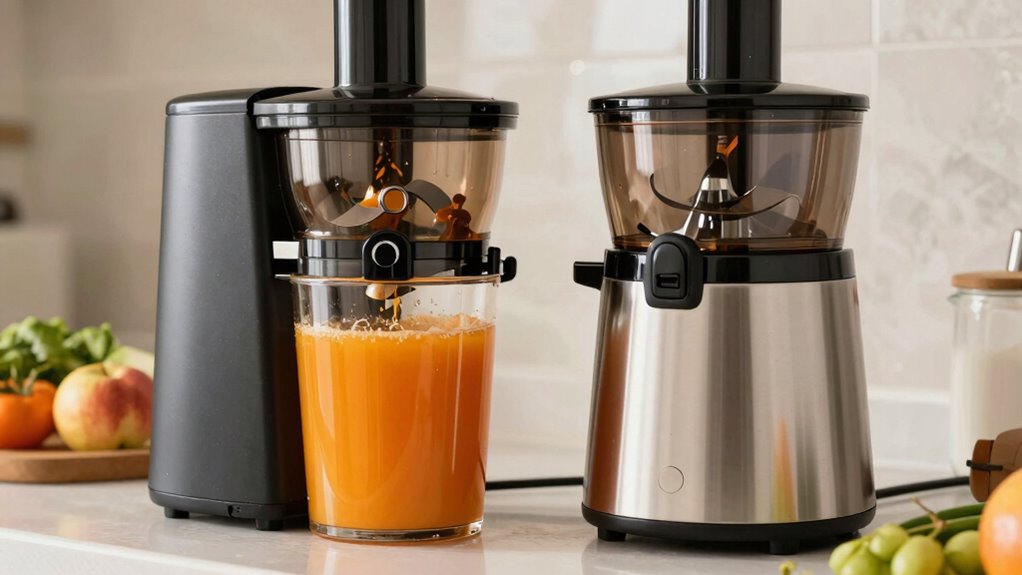
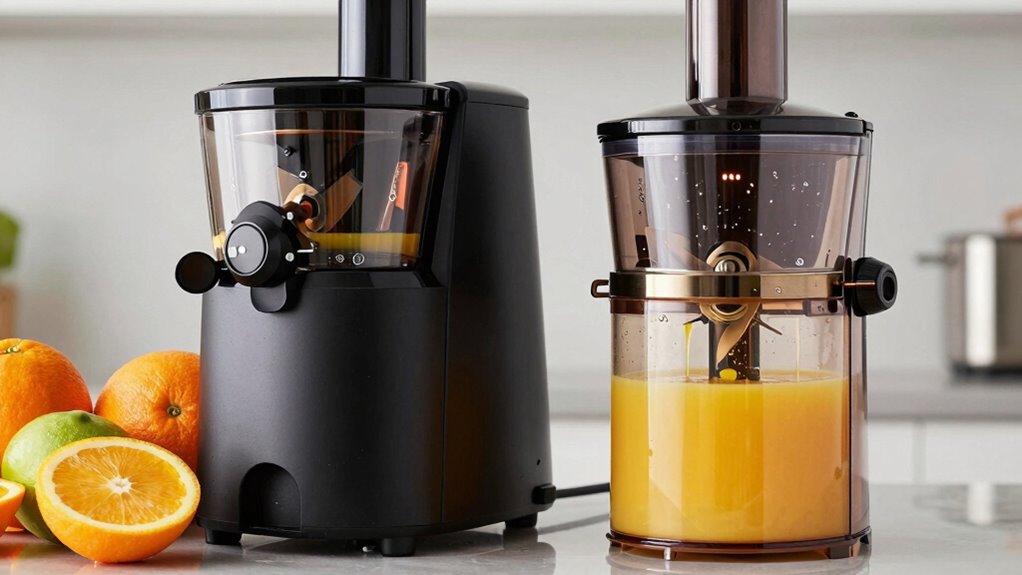
Cold-press and centrifugal juicers are two popular types of juicers that differ mainly in how they extract juice from fruits and vegetables. With cold-press juicers, pulp extraction is slow but gentle, using a hydraulic press or masticating mechanism that crushes produce to maximize juice yield and preserve nutrients. The resulting juice typically has less foam and a drier pulp, indicating efficient pulp extraction. Cold-press juicers also tend to preserve nutrients better, since the slow extraction process generates less heat that can degrade delicate vitamins and enzymes. Additionally, the nutrient retention in cold-press juices makes them a healthier option for daily consumption. Cold-press juicers often produce less oxidation due to their gentle process, which helps maintain the fresh flavor and nutritional content. This method is especially beneficial for preserving enzymes and antioxidants, which are sensitive to heat and oxidation. Centrifugal juicers work quickly by spinning produce at high speeds, forcing juice out through a mesh strainer. They tend to produce wetter pulp, meaning less complete pulp extraction. Your choice depends on whether you prefer higher juice quality and nutrient retention or faster juicing with simpler cleanup. Both types handle pulp differently, affecting the overall juicing experience.
How Do Cold-Press and Centrifugal Juicers Extract Juice?
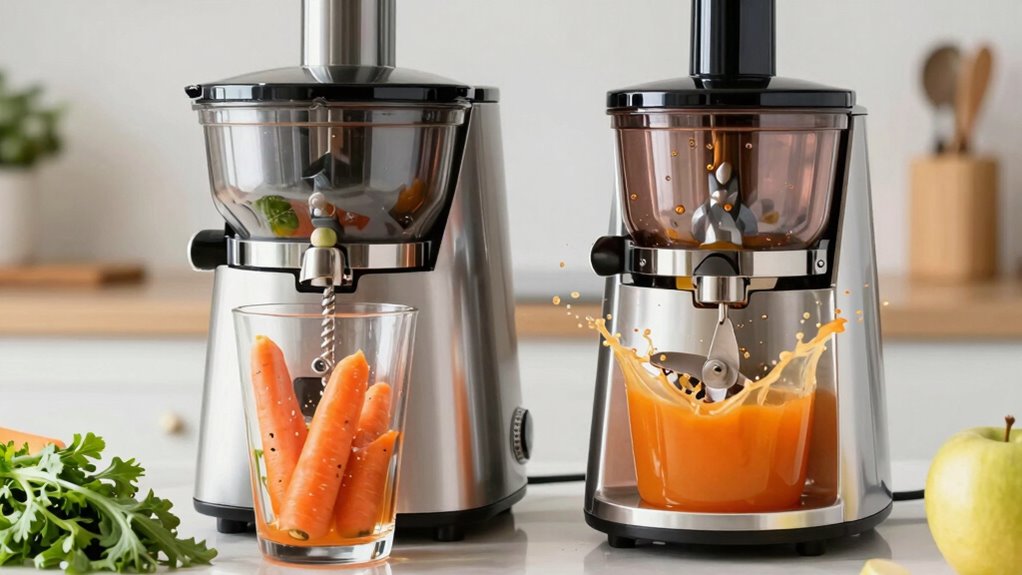
Both cold-press and centrifugal juicers use different methods to extract juice from fruits and vegetables. Cold-press juicers, also known as masticating juicers, slowly crush and press produce, resulting in minimal heat and oxidation. This process preserves nutrients and produces a rich, high-quality juice. Centrifugal juicers spin at high speeds to shred produce with a sharp blade, then use centrifugal force to separate juice from pulp quickly. Juice storage can be an issue with centrifugal models, as juice may oxidize faster. Pulp disposal also varies; cold-press juicers typically eject dry pulp, making cleanup easier, while centrifugal juicers produce wetter pulp, requiring more frequent disposal. Understanding these extraction methods helps you choose the right juicer based on your preferences for juice freshness and convenience.
Benefits of Cold-Press Juicers for Nutrition and Juice Quality
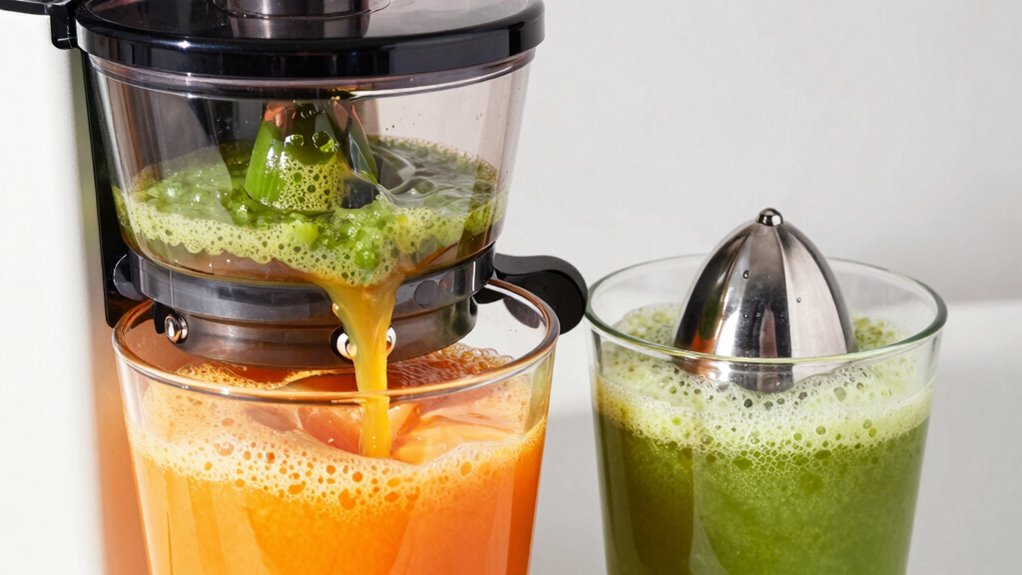
Cold-press juicers help you get the most nutrients from your fruits and vegetables because they preserve more vitamins and enzymes. They also keep your juice fresher for longer and reduce oxidation, which can degrade flavor and quality. As a result, you enjoy healthier, tastier juice with every glass. Additionally, cold-press methods align with sustainable practices that promote environmentally friendly practices in backyard and outdoor spaces. Using a cold-press juicer can also minimize energy consumption compared to traditional centrifugal models, supporting a more eco-conscious lifestyle. Furthermore, cold-press juicers typically have a lower noise output, making your juicing process more pleasant and unobtrusive.
Preserves Nutrients Better
Because of the gentle extraction process they use, cold-press juicers better preserve the nutrients in your fruits and vegetables. This means you get more vitamins, enzymes, and antioxidants in your juice, maximizing its health benefits. Unlike centrifugal juicers, which generate heat that can degrade nutrients, cold-press models operate slowly, maintaining juice quality. They also tend to have lower noise levels, making your juicing experience more pleasant. Here’s a quick comparison:
| Feature | Cold-Press Juicers | Centrifugal Juicers |
|---|---|---|
| Juicing efficiency | Higher nutrient retention | Less efficient |
| Noise levels | Quieter operation | Louder noise |
| Nutrient preservation | Better | Slightly compromised |
| Heat generation | Minimal | Produces heat |
| Juice quality | Longer shelf life, richer flavor | Shorter shelf life |
Enhances Juice Freshness
Since cold-press juicers operate at a slow, gentle pace, they help preserve the natural freshness of your juice longer than centrifugal models. This means your juice stays vibrant, flavorful, and nutrient-rich for a longer period, even with minimal juice storage. The slower process reduces heat and oxidation, which can degrade juice quality quickly. As a result, you may find that your juice remains fresher for up to 72 hours, depending on storage conditions. Additionally, because cold-press juicers typically require less frequent cleaning, you’re more likely to enjoy freshly made juice without worry about spoilage or loss of freshness. Understanding juice preservation helps you appreciate the benefits of cold-press technology even more. Moreover, the nutritional quality of cold-press juice is often superior, as the gentle extraction process preserves enzymes and nutrients that are sensitive to heat.
Minimizes Oxidation Effects
By operating at a low speed with minimal heat generation, cold-press juicers considerably reduce oxidation during the juicing process. This helps preserve nutrients and enzymes, which are sensitive to oxygen exposure. As a result, your juice maintains a longer shelf life and retains more vibrant flavor and color. Cold-press juicers also excel at pulp extraction, capturing more of the fruit’s natural goodness without exposing it to air. Less oxidation means fewer nutrients are lost, ensuring your juice stays fresher, healthier, and more flavorful for days. This process keeps oxidation effects to a minimum, giving you better nutrient retention and a higher-quality juice experience. Additionally, oxidation effects can impact the overall health benefits of your juice, making cold-press juicers a superior choice for health-conscious consumers. Overall, cold-press juicers offer a significant advantage in maintaining juice quality from extraction to storage. Their ability to protect delicate compounds like enzymes and antioxidants further underscores their value in preserving nutritional integrity. Implementing proper storage techniques can further enhance the preservation of these nutrients, maximizing the health benefits of your freshly made juice. Using advanced technology in cold-press juicers also contributes to better preservation of nutrients and overall juice quality.
How Fast Do Centrifugal Juicers Work?

Centrifugal juicers are known for their impressive speed, allowing you to get fresh juice in just a few seconds. Their powerful motors spin the blades rapidly, extracting juice quickly from fruits and vegetables. This high juicing speed means you can enjoy a glass of juice almost instantly, making them ideal for busy mornings. However, this rapid processing can impact nutrient retention, as the quick extraction may generate heat and expose juice to oxygen longer. While they excel at providing fast results, some nutrients may degrade faster compared to slower methods. Understanding the differences in juicing techniques can help you choose the best option for your nutritional needs. If speed is your priority, centrifugal juicers deliver, but be mindful that the quick process might slightly compromise the nutritional quality of your juice. Additionally, the oxidation process that occurs during fast juicing can affect the flavor and freshness of the juice over time. Moreover, their ease of cleaning often makes them a preferred choice for everyday use, despite some limitations in juice yield and nutrient preservation. A juicing speed comparison can help determine whether quick results or nutrient density is more important for your health goals.
Are Cold-Press Juicers Easier to Clean?

Cold-press juicers generally have a simpler cleaning process due to fewer parts, but they do require disassembly after each use. You’ll need to spend some time taking apart and rinsing components, which can be more involved than with centrifugal models. Consider how much time and effort you’re willing to invest in cleaning when choosing between the two types. Additionally, understanding free crypto opportunities can help you maximize your savings for kitchen appliances. Being aware of the machine weight can also influence how easily you can handle and clean your juicer. Moreover, selecting a lighter appliance weight can make the cleaning process less of a chore and more manageable in daily use. Proper cleaning and maintenance are crucial for preventing infection risks and ensuring your juicer remains in good condition.
Cleaning Process Complexity
Cleaning a juicer can vary in difficulty, but many find cold-press models to be simpler to maintain. Cold-press juicers typically have fewer parts and less mess, making the cleaning process quicker and more straightforward. This simplicity often enhances juicing efficiency because you spend less time cleaning and more time enjoying fresh juice. Additionally, cold-press models operate quietly, reducing noise levels during cleaning, which can be a bonus if you prefer a peaceful environment. Centrifugal juicers tend to have more components and produce splatter, complicating cleaning. Overall, if ease of cleaning is a priority, cold-press juicers offer a more manageable process, helping you maintain your machine with less hassle and keep your kitchen quieter during cleanup.
Disassembly Requirements
Because fewer parts are involved, cold-press juicers generally require less disassembly for cleaning. Their straightforward design means you won’t need to take apart many components, reducing disassembly complexity. This simplicity makes cleaning easier and quicker since you can access the main parts without fuss. In contrast, centrifugal juicers often have more intricate parts that need careful disassembly, which can increase cleaning difficulty. You might find yourself spending more time detaching and reassembling components, risking missed spots or damage. Overall, cold-press juicers are designed for ease, making the disassembly process less stressful and more convenient. If you value minimal effort when cleaning your juicer, a cold-press model clearly has the advantage in disassembly requirements. Additionally, market reputation for these juicers often highlights their user-friendly design and ease of maintenance. Furthermore, understanding the electric motor and its components can help ensure proper cleaning and maintenance.
Time Investment Needed
When it comes to maintaining your juicer, cold-press models typically require less time and effort compared to centrifugal ones. They often have fewer parts to disassemble and clean, making routine maintenance quicker. With cold-press juicers, you can focus on juice storage and adding juice additives without lengthy cleanup sessions. Imagine a simple process like this:
| Step | Cold-Press Juicer | Centrifugal Juicer |
|---|---|---|
| Disassembly | Quick, minimal parts | Multiple parts, complex |
| Cleaning Time | Shorter, straightforward | Longer, tedious |
| Juice Storage | Easy, seals well | More prone to spills |
| Juice Additives | Compatible, easy mixing | Less adaptable |
| Overall Maintenance | Less time-consuming | More effort needed |
Cold-press juicers save you time, especially when you’re balancing juice storage and additives.
How Does Price Influence Your Choice of Juicer?
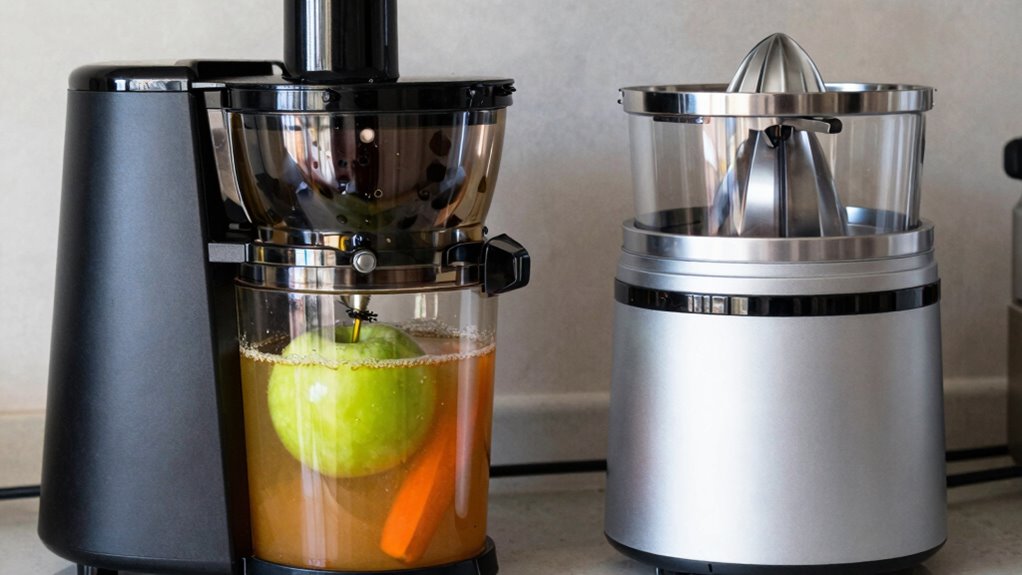
Price plays a significant role in choosing between cold-press and centrifugal juicers, as each type varies widely in cost. A thorough price comparison helps you decide which fits your budget and needs. Cold-press juicers tend to be more expensive upfront, but their durability and juice quality may justify the investment. Centrifugal models usually cost less initially, making them appealing if you’re on a tighter budget. However, brand reputation also influences pricing; well-known brands often charge more due to their reliability and customer trust. Consider how much you’re willing to invest and whether the long-term benefits of a higher-quality juicer align with your budget. Your choice ultimately hinges on balancing these factors to find the best value for your lifestyle.
Are Cold-Press Juicers More Durable Than Centrifugal Models?
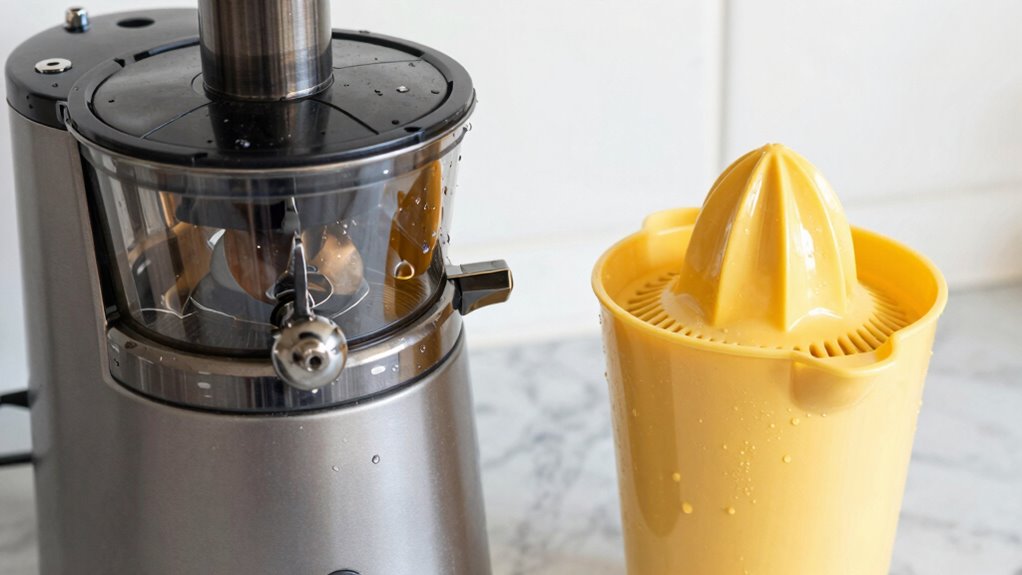
You might notice that cold-press juicers are often built with higher-quality materials, which can make them more durable over time. They typically experience less mechanical wear because they operate at lower speeds, reducing stress on moving parts. With proper maintenance, cold-press models can last longer and require fewer repairs than centrifugal juicers.
Material Quality and Build
While both cold-press and centrifugal juicers are built to handle daily use, cold-press models often feature more durable materials and sturdier construction. This focus on material durability means they typically use high-quality, heavy-duty components like stainless steel or reinforced plastics, which resist wear and tear over time. Their robust build not only enhances longevity but also adds to their aesthetic appeal, giving them a premium look that fits well in modern kitchens. Centrifugal juicers, on the other hand, often incorporate lighter plastics and less substantial materials, making them more prone to chipping or cracking. If you’re seeking a juicer with lasting quality and a sleek appearance, cold-press models generally offer better material quality and a more refined build.
Mechanical Wear and Tear
Cold-press juicers are generally more durable over time because their design minimizes mechanical stress. Since they operate at low speeds, the motor experiences less strain, boosting motor durability and reducing the likelihood of overheating or failure. Their gentle pressing mechanism also means fewer moving parts are involved, which lessens wear and tear on components. In contrast, centrifugal juicers spin blades rapidly, which can quickly dull blade sharpness and put more stress on the motor. Over time, this increased mechanical stress can lead to quicker breakdowns or the need for replacements. If you want a juicer that maintains consistent performance and lasts longer, cold-press models typically offer better durability by keeping mechanical wear and tear to a minimum.
Maintenance and Longevity
Because they operate at lower speeds and with fewer moving parts, cold-press juicers generally require less maintenance and tend to last longer than centrifugal models. They produce less machine noise, making them more suitable for quiet environments. Their simple user interface allows for easier cleaning and fewer adjustments, reducing wear over time. In contrast, centrifugal juicers often have more complex parts that need regular attention. Here’s a quick comparison:
| Feature | Cold-Press Juicers | Centrifugal Juicers |
|---|---|---|
| Machine Noise | Low | High |
| User Interface | Simple, easy to clean | Complex, requires more adjustments |
| Durability | Usually more durable | Prone to quicker wear |
Choosing a cold-press model can save you time on maintenance and extend your juicer’s lifespan.
Which Juicer Is Best for Beginners or Occasional Use?

Are you new to juicing or only plan to make it occasionally? If so, a centrifugal juicer might be your best choice. They’re generally more affordable upfront and easier to use, making them ideal for beginners. Plus, they usually come with a solid appliance warranty, giving you peace of mind. Since you’re not making juice daily, you don’t need to worry about juice storage long-term; just consume your fresh juice soon after making it. Cold-press juicers tend to be more expensive and involve a longer cleaning process, which might be less convenient for occasional use. Opting for a straightforward, reliable centrifugal model allows you to enjoy fresh juice without a big investment or complicated maintenance. It’s a practical way to dip your toes into juicing without overwhelming yourself.
Drawbacks of Cold-Press and Centrifugal Juicers
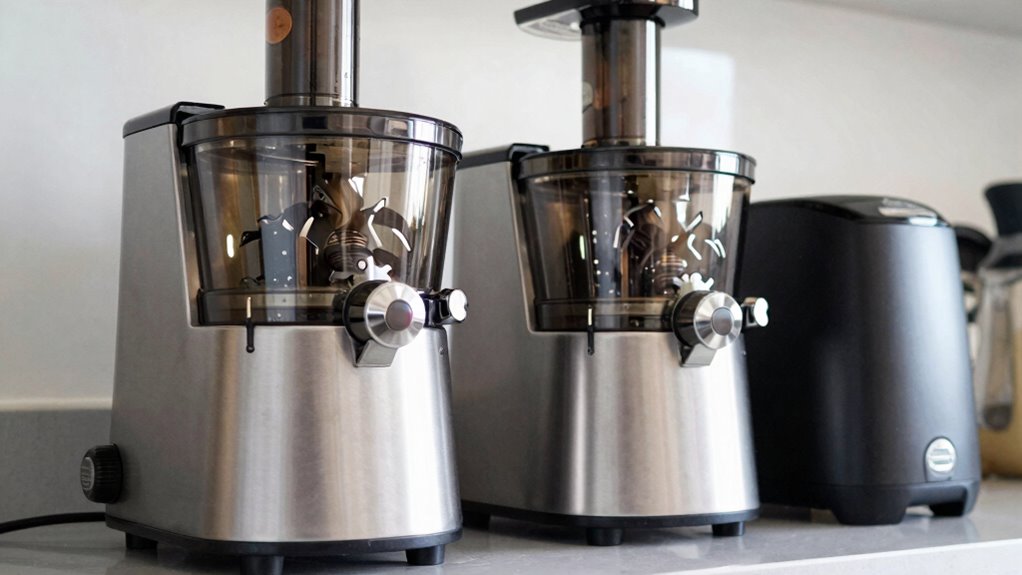
While both cold-press and centrifugal juicers have their advantages, they also come with notable drawbacks. You might find yourself frustrated by the amount of juice pulp left behind, reducing your yield. Cold-press juicers tend to be slow, making your juicing process longer, while centrifugal models can be noisy, disrupting your peaceful mornings. The motor noise from centrifugal machines can be startling, especially in quiet households. Cold-press juicers often require more prep time and are less convenient if you’re in a hurry. Additionally, both types can struggle with fibrous or tough produce, leading to inconsistent results. These downsides can make your juicing experience less enjoyable, especially if you’re seeking efficiency and tranquility in your routine.
Which Juicer Fits Your Lifestyle and Juicing Goals?
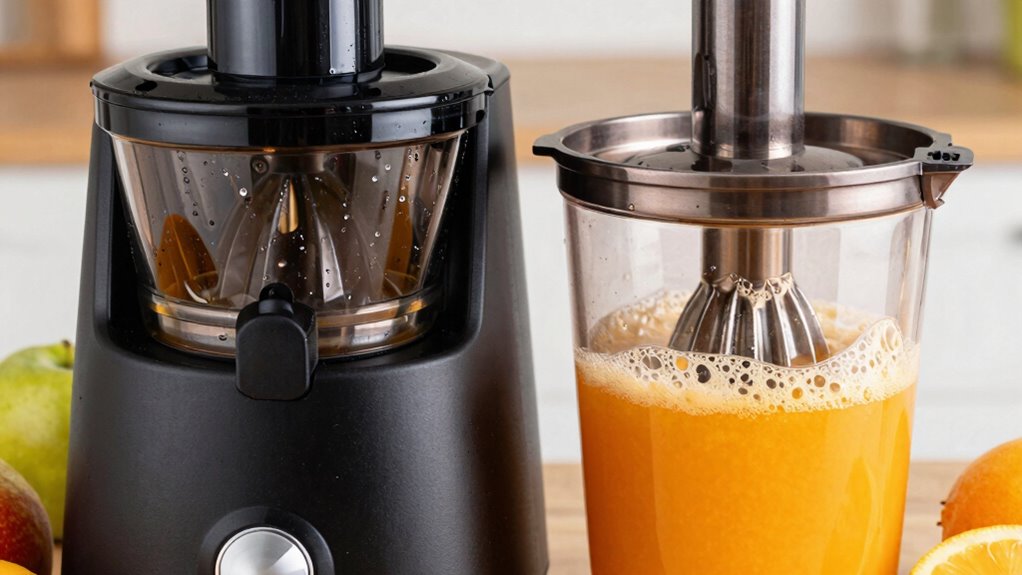
Choosing the right juicer depends on your lifestyle and juicing goals. If you prioritize smooth juice with minimal noise, a cold-press juicer offers a finer juice texture and quieter operation. For quick, high-volume juicing, a centrifugal juicer delivers faster results but might be louder and produce a less refined juice. Consider the table below to match your preferences:
| Feature | Best For |
|---|---|
| Juice texture | Cold-press for smooth, high-quality juice |
| Noise levels | Cold-press is quieter; centrifugal is louder |
| Speed | Centrifugal is faster |
| Price | Cold-press tends to be more expensive |
| Ease of cleaning | Centrifugal is generally easier to clean |
Frequently Asked Questions
How Much Noise Do Each Type of Juicer Produce During Operation?
You’ll notice that cold-press juicers operate much quieter, producing low noise levels and minimal operational sounds, making them ideal for early mornings or shared spaces. Centrifugal juicers, on the other hand, generate louder operational sounds due to their high-speed blades, which can be disruptive. If noise is a concern for you, a cold-press juicer offers a quieter experience, while centrifugal models tend to be noisier during use.
Can Cold-Press Juicers Handle Leafy Greens and Wheatgrass Effectively?
Yes, cold-press juicers handle leafy greens and wheatgrass effectively. You’ll find they extract more nutrients from these ingredients because the slow, gentle pressing preserves enzymes and reduces oxidation. Unlike centrifugal juicers, which can struggle with fibrous greens, cold-press models produce higher yields and better quality juice. So, if you’re into greens and wheatgrass, a cold-press juicer’s the better pick for maximizing nutrition and juice quality.
What Is the Typical Lifespan of a Cold-Press Versus a Centrifugal Juicer?
You’ll find that cold-press juicers typically last 10 to 15 years, thanks to their durable build and quality components, while centrifugal juicers usually span 5 to 10 years. Durability concerns often influence your choice, so check warranty coverage—longer warranties on cold-press models highlight their longevity. Expect cold-press juicers to withstand frequent use, whereas centrifugal models may require more repairs or replacements over time.
Are Replacement Parts Readily Available for Both Juicer Types?
You’ll find spare parts are generally easy to get for centrifugal juicers, thanks to their widespread popularity and simpler design. Cold-press juicers may have limited accessory availability, but replacement parts are usually available through the manufacturer or online. Keep in mind, availability varies by brand and model, so it’s wise to check if spare parts and accessories are accessible before making your purchase.
Which Juicer Type Offers Better Juice Yield per Fruit or Vegetable?
Cold-press juicers typically give you better juice yield per fruit or vegetable because they gently extract juice, preserving more nutrients and producing higher juice quality. Centrifugal juicers, on the other hand, tend to be faster but may produce less juice and compromise nutrient retention due to the high-speed spinning. If you want maximum juice and nutrient retention, a cold-press juicer is the better choice.
Conclusion
Choosing between cold-press and centrifugal juicers depends on your priorities. Cold-press models retain more nutrients, making them ideal for health-conscious users, while centrifugal juicers offer quick results for busy mornings. Notably, studies show cold-press juicers preserve up to 60% more antioxidants. Consider your lifestyle and juicing goals to find the perfect fit. Whichever you choose, investing in the right juicer can elevate your health and daily routine.