
To meal prep on a budget while staying healthy, focus on versatile, bulk ingredients like rice, beans, oats, and seasonal vegetables. Prepare homemade snacks such as roasted chickpeas or granola bars, and store everything in reusable containers to keep costs low and waste minimal. Proper organization and freezing leftovers help preserve freshness. Keep your setup simple and affordable, and you’ll find it easier to stick to nutritious choices. Explore more tips to make it even easier.
Key Takeaways
- Choose versatile, bulk ingredients like rice, beans, and seasonal vegetables to maximize nutrition and minimize costs.
- Prepare simple homemade snacks such as roasted chickpeas and fruit slices to save money and control ingredients.
- Use reusable, airtight containers for efficient storage, portioning, and reducing food waste.
- Plan meals ahead to ensure variety, balanced nutrition, and prevent impulse purchases.
- Buy staple ingredients in bulk and focus on whole foods over processed options for better health and savings.
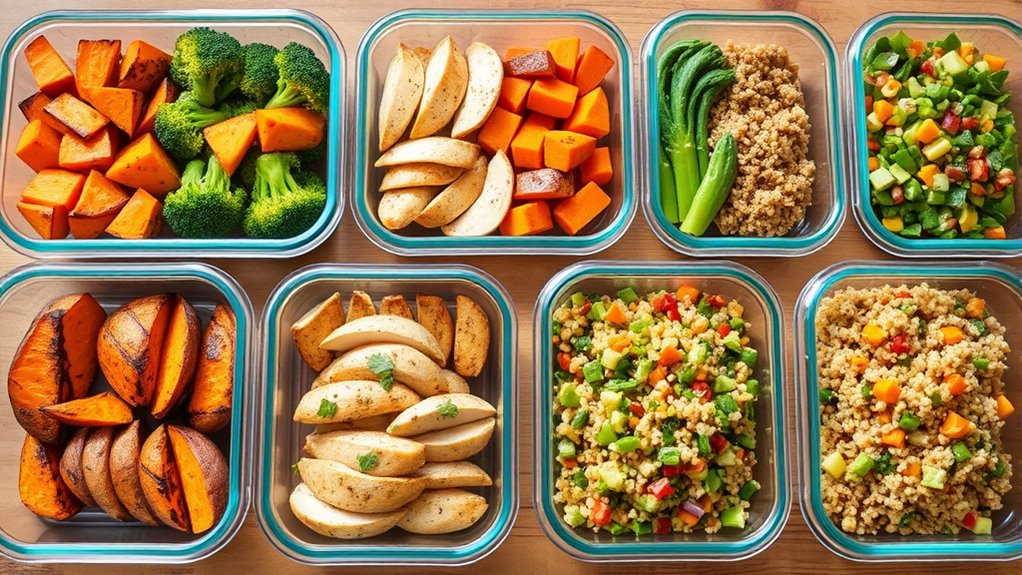
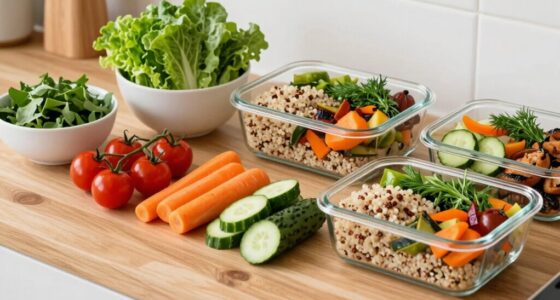
Meal prepping is an effective way to stay on track with healthy eating goals and save time during busy weekdays. When you plan your meals ahead, you can guarantee you’re making nutritious choices while also sticking to your budget. One of the best ways to keep your meal prep cost-effective is by choosing versatile ingredients that can be used across multiple meals. Bulk buying staples like rice, beans, oats, and seasonal vegetables helps you stretch your dollar further. These ingredients are affordable, nutritious, and lend themselves to a variety of dishes, making your meal prep both economical and delicious.
Choose versatile, bulk ingredients like rice and beans to maximize your meal prep budget and variety.
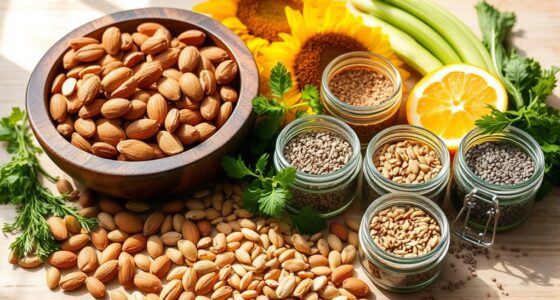
To maximize your budget, focus on simple, whole foods rather than pre-packaged or processed options. For snacks, opt for homemade snack options that are inexpensive and healthy, such as roasted chickpeas, fruit slices, or homemade granola bars. These options are not only budget-friendly but also customizable to suit your taste. When selecting snacks, think about portability and shelf life. For example, nuts and seeds are affordable, long-lasting, and easy to portion into small containers or snack bags, helping you avoid impulse buys and unnecessary expenses.
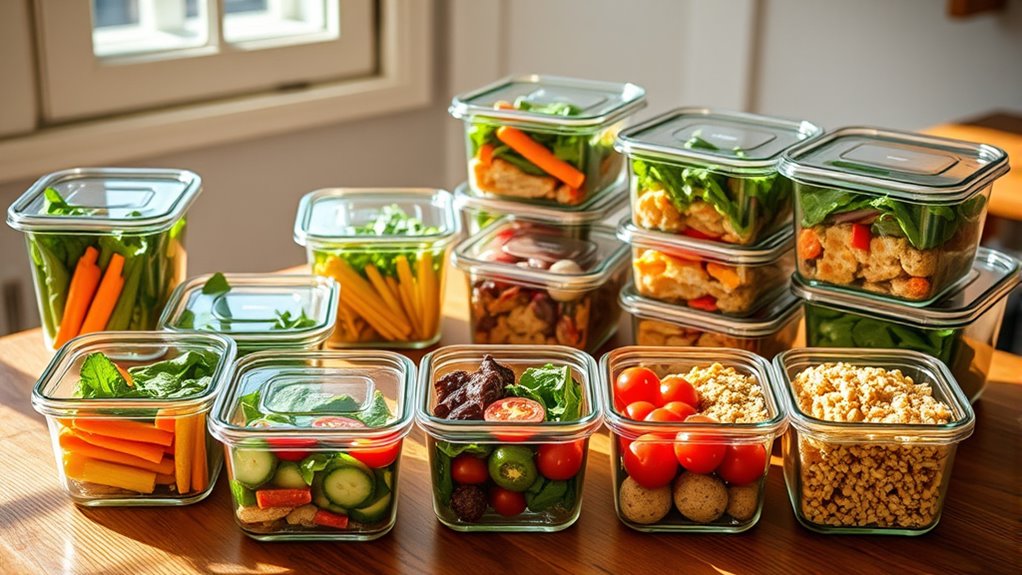
Storage tips are essential for keeping your meal prep budget-friendly and guaranteeing your food stays fresh. Use reusable containers that are stackable and airtight to prevent spoilage and make the most of your fridge or freezer space. Label each container with the date so you can consume older items first, reducing waste and saving money. Freezing leftovers and pre-portioned meals is another smart storage tip, as it prevents food from spoiling and allows you to buy ingredients in bulk without worry. When packing snacks, opt for small, portable containers that fit into your lunch bag or pantry, which helps you avoid buying expensive convenience snacks on the go. Additionally, understanding proper bicycle tire longevity in storage can help you maintain equipment used for outdoor activity, keeping your gear in good condition over time.
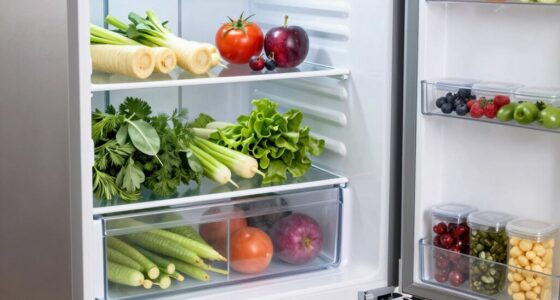
Investing in a good set of storage containers can make a significant difference in your meal prep routine. Clear containers allow you to see what’s inside at a glance, so you don’t forget about leftovers or snacks tucked away in the back. Additionally, using resealable bags or silicone food bags can be a budget-friendly alternative that reduces waste. When storing perishable items, keep your fridge at the right temperature and organize it so that older items are front and center, encouraging you to use them before they spoil. This careful storage not only saves money but also guarantees that your healthy snacks and meals stay fresh and appealing throughout the week.
Frequently Asked Questions
How Can I Adapt Meal Prep for Specific Dietary Restrictions?
To adapt meal prep for specific dietary restrictions, start by identifying your needs, like gluten-free options or plant-based substitutions. Choose ingredients that meet your requirements and plan meals around them. Use gluten-free grains and incorporate plant-based proteins such as beans or tofu. Batch cook and prep ingredients in advance, ensuring each meal aligns with your restrictions. This way, you stay on track while enjoying variety and nutritious, tailored meals.
What Are the Best Affordable Ingredients for Meal Prep?
Imagine a pantry as your treasure chest; inside, affordable staples like rice, beans, and oats shine brightly. You can also find budget-friendly proteins such as eggs, canned tuna, and lentils, which act as versatile gems. These ingredients are not only easy on your wallet but also pack a nutritious punch. Stocking up on these essentials helps you prepare healthy, budget-friendly meals quickly and efficiently.
How Long Can Prepped Meals Be Safely Stored?
Prepped meals stay safe for about 3 to 4 days if you follow proper food safety practices. Use airtight storage containers to keep your meals fresh and prevent contamination. Always cool your food quickly before storing, and keep your fridge at or below 40°F (4°C). If you’re unsure, reheating to an internal temperature of 165°F (74°C) guarantees safety. When in doubt, discard any leftovers that seem questionable.
What Are Quick Tips to Reduce Meal Prep Time?
To cut down meal prep time, start with batch cooking your proteins and grains, so you have ready-to-assemble ingredients. Use versatile containers to organize different components efficiently, making it easier to grab what you need. Plan simple recipes that share ingredients, and chop all your veggies at once. These tips streamline your process, saving time and effort, so healthy meals become quick and manageable every week.
How Can I Prevent Meal Boredom Over Time?
You can prevent meal boredom by regularly trying new variety ideas like swapping ingredients or cooking styles. Coincidentally, adding flavor enhancement with fresh herbs, spices, or zesty dressings keeps meals exciting. You might find that experimenting with different cuisines or swapping proteins and veggies creates delightful surprises. This approach not only keeps your palate interested but also makes healthy eating enjoyable and sustainable over time.
Conclusion
Now that you know how to plan and prep affordable, healthy meals, you’ll find it easier to stay on track without breaking the bank. Remember, even in this era of smartphones and instant gratification, taking time to prepare your own food is a timeless act of self-care. So, roll up your sleeves, embrace the process, and enjoy the benefits of nourishing your body with budget-friendly, wholesome meals. Your future self will thank you—like a knight after a well-fought quest.