
To get better texture with your Blendtec, understand how each cycle affects your blend. Use preset functions like Smoothie, Ice Cream, or Soup to match your ingredients, and customize cycle times and speeds for ideal results. Pay attention to ingredient prep, add liquids gradually, and scrape the jar sides during blending. Fine-tuning cycles and techniques helps eliminate chunks and creates silky smoothies or creamy butters. Keep exploring these tips for consistently perfect textures every time.
Key Takeaways
- Select the appropriate blend cycle (e.g., Smoothie, Soup) based on your ingredient type for optimal texture.
- Customize cycle settings like speed, duration, and pulsing to tailor the blend to desired consistency.
- Use uniform ingredient sizes and add liquids gradually to achieve smooth, even results.
- Scrape down the jar sides during blending to incorporate all ingredients and prevent uneven textures.
- Adjust cycle times and incorporate pulsing to break down large pieces and prevent over-blending.
What Are the Different Blend Cycles on Your Blendtec?
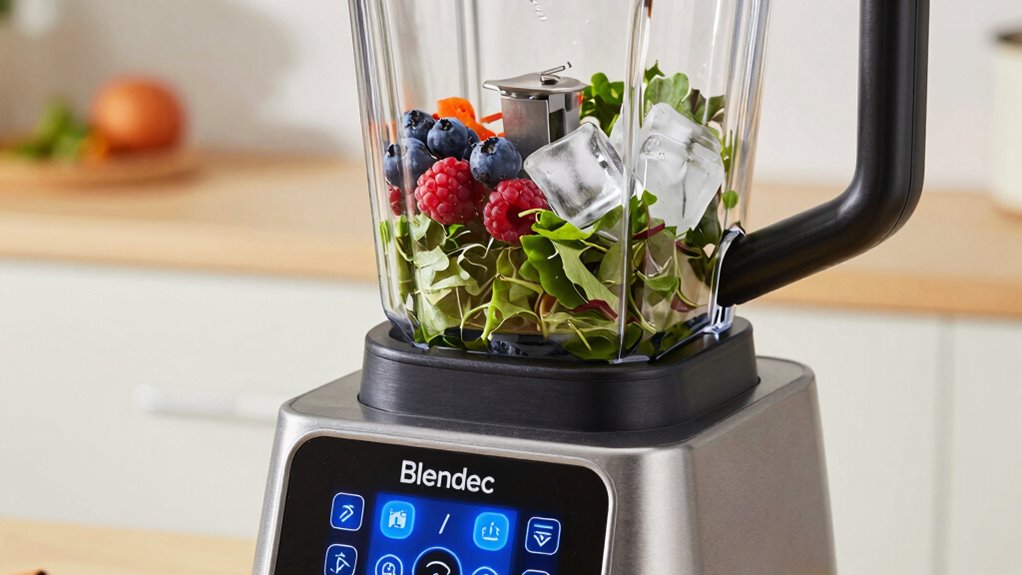
Your Blendtec blender comes equipped with a variety of blend cycles designed to make your blending tasks easier and more effective. These cycle options provide a range of preset functions tailored for different ingredients and textures. The blend cycle variety includes options like Smoothie, Ice Cream, Soup, and Whole Juice, each optimized for specific results. Plus, cycle customization allows you to adjust blending times or speeds within certain modes, giving you more control. Whether you’re making a quick smoothie or preparing a hot soup, these cycles help ensure consistent, professional-quality results without guesswork. Using energy-efficient blending technology not only enhances performance but also supports sustainable practices. The selection of appropriate blend cycles can significantly improve texture and consistency, especially when working with delicate or complex ingredients. By selecting the right cycle, you can streamline your process and achieve better texture and flavor in every blend. Additionally, understanding how to optimize cycle settings can further enhance your blending results and save energy, especially when considering blending efficiency.
How Do Blend Cycles Affect Texture and Consistency?
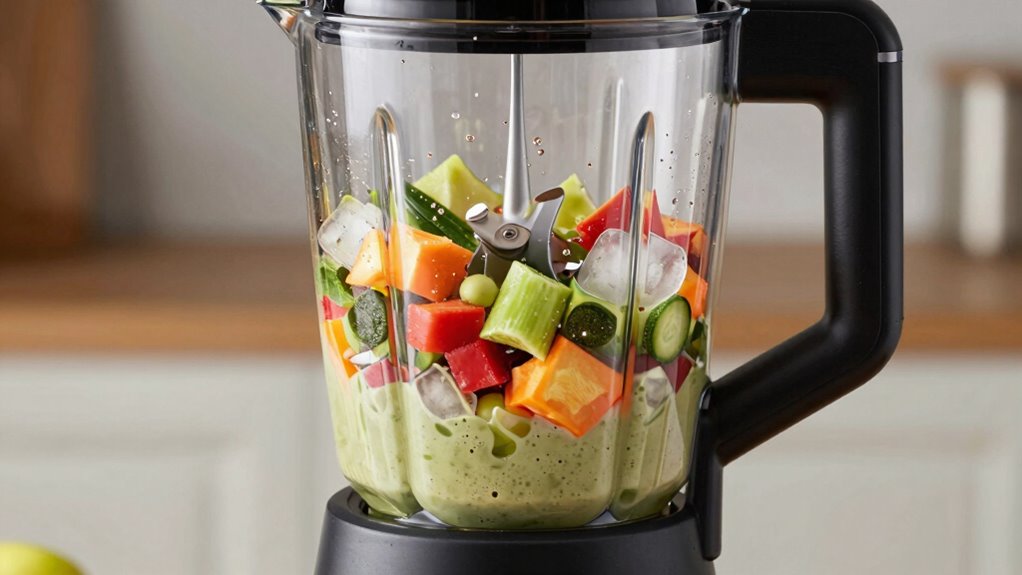
Have you ever noticed how different blend cycles produce noticeably distinct textures and consistencies? This is due to blend cycle science, which involves adjusting speed, duration, and pulsing patterns to influence texture control. Each cycle is designed to target specific ingredients and achieve a desired result, whether it’s smoothness or chunkiness. For example, a longer, slower cycle breaks down ingredients more thoroughly, creating a silky blend, while shorter pulses maintain some texture. Understanding how these cycles affect texture helps you customize your blends for perfect results every time. By selecting the right cycle, you assure your ingredients are processed just enough to meet your preferred consistency, avoiding over- or under-blending. This knowledge puts you in control of your blend’s texture and overall quality.
Which Blend Cycle Is Best for Smoothies and Beverages?
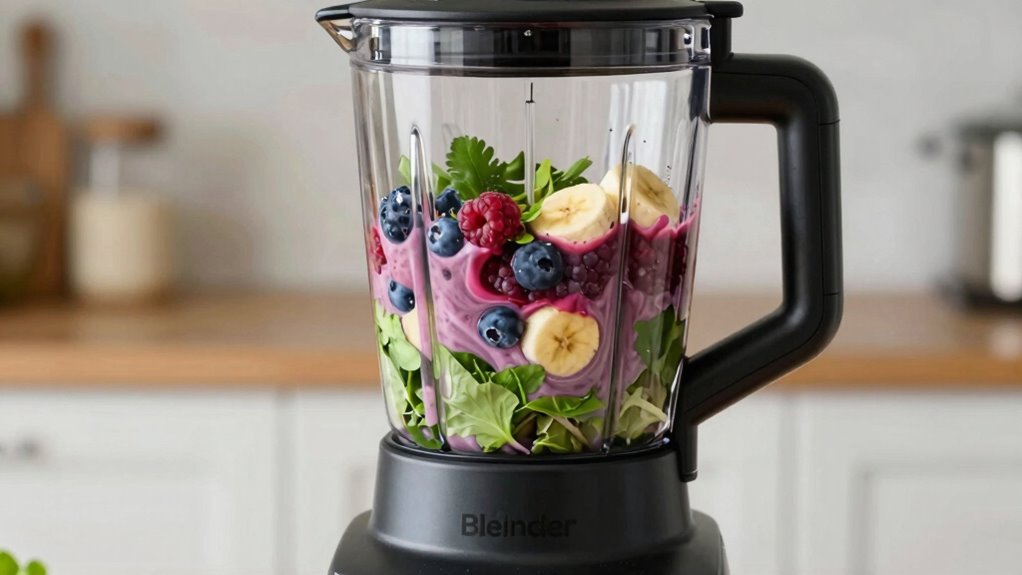
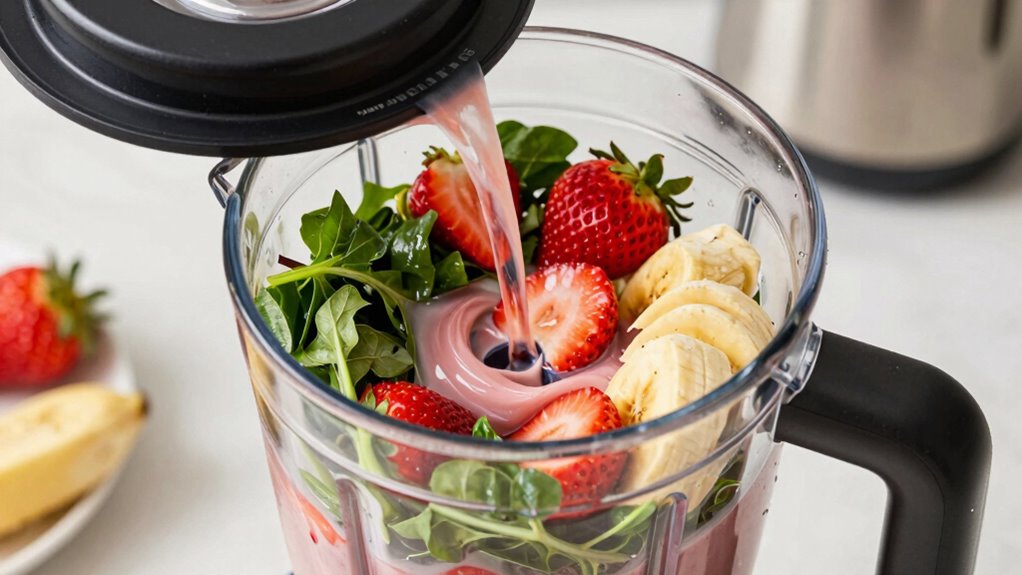
Choosing the right blend cycle is essential to achieve the smooth, consistent texture desired in smoothies and beverages. For ideal blend cycle selection, opt for cycles designed specifically for liquids or smoothies. These cycles typically feature shorter, pulsating actions that break down ingredients efficiently without over-processing. Beverage blending tips include starting with liquids, then adding solids gradually, and using the appropriate cycle for a silky finish. Many Blendtec models offer dedicated smoothie or beverage cycles that provide the perfect blend of power and duration. Use these cycles to blend ingredients until smooth, ensuring no chunks remain. Avoid over-blending, which can heat or thin your drink. Additionally, understanding the powerful motor of your blender helps you select the right cycle for optimal results. By selecting the right cycle, you’ll consistently produce beverages with a professional, restaurant-quality texture.
How to Choose the Right Cycle for Nut Butters, Soups, and Frozen Desserts
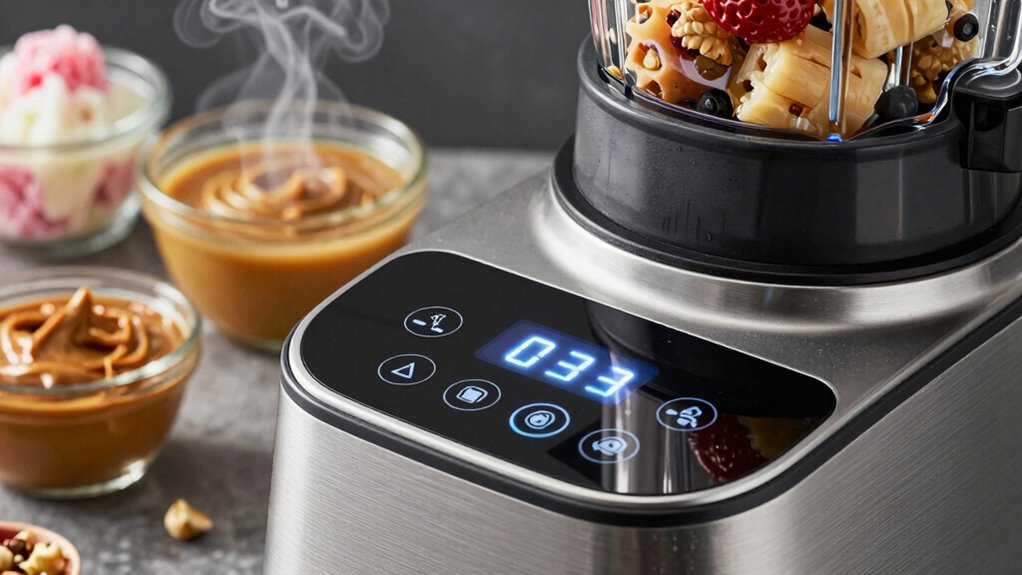
Selecting the right blend cycle is key when making nut butters, soups, and frozen desserts to guarantee ideal texture and consistency. For nut butters, use a cycle that offers longer, steady blending to develop smooth, creamy results. Soups benefit from cycles with pulsing and variable speeds to ensure even blending without over-processing. Frozen desserts require cycles that incorporate rapid blending and pauses, helping to achieve a soft, scoopable texture. Consider this guide: Free Floating can influence the choice of cycles by providing a natural blending environment that minimizes over-processing. Additionally, understanding cycle customization options can allow you to fine-tune blending times and speeds for optimal results. Recognizing blend cycle patterns can also assist in selecting the most appropriate settings for different recipes, ensuring consistent quality every time. Familiarity with adaptive cycle technology can further enhance your blending precision, especially for complex recipes.
Troubleshooting Common Texture Problems
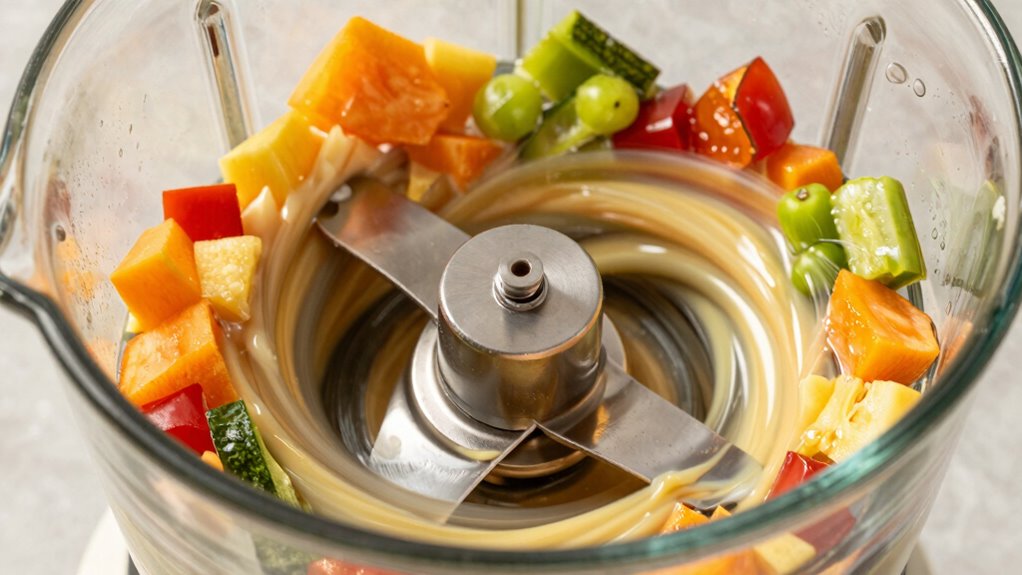
If your blends aren’t coming out right, you might face blade stalls or uneven textures. You can fix these issues by adjusting your cycle or adding liquid to achieve a smoother consistency. Addressing these common problems helps you get perfectly blended results every time. For example, understanding the net worth of individuals like Kate from Breaking Amish can inspire you to invest in quality appliances for better blending outcomes. Additionally, ensuring your ingredients are appropriately prepared and layered can influence how well the blades operate, ultimately improving sleep environment and blending efficiency. Incorporating connected smart home technology can also help monitor and optimize your blending routines for consistent results. Proper tool maintenance is essential to keep your blender operating at peak performance and prevent common issues.
Overcoming Blade Stalls
Blade stalls can disrupt your blending process and lead to uneven textures, but they’re often easy to fix with some simple adjustments. If your blades stall frequently, it might be due to overload or thick ingredients that strain the motor. To prevent blade stalls, try reducing the load or chopping ingredients into smaller pieces before blending. Overloading the blender can cause motor overheating, which can trigger stalls or shutdowns. Make sure you’re not exceeding the recommended capacity for your Blendtec model. Pulsing instead of continuous blending can also help manage resistance and keep the blades moving smoothly. If your motor feels hot or stalls often, give it a break to cool down. Properly balancing your ingredients and avoiding excessive loads will help you maintain consistent textures and prolong your blender’s lifespan. Additionally, being mindful of your home energy setup, such as avoiding overloading the outlet or circuit, can prevent electrical issues that might affect your blender’s performance. Monitoring your vintage tech setup can also help identify electrical issues that may impact your appliances’ performance. Regularly inspecting your blend tech components ensures optimal operation and reduces the likelihood of stalls.
Achieving Smooth Consistency
Achieving a smooth, consistent texture is key to enjoying your blended creations, but common issues like lumps, graininess, or uneven results can sometimes occur. To improve smoothness enhancement, focus on proper ingredient prep—cutting ingredients into smaller pieces and removing tough stems or seeds. This helps the blades process everything evenly. Additionally, make certain you’re adding liquids first to create a liquid base that facilitates smoother blending. Using the correct cycle and stopping just before over-processing can prevent heat buildup and texture breakdown. If your blend still feels grainy, try pulsing briefly or scraping down the sides of the jar. Consistent ingredient prep combined with mindful cycle use results in a creamier, more uniform texture every time.
Fixing Uneven Textures
Uneven textures often result from inconsistent ingredient sizes or improper blending techniques. To fix texture issues, start by ensuring all ingredients are uniformly cut, which promotes even blending. Next, adjust your blending techniques: use pulse mode initially to break down larger pieces, then switch to continuous blending for a smoother result. Finally, pay attention to the blend cycle duration—over-blending can cause a soupy texture, while under-blending leaves ingredients chunky. Additionally, understanding the blend cycle durations can greatly improve your results by preventing over-processing or under-processing. Using the appropriate concentrations of glycolic acid can also influence skin texture, making it smoother and more refined. Incorporating the smart technology features of modern blenders can provide more precise control over blending times and speeds. Here’s how to improve your results:
- Uniformly chop ingredients before blending.
- Use pulse mode to control initial texture.
- Adjust cycle duration based on ingredient consistency.
Mastering these steps helps you achieve consistent, desirable textures every time.
How to Customize Blend Cycles for Perfect Results
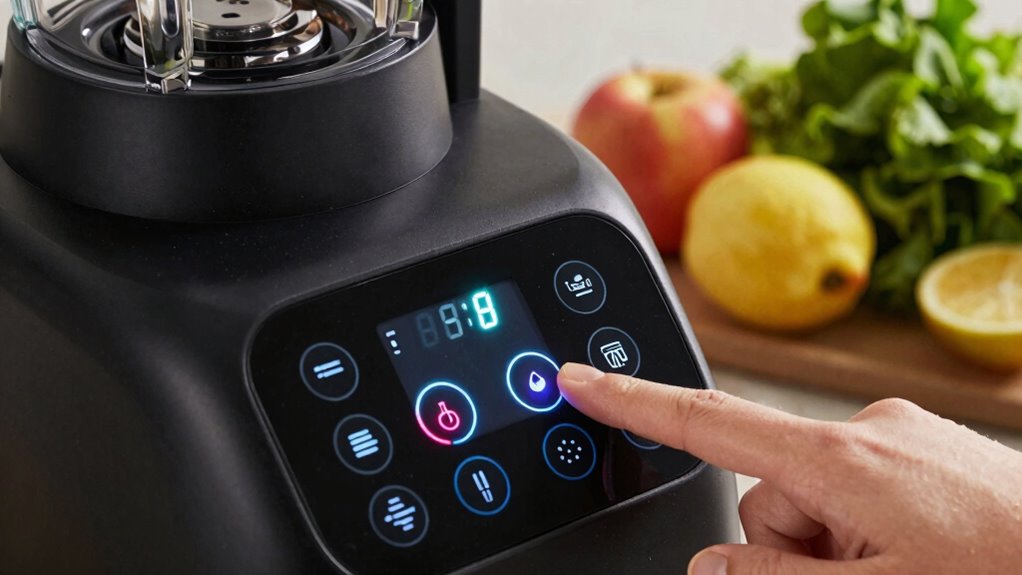
To get the best results from your Blendtec blender, customizing the blend cycles allows you to tailor each blend to your specific needs. You can create a custom cycle that aligns with your blending preferences, ensuring consistent texture and smoothness. Start by adjusting the speed, duration, and pulse settings to match the ingredients you’re working with. Many Blendtec models let you save these settings as a custom cycle for future use, saving time and effort. Experiment with different combinations until you find what works best for your recipes. Remember, the key to perfect blending is understanding your ingredients and adjusting the cycle parameters accordingly. understanding your ingredients is essential for achieving the desired texture. Additionally, paying attention to blend cycle design can help optimize performance and results. Being aware of blending techniques can further help you refine your process and consistently produce better textures. With a personalized approach, you’ll achieve ideal results every time.
Why Your Blends Might Be Chunky and How to Fix It
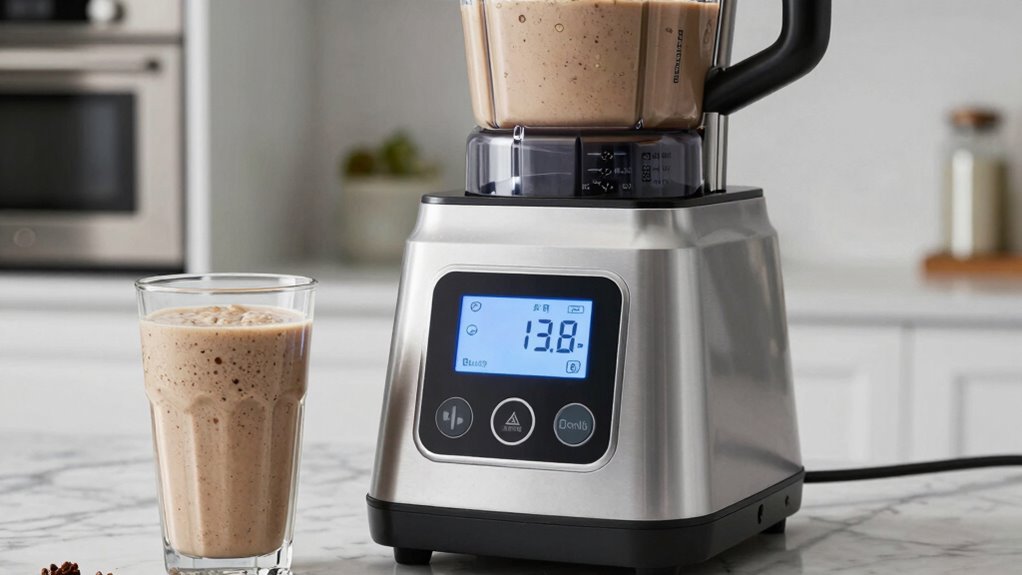
If your blends are coming out chunky instead of smooth, the issue is often related to insufficient blending time or incorrect cycle settings. Texture issues like these can be frustrating, but adjusting your blending techniques can fix them. To improve consistency:
- Make certain you’re using the right cycle duration for your ingredients, allowing enough time for thorough blending.
- Use pulse or manual control to break down larger pieces before settling into a steady blend.
- Confirm that ingredients are evenly distributed, preventing uneven texture and ensuring consistent results.
Tips for Improving Your Blends and Getting Better Texture

Improving your blend quality often starts with refining your technique and paying attention to small details. One key tip is experimenting with blend cycle customization to match your ingredients. Adjust speeds, durations, or add manual pulses to better control texture. If your blend is too chunky or uneven, focus on texture troubleshooting by breaking down the ingredients more thoroughly before blending or adding liquids gradually. Using shorter, targeted blend cycles can prevent over-processing, while longer cycles ensure smoothness. Don’t hesitate to pause and scrape down the sides of the jar, ensuring ingredients are evenly incorporated. These small adjustments help you achieve consistent, better texture every time, making your blends smoother, creamier, and more enjoyable.
Frequently Asked Questions
Can I Create My Own Custom Blend Cycles on My Blendtec?
Yes, you can create your own custom blend cycles on your Blendtec. This process involves blend cycle customization, allowing you to tailor settings like speed and time to suit your needs. Simply access the settings menu, choose the option for custom cycle creation, and adjust the parameters accordingly. This way, you get consistent results and better texture every time, making your blending experience more versatile and personalized.
How Do Blend Cycle Speeds Influence Ingredient Breakdown?
Sure, because nothing says excitement like speed variation in your blender! Faster speeds break down ingredients more thoroughly, creating silky smooth textures, while slower speeds give you chunkier results. Your choice influences ingredient consistency—crucial for perfect smoothies or chunky salsas. So, experiment with blend cycle speeds to find that sweet spot. Remember, a little speed variation can turn your culinary chaos into a masterpiece—or a mess!
Are There Recommended Cycle Durations for Specific Recipes?
Yes, there are recommended cycle durations based on recipe specificity. For smoothies, a 30-60 second cycle usually works well, while tougher ingredients like nuts or ice may need 60-90 seconds. Pay attention to the texture you desire, and adjust the cycle duration accordingly. Always start with the recommended time, then increase or decrease as needed to achieve the perfect consistency for your specific recipe.
What Maintenance Steps Help Preserve Blend Cycle Effectiveness?
To keep your blend cycle effective, you should follow regular cleaning routines by thoroughly rinsing and wiping down the jar after each use. Additionally, check and sharpen the blades when you notice a decline in blending performance. Proper maintenance like this guarantees your Blendtec operates smoothly, preserves cycle consistency, and helps you achieve the perfect texture every time. Regular upkeep is key to extending your blender’s lifespan.
How Do Ambient Temperature and Ingredients Impact Blend Cycle Performance?
Imagine your blender is a ship charting varying seas; ambient temperature and ingredient variability are like changing weather that affects its journey. Temperature effects influence blending speed, with colder temps thickening ingredients and warmer ones easing flow. Ingredient variability, like different fruits or nuts, impacts consistency and texture. To guarantee smooth sailing, warm ingredients slightly and adapt blend cycles accordingly, keeping your blend steady regardless of external conditions.
Conclusion
Mastering your Blendtec’s cycles is like tuning a fine instrument—you’ll achieve perfectly smooth textures every time. By understanding each cycle and customizing them to your needs, you can transform simple ingredients into culinary masterpieces. Don’t be discouraged by chunky results; with a little troubleshooting and practice, your blends will become as seamless as a well-rehearsed melody. Keep experimenting, and soon, your kitchen will be a symphony of delicious, consistently perfect creations.