
More blades in a blender don’t always mean better performance. In fact, fewer well-designed blades can blend just as smoothly, thanks to smarter positioning, sharper edges, and efficient materials. The key factors are blade shape, angle, and motor power, not just quantity. So, don’t assume that more blades are better—focus on quality and design instead. Keep exploring to discover how the right setup can actually outperform multi-blade systems.
Key Takeaways
- Blade design, shape, and sharpness are more important than simply increasing blade count.
- Fewer high-quality blades can be more durable and efficient than multiple poorly designed blades.
- More blades do not guarantee better blending; overall motor power and blade angle are critical factors.
- Proper blade maintenance and material quality impact performance more than blade quantity.
- Streamlined, well-engineered blade setups can outperform complex multi-blade systems in blending effectiveness.
What Are the Common Blender Blade Setups?
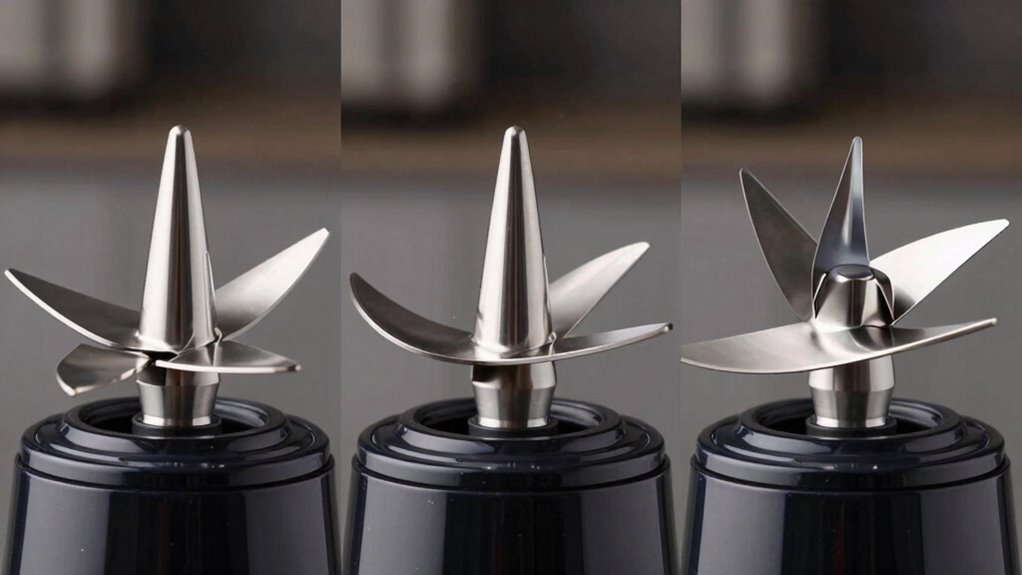
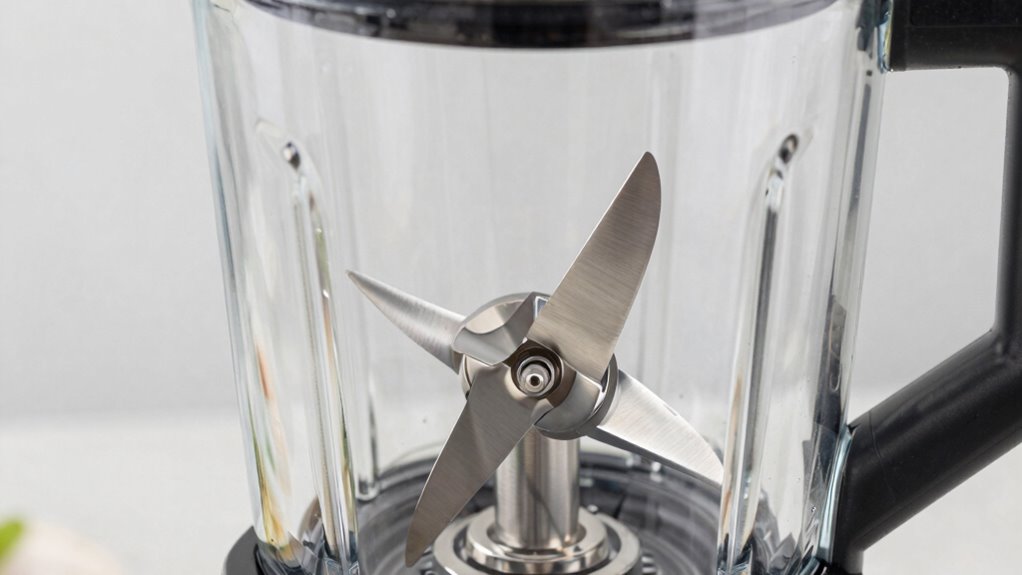
Understanding the common blender blade setups can help you choose the right configuration for your blending needs. Most blenders feature either four or six blades, with the blades often arranged in a cross or stacked pattern. The blade material is usually stainless steel, which provides durability and resistance to corrosion. When considering blade sharpening, look for blades that can be easily maintained or replaced, ensuring consistent performance over time. Some blenders include serrated blades to improve cutting efficiency, especially for tougher ingredients. The design and number of blades influence how well your blender handles different textures, but more blades don’t always mean better blending. Focus on durable blade materials and easy sharpening options to keep your blender performing at its best. Additionally, blade configuration plays a crucial role in blending performance and efficiency, and understanding the blade setup can help optimize your blending results. Recognizing how blade design impacts the mixing process can further enhance your ability to select the best blender for your needs. Proper maintenance of blades is essential for longevity and consistent results.
Does More Blades Mean Better Blending?
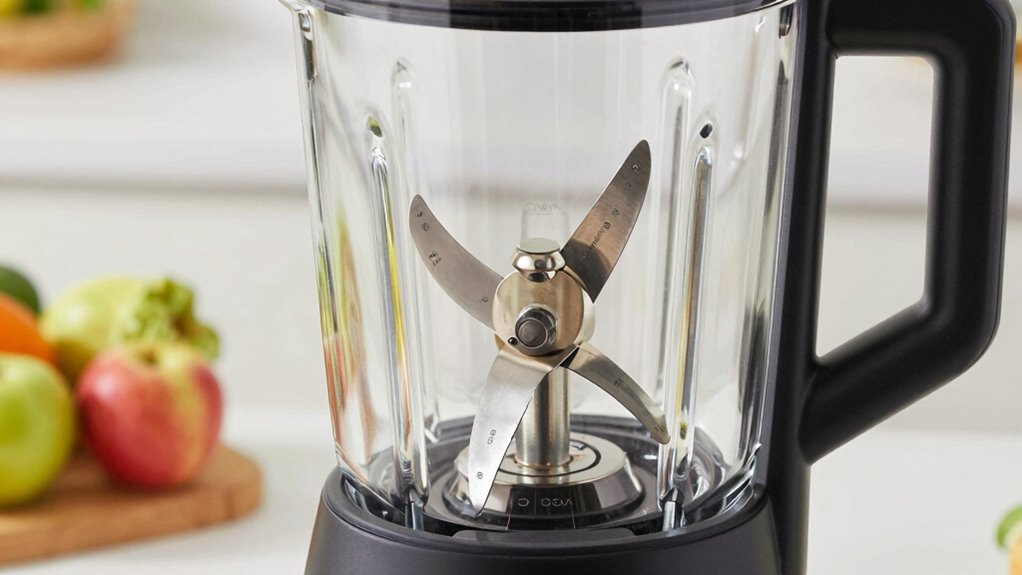
Having more blades in your blender might seem like it would automatically lead to better results, but that’s not always the case. Additional blades can sometimes create more turbulence without improving blending quality. The effectiveness depends heavily on blade material and sharpening. High-quality stainless steel blades resist wear and maintain sharpness longer, ensuring smooth blending. Conversely, dull blades, regardless of quantity, struggle to process ingredients efficiently. Excess blades may cause clogging or uneven blending, especially if they aren’t sharpened properly. Consider this table for clarity:
| Blade Count | Blade Material | Sharpening Quality | Blending Effect | Maintenance Needs |
|---|---|---|---|---|
| Few | High-grade steel | Regularly sharpened | Precise blending | Low |
| Many | Cheaper steel | Dull over time | Less efficient | Higher |
It’s important to also consider blade design and how it influences blending performance. More blades don’t guarantee better results—quality and upkeep matter most. Proper blade maintenance is essential to keep your blender functioning optimally over time. Additionally, understanding blade geometry can help optimize blending efficiency and reduce wear, which is crucial for maintaining blending consistency. Moreover, the material composition of blades impacts their durability and performance in various blending tasks.
How Do Blade Design and Placement Affect Blending?
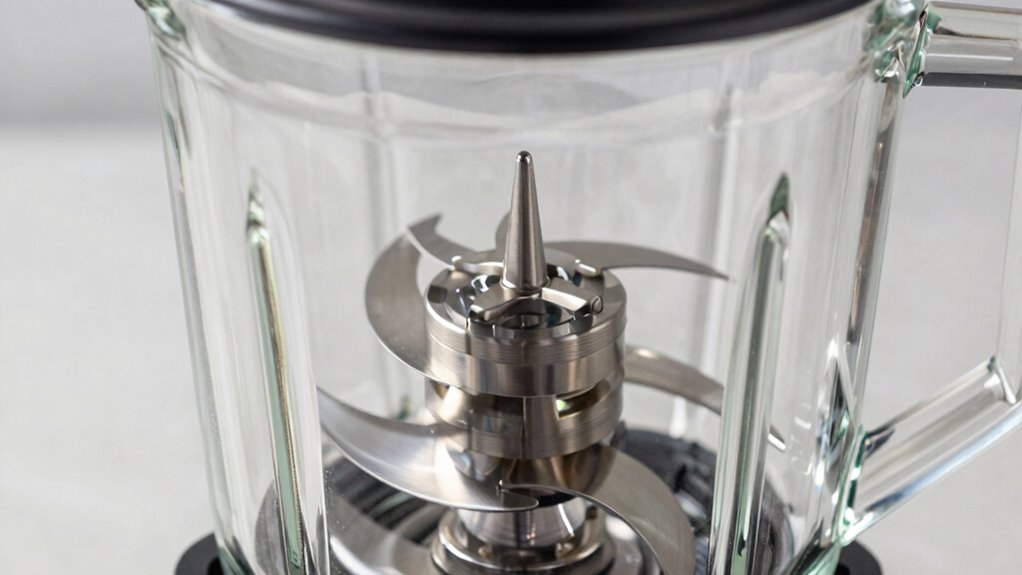
The design and placement of blender blades play a vital role in how effectively your ingredients are processed. Properly positioned blades create optimal circulation, ensuring everything gets blended evenly. Blade material influences durability and performance; high-quality stainless steel resists corrosion and maintains sharpness longer. Blade sharpening affects blending efficiency, as dull blades struggle to cut through tougher ingredients. Consider these factors:
- Blade angle enhances cutting power and vortex creation
- Positioning determines how ingredients are pulled toward the blades
- Material choice impacts longevity and sharpness retention
- Regular blade sharpening maintains optimal performance
Additionally, the blade design influences how well ingredients are chopped and mixed, which can significantly affect the final texture of your blend. Proper blade alignment helps prevent uneven blending and extends the life of your blades. In addition, the luggage & bags used to carry your blender and accessories should be durable and suitable for travel, ensuring your equipment stays protected on the go. Regular blade maintenance is essential for consistent blending results and extending the lifespan of your appliance. Ensuring that your blades are properly maintained and correctly positioned can make a noticeable difference in your blending experience.
When Fewer Blades Can Actually Do a Better Job
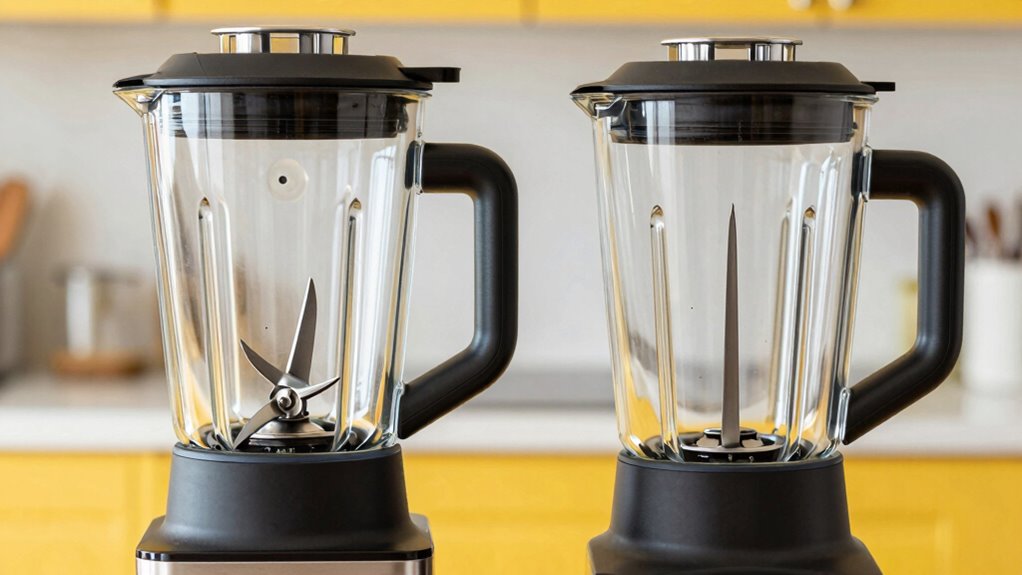
While multiple blades might seem like they would improve blending, fewer blades can sometimes deliver better results. Fewer blades often mean increased blade durability because there’s less wear and tear on each blade, extending their lifespan. Additionally, blenders with fewer blades tend to produce lower noise levels, making your blending experience quieter and more pleasant. This is especially true when the blades are well-designed and made from high-quality materials. Fewer blades also mean less vibration during operation, which contributes to smoother performance and less strain on the motor. In some cases, fewer blades can generate a more focused and powerful blending action, effectively handling tasks like crushing ice or blending tough ingredients without sacrificing durability or increasing noise. Furthermore, blade efficiency can improve with fewer blades, as each blade can be optimized for more effective blending performance. Interestingly, selecting the right blade configuration can also be influenced by market demand and consumer preferences, leading to more innovative and user-friendly blender designs. Moreover, understanding blade design principles can help manufacturers create more effective and efficient blenders tailored to specific tasks. In addition, advancements in material technology have enabled manufacturers to produce blades that maintain sharpness longer and perform better even with fewer blades.
How Motor Power and Blade Design Impact Results
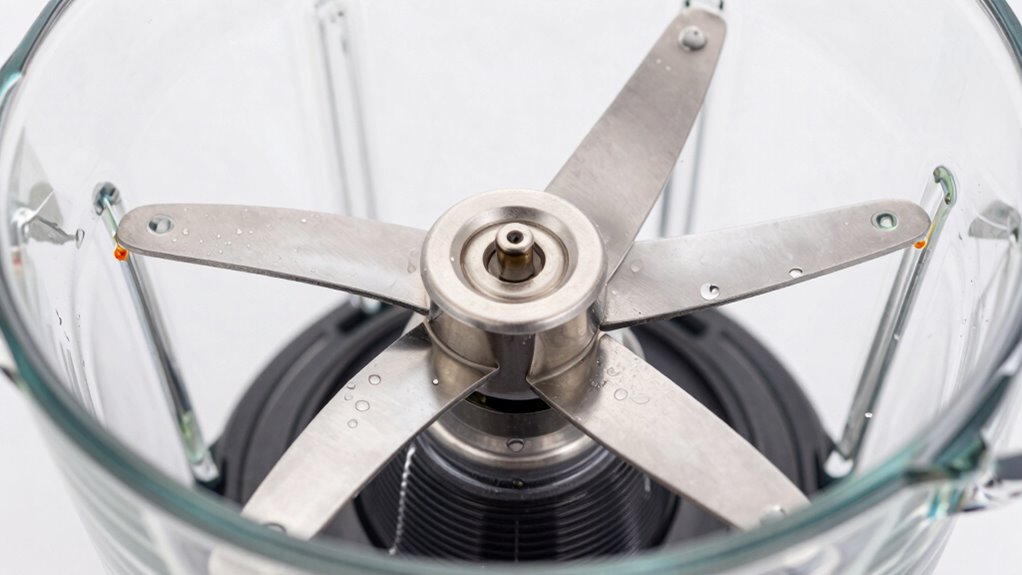
Motor design also impacts efficiency, with well-crafted blades providing better cutting action and longer blade durability. A smart blade design** can enhance blending performance by optimizing flow and minimizing energy consumption. The right combination minimizes noise levels**, making blending more pleasant, while also reducing wear on components. When choosing a blender, consider:
- The motor’s wattage for processing power
- Blade sharpness and material for durability
- Blade design’s impact on noise levels
- How blade shape influences blending efficiency
A well-designed blade with adequate motor power reduces vibrations and noise, ensuring consistent results. It also prolongs blade life, saving you money on replacements. Additionally, blade material plays a crucial role in resisting corrosion and maintaining sharpness over time. Proper blade maintenance can further extend the lifespan of your blender and keep it performing at its best. Ultimately, balance between these factors determines overall performance and longevity.
Mistakes to Avoid When Picking a Blender Based Only on Blade Count
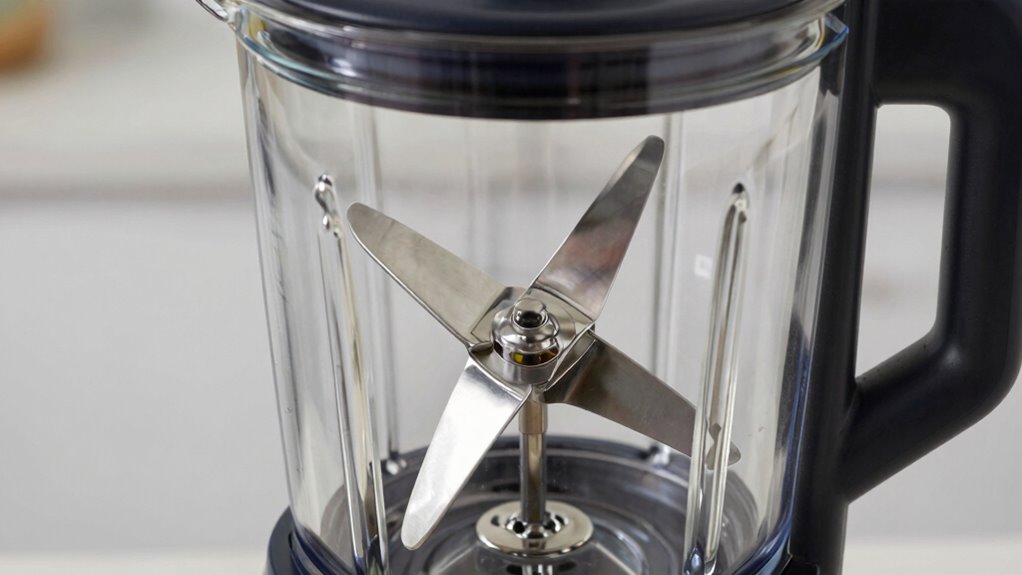
Don’t assume that more blades automatically mean better blending. Focusing solely on blade count can lead you to overlook the importance of motor power and overall design. Remember, a powerful motor often matters more than having extra blades.
Blade Count Isn’t Everything
Is blade count really the best way to judge a blender’s performance? Not necessarily. Focusing solely on the number of blades can be misleading. Instead, consider the blade design, which influences how effectively ingredients are processed. A well-designed blade can blend smoothly even with fewer blades, while poor blade maintenance can hinder performance regardless of blade quantity.
Keep in mind:
- High-quality blade design enhances blending efficiency
- Fewer blades with optimal angles can outperform multiple dull blades
- Regular blade maintenance ensures consistent performance
- Blade shape and sharpness matter more than blade count alone
Focus on Motor Power
Focusing solely on blade count can give a false sense of confidence in a blender’s performance. Instead, prioritize motor power, which directly influences blade durability and noise levels. A powerful motor handles tough ingredients without straining, reducing wear on blades and minimizing noise. Think of it like this:
| Motor Power | Performance Impact |
|---|---|
| Low (300-500W) | Struggles with ice or nuts, blades wear faster |
| Moderate (500-700W) | Handles smoothies well, moderate noise |
| High (700W+) | Blends tough ingredients effortlessly, quieter operation |
A stronger motor ensures longevity and smooth operation, regardless of how many blades you have. Don’t get fooled into thinking more blades compensate for weaker motors; focus on the motor’s strength instead.
Examples of Fewer Blades Outperforming Competition
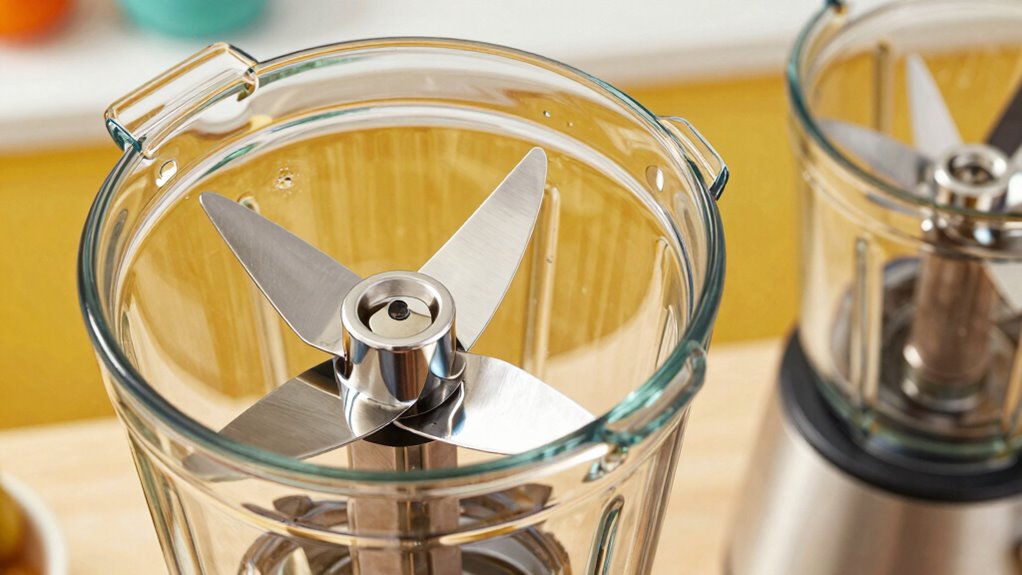
You might be surprised to find that blenders with fewer blades can actually perform better. Fewer blades reduce drag, making the blades spin more efficiently and quickly. This often leads to smoother blends and less strain on the motor, proving that sometimes, less really is more. Additionally, air fryer technology demonstrates that optimizing component design can enhance overall performance and safety.
Reduced Blade Drag
Have fewer blades in a blender can actually reduce drag and improve performance. With fewer blades, there’s less surface area to create resistance as the blades spin, allowing for smoother operation and faster blending. This often results in less energy needed to power the motor, increasing efficiency. The choice of blade material matters, as durable, lightweight metals reduce friction and drag even further. Additionally, an ergonomic handle design ensures better control, minimizing unnecessary movement that can add to drag. When combined, these factors demonstrate that a simpler blade setup can outperform complex, multi-blade systems in certain situations.
- Lighter blade material decreases overall resistance
- Fewer blades reduce turbulence within the jar
- Streamlined design minimizes airflow disruption
- Ergonomic handle enhances user control and stability
Enhanced Blade Efficiency
Sometimes, fewer blades in a blender can actually deliver better performance than more complex designs. This enhanced blade efficiency hinges on factors like blade sharpening and blade material. Well-sharpened blades cut through ingredients more cleanly, reducing strain on the motor and improving blending speed. Additionally, high-quality blade materials, such as stainless steel or titanium, resist dulling and corrosion, maintaining sharpness longer. Fewer blades often mean less turbulence and drag, allowing each blade to work more effectively. This streamlined approach can produce smoother textures and better nutrient retention. By investing in blades with superior sharpening and durable materials, you optimize your blender’s performance. In this way, fewer blades can outperform their multi-blade counterparts, proving that quality often trumps quantity.
What Really Matters When Choosing a Blender?
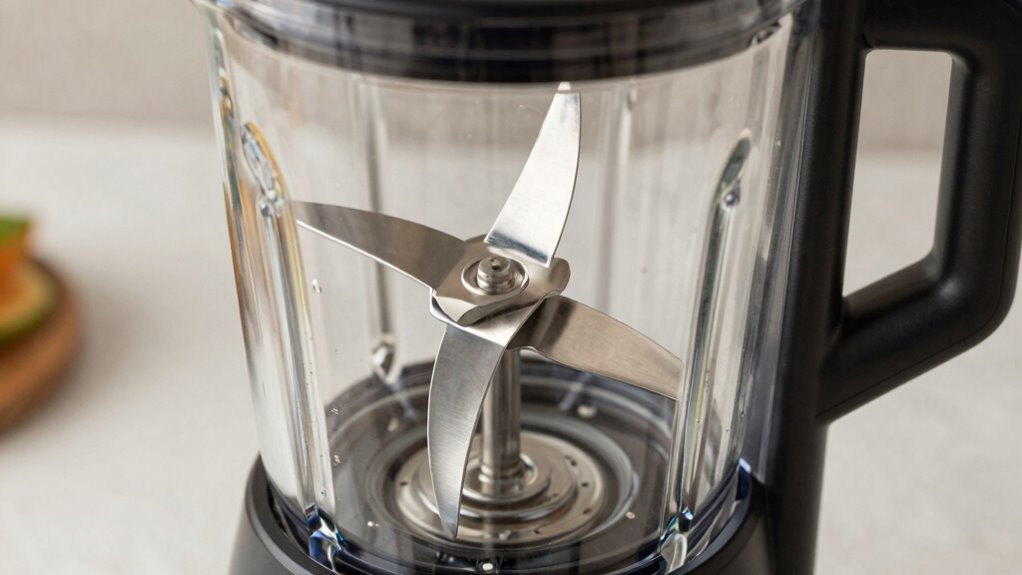
When choosing a blender, several key factors can make all the difference in guaranteeing you get a model that meets your needs. Focus on blade material, as durable options like stainless steel last longer and cut more effectively. Noise levels also matter, especially if you’ll be blending frequently or early in the morning. Consider your typical usage to balance power and comfort. Additionally, pay attention to motor strength, ease of cleaning, and control options. A quieter blender with high-quality blades can enhance your experience without sacrificing performance. Remember, the most blades don’t always mean the best; quality and design are vital for efficient blending. Making informed choices based on these factors ensures you select a model that fits your lifestyle and preferences.
Tips for Picking the Right Blender for Your Needs
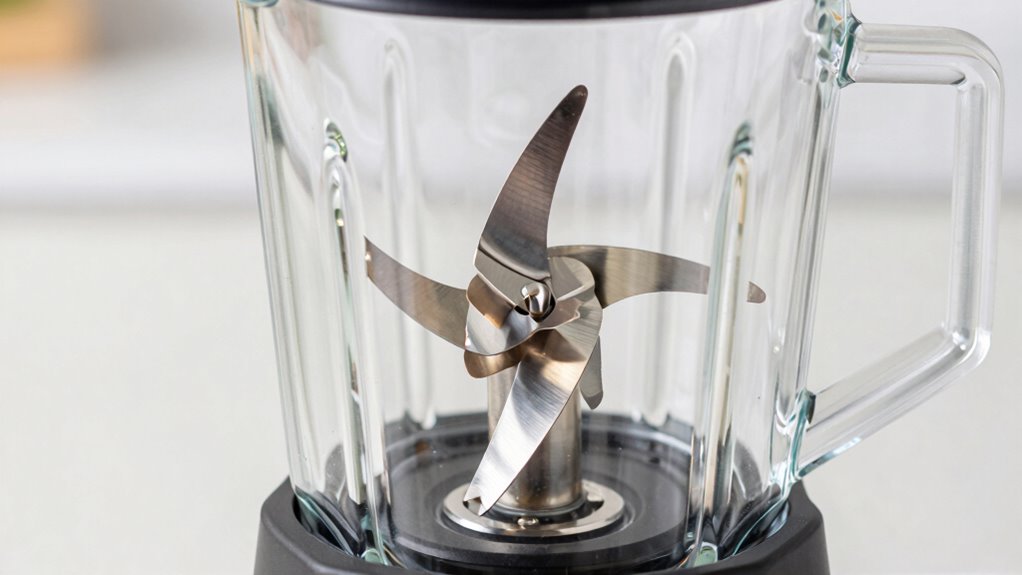
Choosing the right blender depends on several key factors. Consider how blade count, motor power, and your specific needs will impact performance. By focusing on these points, you’ll find a model that fits your tasks perfectly.
Blade Count Considerations
The number of blades in a blender considerably impacts its blending performance and suitability for different tasks. Fewer blades, like two or three, often promote better blade aesthetics and easier blade cleaning, making them ideal for simple tasks. More blades, however, can create a smoother blend but may complicate cleaning and affect blade aesthetics negatively. Consider these factors when choosing:
- Blade configuration and how it influences blending quality
- Ease of blade cleaning for maintenance convenience
- The balance between blade count and noise levels
- How blade design impacts overall durability
Ultimately, selecting the right blade count depends on your specific needs—whether you prioritize quick cleaning, aesthetic appeal, or blending consistency. Remember, more blades aren’t always better; they should suit your typical blending tasks.
Power and Motor Strength
Ever wondered how the power and motor strength of a blender influence its performance? Higher wattage generally means more blending power, helping you crush ice or tough ingredients effortlessly. Stronger motors also improve blade durability, reducing the risk of wear and tear over time. Keep in mind, powerful blenders tend to generate higher noise levels, which can be disruptive, especially early in the morning. If you plan to blend dense ingredients frequently, prioritize a motor with sufficient strength to handle your needs without straining. However, for lighter tasks like smoothies or purees, a less powerful motor may suffice and operate quieter. Choosing the right motor strength guarantees your blender performs reliably without unnecessary noise or damage, making your blending experience smoother and more efficient.
Purpose and Usage Needs
Understanding your blending needs helps you select the right blender that fits your routine. Consider what you’ll blend most often—smoothies, soups, or ice crushing—as this influences blade durability and motor strength. If you’re blending frequently, prioritize a model with sturdy blades designed for longevity. For quiet operation, check noise levels, especially if you live with others or plan to use it early mornings. Think about the size and capacity needed, as larger jars may require more powerful blades but can be noisier. Also, assess how easy it is to clean and maintain. Balancing blade durability, noise levels, and your specific usage ensures you choose a blender that performs reliably without unnecessary noise or wear.
- Blade material and design for durability
- Noise reduction features
- Frequency of use and blending intensity
- Ease of cleaning and maintenance
Bust the Blade Myth: What Makes a Blender Perform Well
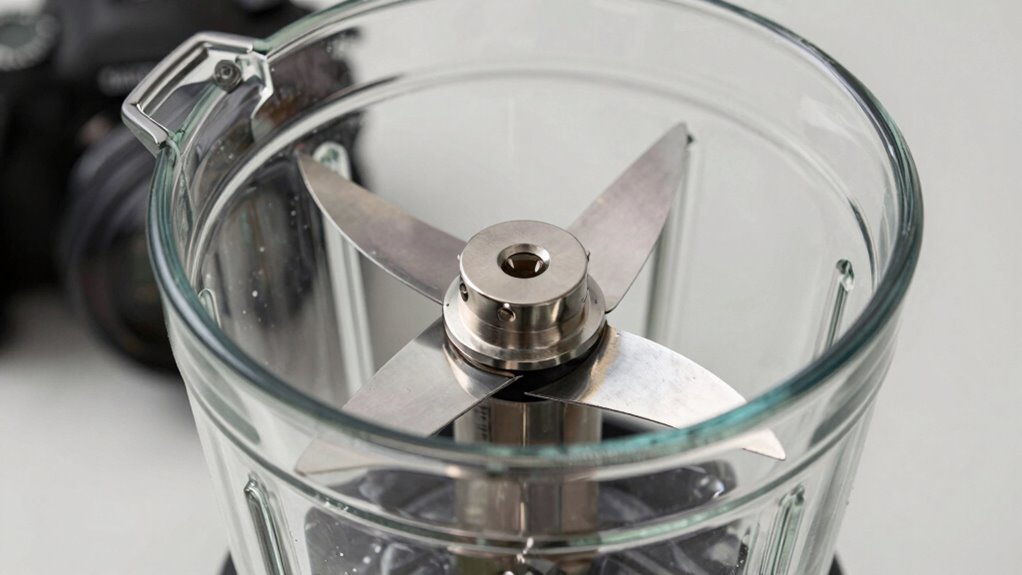
Many assume that blade material alone determines a blender’s performance, but in reality, several factors work together to create an effective blending experience. Blade durability guarantees your blender withstands repeated use without dulling or breaking, while noise levels affect convenience and comfort during operation. A well-designed motor and blade engagement also play critical roles in performance. The sharpness and angle of the blades influence how efficiently ingredients are processed.
| Factor | Impact | Key Consideration |
|---|---|---|
| Blade Material | Durability and longevity | Metal alloys, composites |
| Blade Sharpness | Cutting efficiency | Precision edge design |
| Motor Power | Blending speed and consistency | Wattage and torque |
| Noise Levels | User comfort during operation | Sound insulation, design |
| Blade Angle | Ingredient processing effectiveness | Ideal blade positioning |
Frequently Asked Questions
Do Blade Materials Affect Blending Efficiency Regardless of Blade Count?
Blade materials definitely impact blending efficiency, regardless of blade count. Durable materials like stainless steel or high-quality alloys maintain sharpness longer, ensuring consistent performance. Plus, they help reduce manufacturing costs over time by lasting longer. When choosing blades, consider material strength and durability because these factors directly influence how well your blender performs, regardless of whether it has few or many blades. A well-made blade guarantees smoother, quicker blending.
How Does Blade Angle Influence Blending Performance?
You’ll find that blade angle substantially influences blending performance by optimizing the flow of ingredients. A sharper, well-angled blade improves cut precision and reduces strain on blade sharpness, ensuring consistent results. Additionally, a ideal angle enhances blade durability by minimizing wear and tear. When the blade is properly angled, it maintains sharpness longer and delivers smoother blending, making your device more efficient and extending its lifespan.
Can Blade Shape Impact Noise Levels During Operation?
Yes, blade shape can impact noise levels during operation. You might notice increased blade noise if the blades are sharp or have an aggressive design, which can cause more sound during blending. Conversely, some shapes are designed for sound reduction, helping to minimize noise and make your blending quieter. Choosing a blade shape optimized for sound reduction can markedly improve your experience, especially if you blend frequently or in noise-sensitive environments.
Is Maintenance Easier With Fewer Blades?
Think of a blender with fewer blades like a well-maintained bicycle chain—easier to clean and replace. With fewer blades, you spend less time on blade cleaning and less effort replacing worn blades. I once had a blender with six blades, and it took forever to clean around them. Now, with just four blades, maintenance is quicker, making your blending routine smoother and less stressful.
How Does Blade Design Influence Nutrient Retention in Smoothies?
Blade design critically impacts nutrient retention in smoothies by influencing blade sharpness and blending speed. Sharp blades cut ingredients more effectively, reducing oxidation and preserving nutrients. A well-designed blade with ideal blending speed ensures thorough mixing without overheating, which can degrade nutrients. If blades are too aggressive or too slow, you risk nutrient loss. Consequently, choosing a blender with a blade design that balances sharpness and speed helps retain maximum nutrients in your smoothies.
Conclusion
Remember, more blades don’t always mean better blending. For example, a single-blade blender with a powerful motor and smart design can crush tough ingredients just as well as a multi-blade model. Focus on the motor strength, blade placement, and your specific needs. Don’t get caught up in myths—choose a blender that’s well-designed for your tasks, and you’ll get smooth, consistent results every time.