Shopping for smart kitchen gadgets means choosing between devices that connect to apps, voice assistants or other appliances and simpler electric tools that automate a task without much digital setup. The real tradeoff is whether remote control, alerts and integrations will change how you cook enough to justify extra cost and maintenance. Connected options suit cooks who will use those features regularly; simple gadgets are usually a better fit for anyone who wants dependable help with a specific job and minimal friction.

Get kitchen staples and gadgets delivered free with Prime
- Fast, free delivery on millions of items
- Prime Video, Amazon Music and more included
- Member-only deals all year
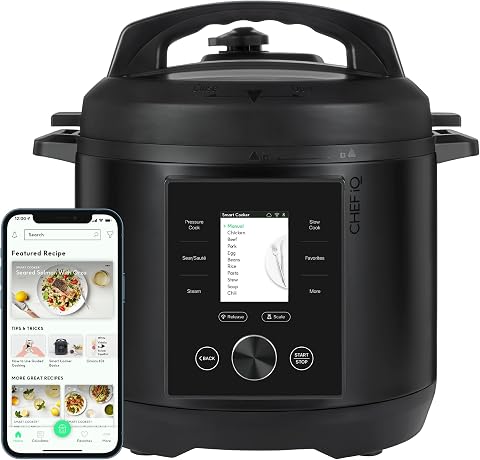
CHEF iQ Smart Pressure Cooker with WiFi and Built-In Scale, 6 Quart
- ✔ Capacity: 6 quarts
- ✔ Connectivity: WiFi and Bluetooth
- ✔ Built-in feature: Ingredient scale

Etekcity Smart Nutrition Kitchen Scale, 11 lb
- ✔ Maximum capacity: 11 lb (5000 g)
- ✔ Weighing range: 3–5000 g
- ✔ Increment: 1 g

DASH Rapid 7-Egg Cooker with Poaching Tray and Omelette Bowl, Aqua
- ✔ Capacity: Up to 7 eggs
- ✔ Functions: Boiling, poaching, steaming, omelette making
- ✔ Dimensions: 7.7 × 6.2 × 6.5 inches
Across everyday usefulness, setup, reliability, privacy, compatibility, cost and long-term value, neither category wins every time. The best choice depends on whether connectivity solves a recurring problem in your kitchen or merely adds another screen and account to manage.
At a Glance
| Criteria | Connected smart kitchen gadgets | Simple electric kitchen gadgets | Winner |
|---|---|---|---|
| Everyday convenience | Remote controls, alerts and app features can help when they fit an established cooking routine. | Quick, direct controls handle a focused task without relying on a phone or network. | Depends |
| Setup and ease of use | Often requires an app, account, network setup and occasional updates. | Usually ready to use with few setup steps. | B |
| Automation and integrations | Can coordinate with voice assistants, timers and compatible devices; features vary by brand and model. | Usually works independently and offers fewer integrations or remote features. | A |
| Reliability and maintenance | More software and network dependencies can add failure points and upkeep. | Fewer connected dependencies; cleaning and ordinary wear still matter. | B |
| Privacy and compatibility | Data practices and compatibility depend on the manufacturer, platform and product lifecycle. | No app connection is generally needed, though electrical and product safety still matter. | B |
| Cost and value | Typically costs more; worthwhile when connected features get regular use. | Usually costs less and can offer stronger value for a single recurring task. | Depends |
CHEF iQ Smart Pressure Cooker with WiFi and Built-In Scale, 6 Quart
The CHEF iQ Smart Pressure Cooker earns the top spot because it combines several useful jobs in one appliance: pressure cooking, steaming, ingredient weighing, and app-guided meal preparation. Its built-in scale can measure ingredients and help determine the required liquid, which ties the smart feature directly to the cooking process instead of leaving it as a separate tracking tool. Guided recipes, ingredient presets, and remote monitoring add more structure for cooks who appreciate prompts while making a meal.Compared with the Etekcity scale, CHEF iQ is a much broader investment in kitchen workflow, but it does not offer the same dedicated nutrient reporting across up to 19 nutrients. Against the DASH cooker, it handles a wider range of meals and offers automatic pressure release options, though it takes up more space and involves more setup. Buyers should factor in the 6-quart capacity, 10.4-pound weight, and the need for WiFi or Bluetooth to use app features. It is also not recommended for use outside the United States and Canada. The multicooker makes the most sense when its guided cooking and scale will see regular use; otherwise, a smaller task-specific gadget is easier to justify.
Pros:
- Built-in scale measures ingredients by weight and helps determine required liquid.
- App offers guided recipes, ingredient presets, and remote monitoring.
- Automatic pressure release supports quick, pulse, and natural methods.
- Includes a steamer rack and basket for added cooking flexibility.
Cons:
- App features require WiFi or Bluetooth connectivity.
- Use outside the United States and Canada is not recommended.
- Its 6-quart body is heavier and bulkier than the other two picks.
Best for: Cooks who want one connected appliance for pressure cooking, steaming, ingredient weighing, and recipe guidance.
Not ideal for: Buyers who need a lightweight, single-purpose gadget, avoid app-connected appliances, or plan to use it outside the United States and Canada.
Bottom line: For cooks who will use its guided recipes and weighing alongside pressure cooking, CHEF iQ offers the most complete smart-kitchen package in this lineup.
“For cooks who will use its guided recipes and weighing alongside pressure cooking, CHEF iQ offers the most complete smart-kitchen package in this lineup.”
Etekcity Smart Nutrition Kitchen Scale, 11 lb
For people who want a clearer picture of what goes into a meal, the Etekcity Smart Nutrition Kitchen Scale gives ordinary weighing a data-focused purpose. It measures from 3 to 5000 grams in 1-gram increments, and the VeSync app pairs those measurements with a Nutritionix database to track up to 19 nutrients and generate reports. That makes it a more specialized smart pick than the CHEF iQ: it concentrates on portions and food information rather than helping cook a meal.The food-grade 304 stainless steel platform is easy to wipe clean, and tare plus several units make it practical for everyday recipes as well as nutrition logging. It can also connect with Apple Health and Fitbit. In contrast with the DASH egg cooker, Etekcity fits a broader set of kitchen tasks, since weighing ingredients is useful across many recipes. Its limitations are clear, though: it does not automate cooking, requires three AAA batteries, and barcode scanning is available only in the United States. Buyers should also be comfortable recording foods through an app; the nutrient features matter most when they will be used consistently. For simple baking measurements, a non-connected scale may be enough.
Pros:
- Tracks up to 19 nutrients through VeSync and Nutritionix.
- 1-gram increments support detailed portion and ingredient measurements.
- Stainless steel platform is durable and easy to clean.
- Tare function and multiple measurement units suit varied recipes.
Cons:
- Barcode scanning is available only in the United States.
- Requires three AAA batteries.
- Nutrition tracking depends on using the app and its food database.
Best for: People who regularly weigh portions or ingredients and want nutrient reports alongside their food measurements.
Not ideal for: Cooks seeking an appliance that prepares food, or buyers who want barcode scanning outside the United States or do not want app-based logging.
Bottom line: Choose Etekcity when measured portions and nutrient visibility matter more than automated cooking or recipe guidance.
“Choose Etekcity when measured portions and nutrient visibility matter more than automated cooking or recipe guidance.”
DASH Rapid 7-Egg Cooker with Poaching Tray and Omelette Bowl, Aqua
The DASH Rapid 7-Egg Cooker is the simplest specialist in this roundup: it streamlines one familiar task instead of adding an app-based system to the kitchen. It can boil up to seven eggs, with doneness adjusted by water level, and its included trays also support poaching and omelettes. When the water evaporates, a thermal sensor shuts the cooker off and sounds a chime. That automatic cue is its key convenience, especially when the stovetop is busy or we are preparing other parts of breakfast.Compared with the CHEF iQ, DASH is far more compact and lighter, but it cannot replace a multicooker or provide guided recipes. It also differs from Etekcity: there is no nutrition logging or ingredient weighing, only a dedicated cooking routine. The accessories nest inside the unit, making storage more manageable, although its seven-egg capacity can feel limiting for larger households or batch cooking. Eggs need a cold-water soak after cooking for easier peeling, so the appliance does not eliminate every step. Choose it when eggs are a frequent part of breakfast and a small, uncomplicated device is appealing; skip it if your kitchen needs broader smart functionality.
Pros:
- Cooks up to seven eggs with doneness adjusted by water level.
- Includes trays for poached eggs and omelettes.
- Thermal sensor shuts off the cooker and sounds a chime when water evaporates.
- Accessories nest inside for compact storage.
Cons:
- Capacity may not suit larger batches or households.
- A cold-water soak is needed after cooking for easier peeling.
- Its focused egg functions cover fewer kitchen needs than CHEF iQ or Etekcity.
Best for: People who make eggs regularly and want a compact appliance for boiled, poached, or omelette-style preparations.
Not ideal for: Large households cooking bigger egg batches, buyers seeking app connectivity or nutrition tracking, and anyone wanting a versatile all-purpose cooker.
Bottom line: DASH is a convenient breakfast specialist for smaller egg batches, but its narrow role makes it the least versatile choice here.
“DASH is a convenient breakfast specialist for smaller egg batches, but its narrow role makes it the least versatile choice here.”
As an Amazon Associate we earn from qualifying purchases.
Key Differences
The clearest distinction is how much the gadget relies on software. A connected appliance may let you check a cooking cycle remotely, receive a completion alert or adjust settings through an app. Those features can help when you are moving between rooms or coordinating several tasks. They add little if you are already standing beside the appliance, and their usefulness can depend on a stable network, a supported app and a compatible phone or smart-home platform.
Simple electric gadgets tend to make fewer promises and ask less of their owners. A basic programmable cooker, electric kettle or countertop appliance may still save time without app pairing, account creation or a voice assistant. That does not make every simpler model better: the right controls, capacity, cleaning effort and build quality matter. But if both products perform the same core task well, paying extra for connectivity makes sense only when you can name a feature you will use repeatedly.
For most kitchens, start with the job that needs help, then judge the device by how often it will be used and how much setup it adds. Choose connected models for useful remote monitoring or automations; choose simpler electric ones when speed, straightforward controls and price matter more.
Detailed Comparison
Everyday convenience (moderate difference)
Connected gadgets can send alerts or let you check settings from another room, which is a moderate advantage for cooks who leave an appliance running while handling other tasks. Simple gadgets are often faster to operate in person: turn a dial, press a button and get on with cooking. If remote checks are not part of your routine, the difference is minor and the simpler control scheme may feel more convenient day to day.
Setup and ease of use (Simple electric kitchen gadgets wins — moderate)
Simple electric gadgets win by a moderate margin because they typically work without installing an app, creating an account or connecting to Wi-Fi. Connected models add initial setup and may require updates or troubleshooting later. For a household that enjoys configuring devices, that can be a manageable one-time effort; for shared kitchens or less technical users, the extra steps can make a useful appliance less approachable.
Automation and integrations (Connected smart kitchen gadgets wins — major)
Connected gadgets win, sometimes by a major margin, when they offer functions such as remote status checks, scheduled operation or reliable smart-home routines. Those features can make cooking easier when they fit the household’s existing devices. Simple models generally cannot match that flexibility, but a phone notification is not a meaningful upgrade if the appliance already finishes a task without supervision and you do not need remote access.
Reliability and maintenance (Simple electric kitchen gadgets wins — moderate)
Simple gadgets have a moderate practical edge because their core functions do not depend on app support or a network connection. Both categories can break, require cleaning or have parts that wear out, so connectivity alone does not determine physical durability. A connected model remains a good choice if its basic controls still work independently and the app adds a useful extra; check the product details before assuming that is true.
Privacy and compatibility (Simple electric kitchen gadgets wins — moderate)
Simple gadgets win by a minor to moderate margin for buyers who prefer not to link kitchen appliances to an app or smart-home account. Connected products can vary in the data they collect and in which assistants, phones and networks they support. The practical question is whether the listed integrations match the devices you already use, and whether the manufacturer explains how it handles data and software support.
Cost and value (moderate difference)
There is no universal winner: simple gadgets usually cost less, while connected models may justify a premium when their features save time often. The value gap is minor if the connected model costs only a little more and you will use remote alerts regularly; it becomes major when the premium buys features that duplicate existing timers or controls. Compare the total price with the core task and the specific connected functions you expect to use.
Connected smart kitchen gadgets: Pros and Cons
Pros:
- Remote monitoring and alerts can help when you are away from the appliance.
- Some models integrate with voice assistants or other compatible devices.
- App controls may offer scheduling or more detailed settings.
Cons:
- Usually costs more than a comparable basic gadget.
- Setup, software updates and network support add ongoing friction.
- Features and compatibility vary, and may depend on continued app support.
Simple electric kitchen gadgets: Pros and Cons
Pros:
- Usually less expensive and straightforward to operate.
- Typically works without an app, account or Wi-Fi connection.
- Focused controls can make common tasks quick and predictable.
Cons:
- Lacks remote status checks and many smart-home integrations.
- May offer fewer automation and customization options.
- Can still be poorly designed, hard to clean or unreliable; simplicity alone does not guarantee quality.
Who Should Choose What
Choose Connected smart kitchen gadgets if:
- You routinely leave appliances running while doing other tasks and would use remote alerts.
- You already use a compatible smart-home platform and want kitchen routines that work with it.
- A specific app feature solves a recurring cooking problem, rather than sounding appealing in theory.
Choose Simple electric kitchen gadgets if:
- You want a gadget for one clear task and prefer direct controls.
- You share the kitchen with people who do not want to learn an app or use separate accounts.
- Your budget is limited and the basic model performs the job you need.
Skip both if: Skip both categories if the gadget duplicates an appliance you already use, adds a task you rarely perform, or cannot be cleaned and stored comfortably in your kitchen.
Value for Money
Connected gadgets often carry a premium, so paying more is sensible only when a feature changes how you cook. Remote alerts can be worth it for someone who regularly steps away from an active appliance; app control may also help when it is part of a well-used smart-home setup. If you will operate the device from the countertop and check it yourself, a simpler model usually offers better value. Compare capacity, cleaning, warranty and core performance alongside the feature list: a low price is poor value if the gadget is awkward to use, and a high price is poor value if its app goes untouched.
Final Verdict
For most buyers choosing between otherwise similar products, start with the simple electric gadget. It is easier to set up, costs less and does not depend on software for ordinary operation. Choose the connected version when you can point to a recurring need for remote alerts, scheduling or a compatible smart-home routine, and when the manufacturer supports the features you need.
The biggest deciding factor is whether connectivity removes a real inconvenience from your cooking routine. If it does, paying more can be worthwhile. If not, put the money toward a well-made, easy-to-clean appliance that handles the task directly.
Frequently Asked Questions
Are smart kitchen gadgets worth the extra cost?
They can be if you will use a specific feature repeatedly, such as checking an appliance remotely or receiving a useful completion alert. If you expect to use only the basic function, a simpler model is usually better value.
Do connected kitchen gadgets work without Wi-Fi?
It depends on the product. Some retain basic local controls when the network is unavailable; others rely on an app for key functions. Check the manual or product specifications for offline operation before buying.
Which type is easier for a shared household?
Simple electric gadgets are usually easier because anyone can use direct controls without installing an app or sharing an account. A connected model can still suit a household if its controls are clear and its essential functions work locally.
What should I check before buying a connected gadget?
Check the features you will actually use, supported phones and smart-home platforms, offline controls, app requirements, cleaning instructions and software support information. These details show whether its connectivity will remain useful in your kitchen.