For leafy greens with less foam, I’d start with a slow masticating juicer that presses produce steadily instead of relying on fast-spinning blades. The Omega H3000RED is my best overall pick for shoppers prioritizing a slow-juicing design, while the Ninja NeverClog stands out for its practical juice and pulp containers. If feeding less-prepped produce matters most, the TUUMIIST with a 5.8-inch chute offers a wider opening, though chute size alone does not promise lower foam. The main tradeoffs are juice texture, prep time, cleanup, and how well a machine handles fibrous greens alongside other ingredients. Read on for the full comparison and guidance on choosing the right fit.

Get kitchen staples and gadgets delivered free — and shop member deals
- Fast, free delivery on millions of items
- Access to Prime Big Deal Days deals on October 6–7
- Prime Video, Amazon Music and more included
Complete the kit


Key Takeaways
- Slow masticating designs lead this roundup’s low-foam focus: the Omega H3000RED and other cold press models are the most relevant starting points for shoppers prioritizing leafy greens.
- Wide chutes address prep effort, not foam directly: the 5.3- to 6-inch openings on the Aeitto, TUUMIIST, and Godspeeds models can reduce cutting for larger produce, but greens still benefit from controlled feeding.
- The Ninja NeverClog is the most clearly specified for collecting juice and pulp: its 24 oz juice jug and 36 oz pulp container suit people who want dedicated vessels.
- Multi-function models trade simplicity for range: the EanOruus and TUUMIIST 3-in-1 add sorbet or nut milk functions, which may appeal to varied routines but mean more features to manage.
- Brand and feature details vary: the NEWBULIG’s 4.25-inch chute and the VITAPLUS stainless steel auger offer distinct design cues, but buyers should compare care instructions and leafy-green guidance before choosing.
| NEWBULIG 4.25-Inch Feed Chute Cold Press Juicer, Black |  | Best for Simple Everyday Greens | Brand: NEWBULIG | Juicing type: Low-speed masticating cold press | Feed chute: 4.25 inches | VIEW ON AMAZON | See Our Full Breakdown |
| Aeitto Cold Press Juicer with 5.3-Inch Wide Feed Chute | 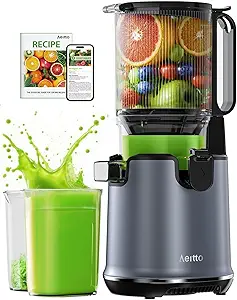 | Best for Hands-Free Feeding | Brand: Aeitto | Juicing type: Slow masticating cold press | Feed chute: 5.3 inches | VIEW ON AMAZON | See Our Full Breakdown |
| TUUMIIST Cold Press Juicer with 5.8-inch Extra Large Feed Chute, Black |  | Best for Specified Slow-Speed Extraction | Brand: TUUMIIST | Model: 580 | Power: 300 watts | VIEW ON AMAZON | See Our Full Breakdown |
| Godspeeds 6-inch Wide Chute Cold Press Juicer |  | Best for Minimal Prep | Feed chute width: 6 inches | Speed: 58 RPM | Motor power: 300 watts | VIEW ON AMAZON | See Our Full Breakdown |
| VITAPLUS Cold Press Juicer with Stainless Steel Auger |  | Best for Greens and Nut Milk | Auger: Food-grade stainless steel | Motor: 250W AC induction motor | Chute: 5.8-inch wide mouth | VIEW ON AMAZON | See Our Full Breakdown |
| Omega H3000RED Cold Press 365 Slow Masticating Juicer, Red |  | Best for Leafy Greens | Type: Horizontal cold press masticating juicer | Speed: 90–110 RPM | Power: 150 watts | VIEW ON AMAZON | See Our Full Breakdown |
| EanOruus 3-in-1 Cold Press Juicer, Premium Gray |  | Best for Large Batches and Versatility | Type: 3-in-1 cold press juicer | Feed chute width: 6.5 inches | Hopper capacity: 100 ounces | VIEW ON AMAZON | See Our Full Breakdown |
| Cold Press Juicer with 5.8-Inch Feed Chute, 300W Slow Masticating Juicer |  | Best for Low-Speed Operation | Juicer type: Cold press masticating | Motor power: 300 watts | Operating speed: 57 RPM | VIEW ON AMAZON | See Our Full Breakdown |
| TUUMIIST 3-in-1 Cold Press Juicer – Juice, Sorbet & Nut Milk Maker |  | Best for Hands-Free Meal Prep | Model: TM-780SJ | Power: 350 watts | Speed: 60 RPM | VIEW ON AMAZON | See Our Full Breakdown |
| Ninja NeverClog Cold Press Juicer, 24 oz Juice Jug, 36 oz Pulp Container, Navy, JC151NV |  | Best Compact Pick | Model: JC151NV | Juicer type: Masticating / cold press | Motor power: 150 watts | VIEW ON AMAZON | See Our Full Breakdown |
| juicer for leafy greens low foam | Cleaning | Feed chute | Color |
|---|---|---|---|
| NEWBULIG 4.25-Inch Feed Chute | Detachable parts; rinse clean | 4.25 inches | — |
| Aeitto Cold Press Juicer with | Fewer removable parts; rinse under running water | 5.3 inches | Grey |
| TUUMIIST Cold Press Juicer wit | — | 5.8 inches | Black |
| Godspeeds 6-inch Wide Chute Co | — | — | — |
| VITAPLUS Cold Press Juicer wit | Three parts; rinse clean in under 60 seconds | — | — |
| Omega H3000RED Cold Press 365 | Most removable parts top-rack dishwasher safe; drum excluded | — | Red |
| EanOruus 3-in-1 Cold Press Jui | Detachable parts, including detachable pulp outlet | — | Premium Gray |
| Cold Press Juicer with 5.8-Inc | Quick disassembly; five-second cleaning claimed | 5.8 inches | — |
| TUUMIIST 3-in-1 Cold Press Jui | — | 6.5 inches | — |
| Ninja NeverClog Cold Press Jui | — | — | Navy |
More Details on Our Top Picks
NEWBULIG 4.25-Inch Feed Chute Cold Press Juicer, Black
The NEWBULIG suits buyers who want a straightforward slow juicer for greens and other produce, with a reverse setting to help clear fibrous pulp when it builds up. Its 4.25-inch chute is smaller than the Aeitto’s 5.3-inch opening, so expect more trimming and feeding in batches, but that narrower opening may feel easier to manage if whole-produce capacity is not the priority. Low-speed masticating extraction is a better fit for a low-foam roundup than a high-speed approach, though the listing gives no measured foam or leafy-green yield figures. Detachable parts rinse clean, but cleanup water must stay below 104°F / 40°C. Choose it for basic daily juicing; skip it if you want the widest chute or the least hands-on feeding.
Pros:- Low-speed masticating design suits buyers seeking a gentler juicing process
- Reverse setting can help clear fibrous pulp buildup
- Detachable parts rinse clean
- Automatic safety lock is included
Cons:- The 4.25-inch chute is narrower than the Aeitto and TUUMIIST openings
- Slow operation takes longer than high-speed juicing
- Cleaning instructions limit water temperature to below 104°F / 40°C
Best for: Buyers who juice leafy greens alongside smaller produce portions and want a simple masticating juicer with a clog-clearing reverse function.
Not ideal for: People who want to load whole large produce with minimal prep or who prefer warm-water cleaning.
- Brand:NEWBULIG
- Juicing type:Low-speed masticating cold press
- Feed chute:4.25 inches
- Auger:Blade-free
- Safety feature:Automatic safety lock
- Anti-clog function:Reverse setting
- Cleaning:Detachable parts; rinse clean
- Recommended cleaning water temperature:Below 104°F / 40°C
Our verdict“Pick the NEWBULIG for uncomplicated greens juicing and reverse-assisted clearing if you can accept extra prep and slower operation.”
Aeitto Cold Press Juicer with 5.3-Inch Wide Feed Chute
For someone who wants to spend less time tending the hopper, the Aeitto pairs a 5.3-inch chute with hands-free feeding and one-touch operation. That makes it a more convenient choice than the NEWBULIG, whose smaller chute and simpler listed setup call for more involvement. It is described as suitable for leafy greens, but the listing does not give a measured foam level or leafy-green yield, so those claims should not be treated as guarantees. The reverse function can help when fibers slow the feed, and fewer removable parts are intended to simplify rinsing. The companion app is only useful if you want its recipe suggestions; buyers who avoid app-dependent extras can ignore that feature. This is the convenience-led pick, with less specific performance evidence than the wattage and speed details supplied for the TUUMIIST.
Pros:- 5.3-inch chute and large hopper reduce produce preparation
- Hands-free feeding and one-touch operation simplify use
- Reverse function can help address clogging
- Fewer removable parts are designed for quick rinsing
Cons:- No motor power or operating speed is provided in the listed specs
- The advertised juice-yield claim is not independently verified in the supplied product data
- Personalized recipe suggestions require the companion app
Best for: Busy buyers who want to feed leafy greens and other produce with less hands-on loading and prefer a simple one-touch routine.
Not ideal for: Shoppers who want documented motor speed, power, or measured leafy-green foam and yield data, or who do not want app-linked features.
- Brand:Aeitto
- Juicing type:Slow masticating cold press
- Feed chute:5.3 inches
- Suitable produce:Fruits, vegetables, and leafy greens
- Feeding:Hands-free
- Controls:One-touch operation
- Anti-clog function:Reverse function
- Cleaning:Fewer removable parts; rinse under running water
- Color:Grey
Our verdict“Choose the Aeitto if hands-free feeding matters more than detailed performance specifications or app-free simplicity.”
TUUMIIST Cold Press Juicer with 5.8-inch Extra Large Feed Chute, Black
The TUUMIIST 580 is the clearest fit here for buyers who want a stated slow operating speed: its 55 RPM masticating system is described as helping preserve freshness, a useful design direction for low-foam greens juicing. The listing does not provide measured foam results, however, so speed alone cannot promise a particular texture. Its 5.8-inch chute is wider than the Aeitto’s, cutting down prep for larger produce, while the included juice cup, residue cup, and brush make the basic setup more complete. Compared with the NEWBULIG, it offers more chute room and more technical detail, but requires careful hopper alignment to operate properly. Slow extraction also means a longer routine than high-speed juicing. It suits buyers who value a stated speed and broad chute over the simplest assembly.
Pros:- 55 RPM slow-speed operation is specified
- 5.8-inch feed chute reduces prep for larger produce
- BPA-free material is specified
- Juice cup, residue cup, and cleaning brush are included
Cons:- Hopper alignment and assembly require care
- Slow-speed juicing takes longer than high-speed methods
- No measured foam or leafy-green yield data is provided
Best for: Greens-juice makers who want a stated low operating speed, a wide chute, and included collection cups and cleaning brush.
Not ideal for: Buyers who want quick high-speed juice or a forgiving assembly process without careful hopper alignment.
- Brand:TUUMIIST
- Model:580
- Power:300 watts
- Speed:55 RPM
- Feed chute:5.8 inches
- Material:BPA-free
- Included components:Cleaning brush, juice cup, and fruit residue cup
- Color:Black
Our verdict“Choose the TUUMIIST if a documented 55 RPM speed and wide chute matter more than effortless setup or fast juicing.”
Godspeeds 6-inch Wide Chute Cold Press Juicer
The Godspeeds earns its place for buyers whose main friction is preparing produce: its 6-inch chute is the widest specified in this batch, slightly ahead of the 5.8-inch TUUMIIST and VITAPLUS. That can reduce cutting for larger ingredients, though it does not by itself say how well the machine handles leafy greens or controls foam. The 58 RPM slow cold-press system is directionally suited to gentler extraction, but the listing provides no measured foam results, and its “up to 99%” yield figure should not be read as a greens-specific guarantee. A 3-step assembly, detachable filter, and included brush support routine cleanup. The tradeoff is slower extraction, and buyers choosing between this and the TUUMIIST get a marginally wider chute here but a higher stated speed.
Pros:- 6-inch feed chute is the widest among these five products
- 58 RPM slow cold-press operation is specified
- Three-step assembly and detachable filter support simpler cleanup
- Includes juice cup, pulp cup, food pusher, cleaning brush, and recipe book
Cons:- Slow extraction takes longer than centrifugal juicing
- The stated yield figure is not greens-specific or independently verified in the supplied data
- No measured foam performance is provided
Best for: People who juice varied produce, including greens, and want to reduce chopping with a particularly wide feed chute.
Not ideal for: Buyers focused on verified low-foam performance or who want a documented greens-specific yield rather than general yield claims.
- Feed chute width:6 inches
- Speed:58 RPM
- Motor power:300 watts
- Noise level:Under 58 dB
- Assembly:3-step
- Warranty:10 years
- Included accessories:Juice cup, pulp cup, food pusher, cleaning brush, user manual, and recipe book
- Juice yield claim:Up to 99%
Our verdict“Pick the Godspeeds if reducing produce prep is your priority and you are comfortable with unverified general yield claims.”
VITAPLUS Cold Press Juicer with Stainless Steel Auger
The VITAPLUS stands apart from the other four by pairing a stainless steel auger with a built-in strainer intended for both juice and nut milk. That broader use makes it a more versatile kitchen choice than the greens-focused NEWBULIG, though it also means its appeal depends on whether you will use the extra function. Its 5.8-inch chute matches the TUUMIIST’s, while the 250W AC induction motor is specified at lower wattage than the TUUMIIST and Godspeeds; the supplied data does not establish how that difference affects leafy-green extraction. Three parts rinse clean in under 60 seconds, a clear cleanup advantage on paper. The food-contact certifications and five-year limited warranty add detail, but the motor lifespan statement is only an estimate, and no foam measurement is listed.
Pros:- Stainless steel auger is designed for fibrous ingredients
- Can make juice as well as almond or oat milk
- 5.8-inch chute accommodates larger produce
- Three parts are specified to rinse clean in under 60 seconds
Cons:- Five-year warranty is limited
- Motor lifespan claim is an estimate
- No measured foam or leafy-green yield data is provided
Best for: Buyers who regularly make leafy-green juice and homemade almond or oat milk and want a stainless steel auger with quick-rinsing parts.
Not ideal for: People seeking a dedicated juicer with documented low-foam test results, or those who do not need nut-milk capability.
- Auger:Food-grade stainless steel
- Motor:250W AC induction motor
- Chute:5.8-inch wide mouth
- Functions:Juice and nut milk maker
- Juice-contact parts:BPA-free
- Certifications:Bureau Veritas FDA 21 CFR, Intertek ETL, German LFGB
- Cleaning:Three parts; rinse clean in under 60 seconds
- Warranty:5-year limited warranty
Our verdict“Choose the VITAPLUS if nut-milk capability and fast rinsing are as useful to you as slow juicing greens.”
Omega H3000RED Cold Press 365 Slow Masticating Juicer, Red
Slow, horizontal extraction gives this Omega a focused role for buyers who juice greens and wheatgrass regularly. Its 90–110 RPM operation is designed to limit foam and oxidation, which suits the low-foam goal better than choosing a machine mainly for a wide chute or large batch hopper. Compared with the Ninja NeverClog, the Omega offers a broader stated range of produce uses, including wheatgrass, while the Ninja counters with pulp filters and a reverse function for clearing jams.
The tradeoff is pace: this masticating process takes longer than centrifugal juicing, and the drum must be rinsed by hand even though most removable parts are top-rack dishwasher safe. I’d choose it for greens-first routines; buyers prioritizing big, hands-free batches may prefer the EanOruus or TUUMIIST.
Pros:- Designed to reduce foam and oxidation at 90–110 RPM
- Stated uses include leafy greens and wheatgrass
- BPA-free construction
- Most removable parts are top-rack dishwasher safe
Cons:- Slow extraction takes longer than centrifugal juicing
- Drum is excluded from dishwasher-safe parts
Best for: Regular leafy-green and wheatgrass juicers who prioritize slow extraction and lower foam over quick batches.
Not ideal for: Households that want fast juicing, hands-free large batches, or every removable part to be dishwasher safe.
- Type:Horizontal cold press masticating juicer
- Speed:90–110 RPM
- Power:150 watts
- Color:Red
- Recommended uses:Fruits, vegetables, leafy greens, wheatgrass, citrus fruits
- BPA-free:Yes
- Cleaning:Most removable parts top-rack dishwasher safe; drum excluded
Our verdict“Choose the Omega if leafy greens and wheatgrass are your main ingredients and you can accept slower juicing and hand-washing the drum.”
EanOruus 3-in-1 Cold Press Juicer, Premium Gray
The EanOruus suits households that want a large batch hopper and more than juice from one appliance. Its 100-ounce capacity can reduce interruptions during meal prep, while interchangeable strainers support juice and sorbet; the description also lists nut milk. For the low-foam greens focus, it is a less specific pick than the Omega H3000RED, which provides a stated slow speed and explicit leafy-green and wheatgrass use. The EanOruus instead emphasizes a quiet, high-torque motor for daily use and a 6.5-inch chute that can cut produce prep.
That convenience comes with a large footprint, so I’d skip it if counter space is tight or greens are the only job. Its broad functionality makes more sense for families who will use the extra strainer options and batch capacity; the compact Ninja NeverClog is easier to accommodate for smaller servings.
Pros:- 100-ounce hopper supports larger batches with fewer refills
- 6.5-inch chute accepts whole fruits and vegetables
- Interchangeable strainers support juice and sorbet, with nut milk also listed
- Detachable parts include a removable pulp outlet for cleanup
Cons:- Large footprint can consume substantial counter space
- No operating speed or power figure is provided to compare extraction directly
Best for: Families and meal-prep cooks who juice in large batches and also want sorbet and nut milk functions.
Not ideal for: Small-kitchen buyers or greens-only juicers who do not need a 100-ounce hopper or extra functions.
- Type:3-in-1 cold press juicer
- Feed chute width:6.5 inches
- Hopper capacity:100 ounces
- Motor:AC brushless, high-torque, whisper-quiet
- Strainers:Two interchangeable: juice and sorbet
- Cleaning:Detachable parts, including detachable pulp outlet
- Color:Premium Gray
Our verdict“Pick the EanOruus for family-sized batches and varied recipes if you have room for its large hopper.”
Cold Press Juicer with 5.8-Inch Feed Chute, 300W Slow Masticating Juicer
At a stated 57 RPM, this masticating juicer is the slowest clearly specified option in this batch, making its low-speed design a good match for buyers trying to keep leafy-green juice less foamy. The 5.8-inch chute also reduces chopping for larger produce, though whole-fruit convenience does not by itself establish how it handles stringy greens. Compared with the Omega H3000RED, its listed speed is lower and its chute is wider, while the Omega gives clearer guidance on intended use by naming wheatgrass and leafy greens.
The model emphasizes quiet operation, quick disassembly, and a lid safety stop. Its claimed five-second cleaning should be treated as a product claim, not a guarantee of cleanup time after fibrous greens. I’d choose it for buyers who value the stated low speed and simple assembly, but skip it if they need a large-batch hopper or clearer evidence about greens performance.
Pros:- 57 RPM operating speed is designed for slow extraction
- 5.8-inch feed chute accommodates whole fruits and vegetables
- Quiet operation is suited to home use
- Quick disassembly supports easier cleaning
Cons:- The up-to-99% juice-yield claim is not independently verified in the supplied data
- No customer reviews or ratings are provided in the supplied data
- No hopper or juice-container capacity is listed
Best for: Home juicers who want a stated 57 RPM machine, a wide chute, and straightforward disassembly.
Not ideal for: Buyers who need verified leafy-green performance, a stated batch capacity, or confidence that cleanup takes only five seconds.
- Juicer type:Cold press masticating
- Motor power:300 watts
- Operating speed:57 RPM
- Feed chute:5.8 inches
- Operation:Quiet
- Safety feature:Stops when lid is opened
- Cleaning:Quick disassembly; five-second cleaning claimed
Our verdict“Choose this model if a stated 57 RPM and wide chute matter most, while accepting limited capacity and greens-specific information.”
TUUMIIST 3-in-1 Cold Press Juicer – Juice, Sorbet & Nut Milk Maker
The TUUMIIST pairs a 100-ounce hopper with a stated 60 RPM motor, giving batch makers a useful mix of capacity and slow extraction. Its description specifically presents the process as quiet and intended to preserve nutrients, although it does not provide a measured foam result for leafy greens. Compared with the Omega H3000RED, the TUUMIIST is built around hands-free batches and three functions; the Omega is the more targeted greens-and-wheatgrass choice, with a specified 90–110 RPM range.
A 6.5-inch chute can save prep time for larger produce, and quick-release parts plus an included brush help with cleanup. The large hopper also means a larger footprint, and slow masticating extraction will not suit anyone seeking centrifugal speed. I’d pick it for meal prep and varied recipes, but a greens-only user with limited counter space may find the compact Ninja NeverClog a better fit.
Pros:- 100-ounce hopper supports hands-free batch juicing
- 60 RPM slow extraction is suited to low-speed juicing
- 6.5-inch chute fits whole apples
- Quick-release parts and included brush support cleanup
Cons:- Large hopper design takes up substantial space
- Slow masticating extraction takes longer than centrifugal juicing
Best for: Meal-prep households that want hands-free large batches, slow extraction, and juice, sorbet, and nut milk functions.
Not ideal for: Small kitchens or buyers who mainly juice greens in modest servings and have no use for a large hopper or extra functions.
- Model:TM-780SJ
- Power:350 watts
- Speed:60 RPM
- Feed chute:6.5 inches
- Hopper capacity:100 ounces
- Functions:Juice, sorbet, nut milk
- Material:BPA-free food-grade materials
- Included components:Brush, hopper, juice cup, juicer, pulp cup
- Warranty:30-day satisfaction guarantee
Our verdict“Choose the TUUMIIST for large, varied meal-prep batches if its footprint and slower pace fit your kitchen routine.”
Ninja NeverClog Cold Press Juicer, 24 oz Juice Jug, 36 oz Pulp Container, Navy, JC151NV
The Ninja is the most practical choice here for smaller counters and everyday servings: its 24-ounce jug keeps batches modest, while dishwasher-safe juice-contact parts simplify cleanup. For leafy greens, the high-torque motor and cold-press design are intended to reduce clogging and foam, and the reverse function offers a way to address jams. Compared with the large-hopper TUUMIIST, it gives up hands-free batch capacity and extra functions in exchange for a more compact setup. The Omega H3000RED names wheatgrass among its recommended uses, which makes it the more explicitly greens-focused option.
Two pulp filters let buyers choose between juice textures, but controls stay simple: start/stop and reverse, with no multiple speed settings listed. I’d choose the Ninja for convenient smaller runs, not for large households that would need to empty its jug repeatedly.
Pros:- High-torque motor is designed to help reduce clogging
- Two interchangeable pulp filters allow texture choices
- Reverse function can help clear jams
- Compact design and dishwasher-safe juice-contact parts simplify routine use
Cons:- 24-ounce juice jug may need emptying during larger batches
- Only start/stop and reverse programs are listed
- Cold-press juicing is slower than centrifugal juicing
Best for: Small-kitchen users who make modest servings of leafy-green juice and value simple controls and easier cleanup.
Not ideal for: Families or batch juicers who would frequently outgrow the 24-ounce jug, or buyers who want multiple speed settings.
- Model:JC151NV
- Juicer type:Masticating / cold press
- Motor power:150 watts
- Juice jug capacity:24 ounces
- Pulp container capacity:36 ounces
- Pulp control:Two interchangeable pulp filters
- Programs:Start/Stop, Reverse
- Color:Navy
- Dishwasher-safe parts:Juice-contact parts
Our verdict“Pick the Ninja for compact, smaller-serving juicing with convenient cleanup, and look to a large-hopper model for frequent batch prep.”

How We Picked
I ranked these juicers around the stated goal: pressing leafy greens while keeping foam low. Slow masticating and cold press designs received the closest attention because their pressing approach is more aligned with that aim than a high-speed centrifugal style. I also compared feed-chute dimensions, stated materials, container capacity, and whether each model adds functions beyond juicing. Those details affect prep, serving size, and day-to-day use, though they do not by themselves establish juice yield or foam levels.
The order reflects how directly each product’s stated design and features serve this use case, along with how clearly a buyer can judge its fit. The Omega H3000RED leads as a slow masticating model centered on juicing; the Ninja follows for its clearly named collection vessels and straightforward juicing focus. Wider chutes and multi-function attachments earn consideration for convenience and versatility, while buyers should check the manufacturer’s leafy-green instructions and cleaning details before deciding. Product names and listed specifications do not provide controlled comparative measurements of foam or yield.
| juicer for leafy greens low foam | Cleaning | Color |
|---|---|---|
| NEWBULIG 4.25-Inch Feed Chute | Detachable parts; rinse clean | — |
| Aeitto Cold Press Juicer with | Fewer removable parts; rinse under running water | Grey |
| TUUMIIST Cold Press Juicer wit | — | Black |
| Godspeeds 6-inch Wide Chute Co | — | — |
| VITAPLUS Cold Press Juicer wit | Three parts; rinse clean in under 60 seconds | — |
| Omega H3000RED Cold Press 365 | Most removable parts top-rack dishwasher safe; drum excluded | Red |
| EanOruus 3-in-1 Cold Press Jui | Detachable parts, including detachable pulp outlet | Premium Gray |
| Cold Press Juicer with 5.8-Inc | Quick disassembly; five-second cleaning claimed | — |
| TUUMIIST 3-in-1 Cold Press Jui | — | — |
| Ninja NeverClog Cold Press Jui | — | Navy |
Factors to Consider When Choosing Juicer For Leafy Greens Low Foam
Low-foam results depend on more than the juicer’s label. I’d match the machine to the greens you buy, the amount you make, and the effort you’ll tolerate for feeding and cleanup.
Choose a pressing style that matches your foam priority
Juicer categories describe how a machine extracts juice, but names such as “cold press” do not guarantee a particular foam level. For leafy greens, a slow masticating design is a sensible place to start because it presses produce through an auger rather than chopping it at high speed. If low foam is your main goal, check whether the maker gives specific guidance for greens and whether its process uses a strainer or screen that needs frequent clearing. Foam also varies with ingredients, freshness, and feeding pace. Avoid treating wattage or a large chute as a substitute for information about the extraction method. If possible, compare independent demonstrations that use similar greens and serving sizes.
Feed greens in a way the machine can handle
Leafy greens are light and flexible, so a wide feed chute does not automatically make them easier to juice. Long leaves can fold or bunch near the opening, and some machines work better when greens are rolled or alternated with firmer produce. Read the manual for recommended preparation and feed order before buying. A larger chute helps more with whole apples or other bulky ingredients than with delicate leaves. If you plan to juice mostly greens, prioritize instructions for fibrous produce and ease of feeding over the biggest opening. The right routine can matter as much as the machine’s headline dimensions.
Think about the juice you want to drink
Low foam and smooth texture are related concerns, but they are not identical. A juicer can leave visible foam even when the liquid is well extracted, and pulp separation can affect how smooth a glass feels. Decide whether you prefer a very clear juice or a little more body, then check how the machine collects and separates pulp. For leafy greens, mixing them with cucumber or apple may change both texture and foam. If you make juice for more than one person, container capacity can cut down on interruptions, while a small batch may be easier to handle with compact vessels. Do not assume a larger container predicts better extraction.
Count cleanup as part of the daily routine
Fine screens and narrow channels can collect green fibers, which makes cleaning time a practical buying factor. Before choosing, look for removable parts, clear care instructions, and whether the manufacturer recommends cleaning immediately after use. A brush included with a machine can help, but it cannot make awkward parts effortless to wash. More functions may also mean more pieces to rinse and store. If you expect to juice on busy mornings, a simpler design you will clean consistently may serve you better than an elaborate unit left unused. Check dishwasher guidance rather than assuming removable parts are dishwasher safe.
Pay for functions you will use
Extra attachments for sorbet or nut milk can make a juicer more useful across a household, but they do not directly improve leafy-green juicing. Consider how often you will use each function and where the parts will live between uses. A dedicated juicing model may be easier to understand and maintain if greens are the main reason for buying. Conversely, a multi-function unit can suit someone who already plans to make frozen desserts or plant-based drinks. Compare the warranty, replacement parts, and cleaning steps as well as the feature list. The best value is the model whose capabilities fit your actual routine.
Frequently Asked Questions
Does a cold press juicer guarantee less foam from leafy greens?
No juicer label guarantees a foam-free glass. Cold press and masticating designs align with a slower pressing approach, which is why they are the most relevant options in this roundup for shoppers focused on foam. Results still depend on the greens, how quickly they are fed, and the machine’s screen and outlet design. Check manufacturer guidance for leafy produce and look for demonstrations using comparable ingredients. If foam matters greatly, leave room in your routine to let juice settle briefly or skim the surface.
Is a wider feed chute better if I mostly juice spinach and kale?
Usually, the biggest benefit of a wide chute is reducing cuts to larger fruits and vegetables. Spinach and kale are flexible, so they may still need folding, rolling, or alternating with firmer ingredients to feed smoothly. A very wide opening does not tell you how well the auger handles stringy stems. Look for instructions that mention leafy greens and fibrous produce, then compare how accessible the feed path is for clearing. If greens dominate your recipes, handling and cleanup deserve more weight than chute width alone.
Should I choose a multi-function juicer if leafy greens are my main use?
Choose one only if its extra functions fit routines you already expect to have. Sorbet and nut milk options can broaden what you make, but they do not automatically improve the juice from greens. Each function can add parts, setup steps, and storage needs. For a daily green juice habit, a simpler model may be easier to clean and use consistently. Compare the juicing instructions and cleaning process first, then treat the other functions as a bonus rather than the deciding factor.
How can I judge whether a juicer will handle fibrous greens without clogging?
Look for manufacturer instructions that specifically name kale, celery, wheatgrass, or other fibrous ingredients you plan to use. Check whether the machine calls for alternating greens with firmer produce or pausing to clear the screen. A brand name or “NeverClog” label is not a substitute for understanding those limits. Container size and chute width also do not establish clog resistance. If your recipes use long stems, seek demonstrations or documentation that show those ingredients being fed through the model.
What should I prioritize if I want a low-foam glass but have limited time to clean?
Compare the number of parts that touch the juice, how easily the strainer comes out, and whether the manual recommends immediate rinsing. Fine screens can hold onto leaf fibers, so a machine that is quick to disassemble may be easier to keep in regular use. Look for a supplied cleaning brush and verify dishwasher rules for each removable part. A large chute may save some prep time but will not necessarily shorten cleanup. For a rushed routine, a manageable cleaning process may matter more than an extra attachment or larger opening.
Conclusion
For a leafy-green routine centered on slow pressing, I’d choose the Omega H3000RED as best overall from this lineup. The Ninja NeverClog is my best practical pick for buyers who value clearly sized juice and pulp containers, while the wide-chute Aeitto or TUUMIIST models suit people who also want less cutting for larger produce. For a beginner, I’d favor a straightforward juicing setup with clear leafy-green instructions over a feature-heavy machine; for a premium or versatile setup, consider the EanOruus or TUUMIIST 3-in-1 if you will use their added functions. I’d treat the VITAPLUS stainless steel auger as a material-led option and verify care details before buying. Since listed specifications do not settle foam performance, check the maker’s greens guidance and cleaning steps against your own routine before making the final choice.
Halloween Picks
halloween
As an affiliate, we earn on qualifying purchases.