To start with vegan nutrition for kids, focus on offering a variety of plant-based proteins like beans, lentils, tofu, and seeds to guarantee all essential amino acids. Include fortified foods or supplements for vitamin B12, and fill their plates with colorful fruits, vegetables, whole grains, and healthy fats like nuts and seeds. Planning balanced meals helps support their growth and development. Keep exploring to learn more about creating a nutritious and sustainable vegan diet for children.
Key Takeaways
- Ensure diverse plant-based proteins like beans, lentils, tofu, nuts, and seeds to meet all amino acid needs.
- Incorporate fortified foods and consider B12 supplements to prevent deficiency and support neurological health.
- Include a variety of fruits, vegetables, whole grains, and healthy fats to promote growth and immune function.
- Focus on key nutrients such as calcium, iron, vitamins A, C, D, and omega-3s for optimal child development.
- Plan meals thoughtfully, combining foods to create complete proteins and consulting healthcare providers for personalized guidance.
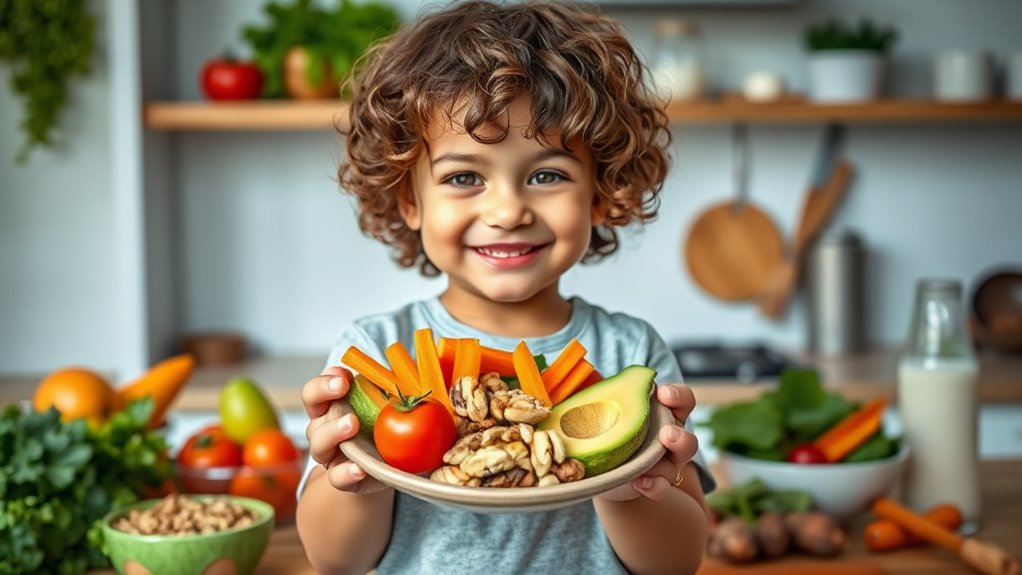
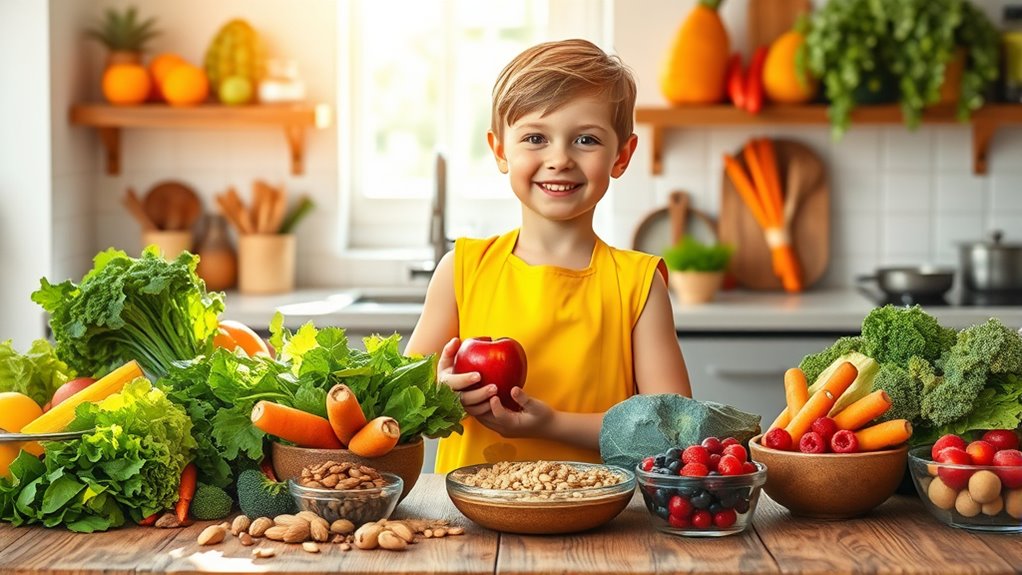
Are you wondering if a vegan diet can meet your child’s nutritional needs? The good news is, with careful planning, it absolutely can. As a parent, you might worry about whether your child gets enough essential nutrients, especially since some nutrients are less abundant in plant-based foods. One key area to focus on is ensuring they receive sufficient plant based proteins, which are indispensable for growth and development. Unlike animal products, which naturally contain protein, plant based proteins come from sources like beans, lentils, tofu, tempeh, nuts, and seeds. Incorporating a variety of these foods guarantees your child gets all the amino acids they need for healthy muscles and tissues. It’s important to include diverse sources regularly because plant proteins are sometimes incomplete, meaning they lack one or more essential amino acids. Combining different plant foods throughout the day, such as rice and beans or hummus with whole grain bread, helps provide a complete protein profile. Additionally, eye patches can be used as a quick and effective way to refresh the eye area, especially when you’re short on time or need an immediate aesthetic boost. Another concern is Vitamin B12, a nutrient essential for nerve function and red blood cell production. Since Vitamin B12 sources are primarily animal-based, you need to find fortified foods or supplements to meet your child’s needs. Fortified plant milks, breakfast cereals, and nutritional yeast are excellent options to incorporate into their diet. Many parents choose to give their children a daily B12 supplement to guarantee consistent intake, especially since deficiency can lead to anemia or neurological issues. Always consult with a healthcare professional to determine the appropriate dosage and form of B12 for your child. Beyond proteins and B12, a well-rounded vegan diet for kids includes plenty of fruits, vegetables, whole grains, and healthy fats, supporting overall growth and immune health. You should aim for nutrient-dense foods that provide vitamins A, C, D, calcium, iron, and omega-3 fatty acids, which are also essential for development. For example, dark leafy greens like spinach and kale supply calcium and iron, while flaxseeds and walnuts are good sources of omega-3s. To make sure your child’s diet is balanced, plan meals that combine these foods regularly and include fortified options as needed.
Frequently Asked Questions
How Can I Ensure My Vegan Child Gets Enough Vitamin B12?
To guarantee your vegan child gets enough vitamin B12, include fortified foods like plant-based milks and cereals daily. You should also consider supplementation strategies, such as B12 drops or tablets, as they provide a reliable source. Regularly check with your pediatrician to monitor your child’s B12 levels and adjust the plan if needed. This way, you support their growth and development while keeping their diet plant-based and nutritious.
Are There Specific Plant-Based Sources of Calcium Suitable for Kids?
Yes, there are plenty of plant-based calcium sources suitable for kids. You should include foods like fortified plant-based milks and vegan dairy alternatives, which are rich in calcium. Additionally, leafy greens like kale and collard greens, as well as fortified orange juice and tofu, provide good calcium levels. Incorporating these into your child’s diet guarantees they get enough calcium for healthy bones and growth.
What Are the Best Protein-Rich Vegan Foods for Children?
Imagine you’re stepping into the future with a tech-savvy kid! You’ll want to include plant-based proteins like lentils, beans, tofu, and tempeh in their meals, as they’re excellent sources of protein. For quick bites, try vegan snack ideas like nut butters, trail mix, or veggie sticks with hummus. These foods help guarantee your child gets enough protein to grow strong and healthy, all while enjoying tasty, plant-powered options.
How Do I Prevent Iron Deficiency in Vegan Kids?
To prevent iron deficiency in vegan kids, make certain they eat plenty of iron-rich foods like spinach, lentils, and fortified cereals. Pair these with vitamin C-rich foods such as oranges or bell peppers to boost iron absorption. Avoid giving them tea or coffee with meals, as tannins can hinder absorption. Regular check-ups and consulting a healthcare professional help you monitor their iron levels and adjust their diet as needed.
When Should I Consider Supplements for My Vegan Child’s Diet?
Imagine your kid’s diet is a carefully crafted puzzle, but sometimes a piece is missing—like vitamin B12 or omega-3s. When you notice persistent fatigue, mood swings, or growth stalls, it’s time to contemplate supplements. Focus on supplement timing to fill dietary gaps. Don’t wait until deficiencies cause trouble; proactive supplementation ensures your vegan child stays vibrant, healthy, and thriving—because no puzzle should be incomplete.
Conclusion
Now that you know the basics, you can confidently give your kids a balanced vegan diet. Remember, with careful planning, kids can meet all their nutritional needs on a plant-based diet. Did you know that plant-based diets can reduce the risk of childhood obesity? By focusing on variety and nutrient-rich foods, you’re setting your kids up for a healthy future. Keep learning and experimenting—your efforts make a lasting difference!