To grow microgreens indoors, start with lightweight, well-draining soil in trays and press it down gently. Place the trays near a south-facing window or use LED grow lights for at least 12-16 hours daily. Keep the soil consistently moist but not waterlogged, and maintain temperatures between 60-75°F. Good airflow and steady conditions help prevent mold and guarantee healthy growth. If you keep up with these steps, you’ll discover more tips to maximize your microgreens’ success.
Key Takeaways
- Use lightweight, well-draining soil mixes like organic potting soil for easy germination.
- Provide 4-6 hours of natural sunlight or supplement with LED grow lights.
- Keep soil consistently moist but avoid overwatering to prevent mold.
- Maintain indoor temperatures between 60-75°F and ensure good airflow.
- Harvest microgreens once tiny shoots are developed, usually within a few weeks.

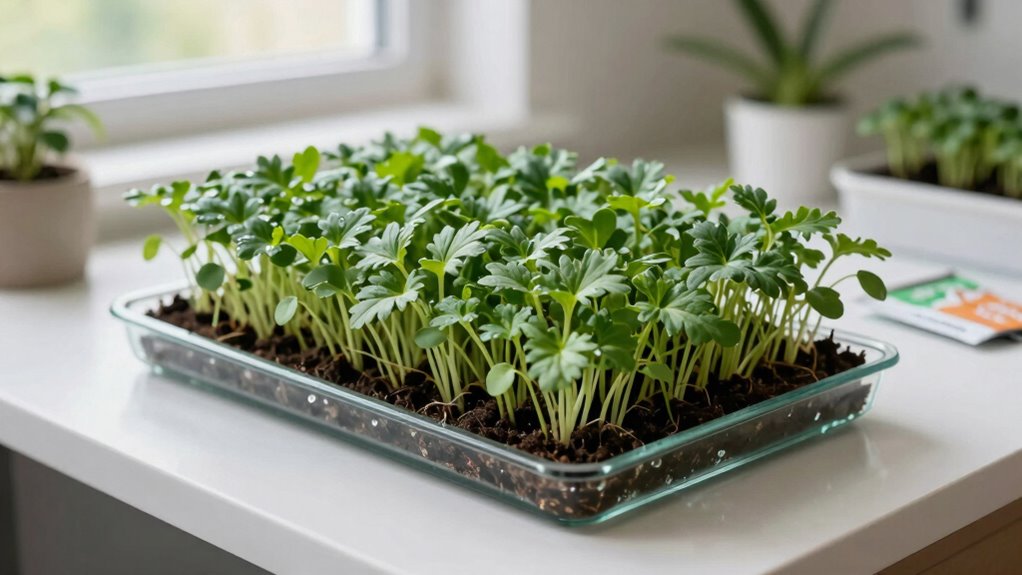
Growing microgreens indoors is an easy and rewarding way to add fresh, nutritious greens to your meals year-round. To get started, you need to focus on proper soil preparation and lighting requirements, which are fundamental to healthy microgreen growth. When preparing your soil, choose a lightweight, well-draining medium like organic potting soil or a seed-starting mix. Avoid heavy garden soil, as it can retain too much moisture and cause mold or root rot. Fill your trays with a few inches of soil, then gently level it out, making certain there are no large clumps or debris that could hinder seed contact or water absorption. You might want to lightly press the soil to create a smooth surface, which helps with even germination and growth. Ensuring your growing environment has adequate airflow can also prevent mold and promote healthy growth.
Use lightweight, well-draining soil like potting mix for healthy microgreen growth.
Lighting is equally vital. Microgreens require ample light to grow quickly and develop vibrant colors. For indoor growing, natural sunlight is ideal, so place your trays near south-facing windows where they can get at least 4 to 6 hours of direct sunlight each day. If sunlight is limited or inconsistent, supplement with grow lights. LED grow lights are energy-efficient and provide the full spectrum of light that microgreens need. Position the lights about 12 to 18 inches above the trays, adjusting as the plants grow taller. Keep the lights on for around 12 to 16 hours daily to mimic natural daylight, which encourages vigorous growth. Properly managing light duration can significantly influence the quality and speed of growth. Additionally, understanding the light spectrum can help optimize plant development indoors.
Watering is another key aspect. Use a spray bottle or a gentle watering can to keep the soil consistently moist but not waterlogged. Overwatering can lead to mold, while underwatering stalls growth. Check the soil daily, especially during warmer months, and water when the top feels dry to the touch. Proper soil preparation combined with adequate lighting helps your microgreens sprout quickly and grow strong. Additionally, maintaining a stable temperature and humidity level can further enhance germination success.
As your microgreens germinate within a few days, you’ll see tiny shoots breaking through the soil. Maintain consistent moisture and lighting, and avoid moving the trays unnecessarily, as this can disrupt germination. Keep an eye on temperature—ideally between 60-75°F—and make certain good airflow to prevent mold and disease. With patience and attention to these details, you’ll soon be harvesting fresh microgreens, packed with nutrients, that can elevate your salads, sandwiches, and smoothies. Growing indoors gives you control over these conditions, making it easier to succeed even if you’re new to gardening.
As an affiliate, we earn on qualifying purchases.
Frequently Asked Questions
How Often Should I Water My Microgreens?
You should water your microgreens daily or when you notice the topsoil feels dry, ensuring consistent moisture levels. Check your microgreens regularly, as watering frequency depends on humidity, temperature, and pot size. Keep the soil moist but not soggy to prevent mold and root rot. Use a gentle spray or watering can to avoid disturbing the delicate seedlings, maintaining ideal moisture levels for healthy growth.
Can I Grow Microgreens Without Soil?
Absolutely, you can grow microgreens without soil by exploring soil alternatives like coconut coir, hemp mats, or even hydroponic systems. Instead of traditional dirt, you just need nutrient solutions to nourish your tiny greens. These methods often lead to cleaner, quicker harvests, and reduce mess. With a bit of care, your microgreens will thrive in these innovative setups, offering fresh greens straight from your space without soil.
What Are Common Pests for Indoor Microgreens?
Common pests for indoor microgreens include aphids, fungus gnats, and spider mites. To keep them at bay, focus on pest prevention by maintaining clean growing conditions and proper watering. If pests appear, use organic treatments like neem oil or insecticidal soap to control them without harming your microgreens. Regularly inspecting your plants helps catch infestations early, ensuring healthy, pest-free microgreens for your indoor garden.
How Long Do Microgreens Typically Take to Harvest?
Microgreens typically take about 7 to 21 days to harvest, depending on the seed selection and growth conditions. You’ll want to monitor their size and coloration, harvesting when they’re about 1-3 inches tall. Make sure they get adequate light, water, and nutrients, tailoring nutrient requirements as they grow. Choosing high-quality seeds suited for microgreens helps guarantee a quick, healthy harvest, giving you fresh greens in just a couple of weeks.
What Lighting Conditions Are Best for Microgreens?
Think of your microgreens as tiny sunflowers seeking their ideal spotlight. They thrive with 12-16 hours of bright, indirect light daily. You can use natural sunlight by placing them near a south-facing window or supplement with artificial lighting, like LED grow lights, if sunlight’s scarce. Keep the light source close but not too close, about 2-4 inches above, to promote healthy, vibrant growth without scorching.
Conclusion
Now that you know how easy it is to grow microgreens indoors, you’re ready to start your own mini garden. Did you know that microgreens can contain up to 40 times more nutrients than mature greens? With just a little space and some simple steps, you can enjoy fresh, nutritious greens year-round. So, go ahead—grab your seeds and tray, and enjoy the rewarding process of growing your own healthy, vibrant microgreens at home.