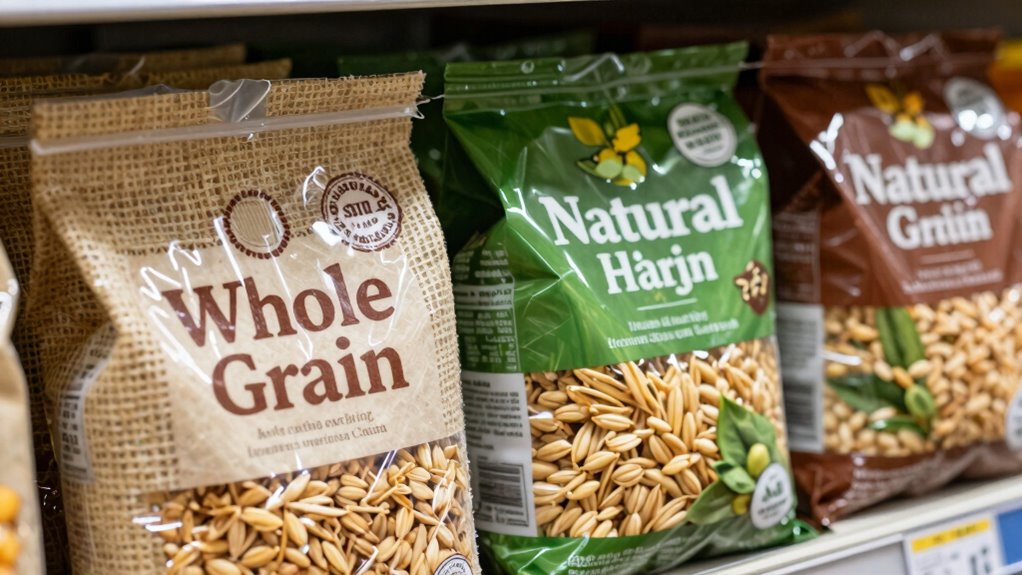
When you see “whole grain,” it means the product retains all parts of the grain, making it healthier with more nutrients, but check the label for added sugars or calories. “Natural” is less regulated and usually suggests minimal processing, but it doesn’t guarantee the absence of preservatives or additives. Learning how to read ingredient lists and understanding labels can help you make smarter choices. Keep exploring to uncover more tips on steering grocery labels effectively.

Get kitchen staples and gadgets delivered free with Prime
- Fast, free delivery on millions of items
- Prime Video, Amazon Music and more included
- Member-only deals all year
Key Takeaways
- “Whole Grain” means the product contains all parts of the grain, offering more nutrients, but check the nutrition label for added sugars or calories.
- “Natural” suggests minimal processing but is not strictly regulated; always review ingredients for additives or preservatives.
- Food additives like preservatives, colorings, and flavor enhancers are common; reading ingredient lists helps identify and avoid unwanted substances.
- Ingredient lists provide transparency, helping consumers identify added preservatives, colorings, or allergens beyond marketing claims.
- Organic certification indicates environmentally friendly and pesticide-free practices, guiding eco-conscious and health-focused shopping choices.
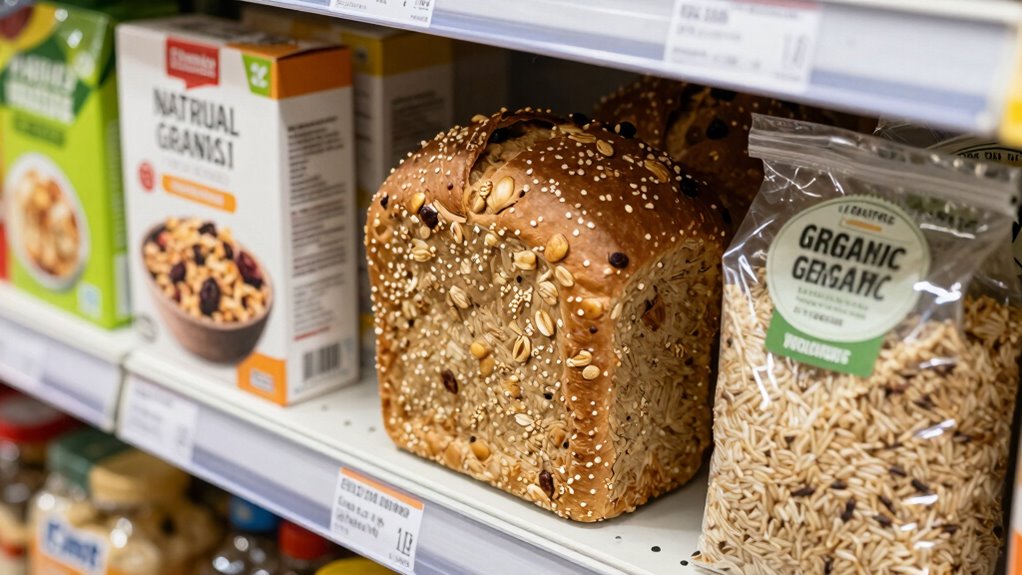
Ever wonder what all those labels on your grocery items mean? It can feel overwhelming trying to decipher the many claims and symbols on packaging. Understanding common labels like “whole grain,” “natural,” and others helps you make more informed choices. Let’s start with “whole grain.” When you see this label, it indicates that the product contains all parts of the grain kernel — the bran, germ, and endosperm. These grains are less processed and retain more nutrients, making them a healthier option. But keep in mind, “whole grain” doesn’t automatically mean it’s low in sugar or calories. Always check the nutrition label to see what else is in the product.
Now, consider the label “natural.” This term is less regulated and can be pretty vague. Generally, it suggests that the product is minimally processed and free from artificial ingredients, but it doesn’t guarantee that it’s free from pesticides, preservatives, or other additives. That’s where understanding food additive meanings becomes important. Food additives are substances added to food to preserve flavor, enhance taste, or improve appearance. Some common additives include preservatives like sodium benzoate, colorings like Tartrazine, and flavor enhancers such as monosodium glutamate (MSG). While many additives are considered safe by regulatory agencies, some people prefer to avoid certain ones due to sensitivities or personal preferences. Learning to read ingredient lists helps you identify these additives and decide whether they fit into your diet. Additionally, paying attention to organic certification labels can help you choose products produced with more environmentally friendly practices.
As an affiliate, we earn on qualifying purchases.
Frequently Asked Questions
Are Organic Labels Always Healthier Than Non-Organic?
Organic labels aren’t always healthier, as organic myths can mislead you into thinking they’re superior in every way. While organic foods often have fewer pesticides and are better for the environment, label accuracy isn’t foolproof—some products may still contain additives or less nutritious ingredients. You should focus on overall diet quality rather than relying solely on organic labels. Ultimately, both organic and non-organic options can be part of a healthy diet.
How Can I Tell if a Product Is Truly Gluten-Free?
Did you know nearly 1 in 133 Americans has celiac disease, making gluten-free labels essential? To tell if a product is truly gluten-free, look for a gluten-free certification on the packaging. Also, watch out for hidden sources of gluten like sauces, seasonings, or processed foods. Always read ingredient lists carefully, and when in doubt, choose products labeled specifically as gluten-free to avoid cross-contamination.
What Does “Low Fat” Really Mean on a Label?
“Low fat” on a label means the product has 3 grams or less of fat per serving, but it doesn’t tell you about ingredient transparency or overall health implications. You should check the ingredient list to see if unhealthy fats are present and consider how the product fits into your diet. Remember, “low fat” doesn’t automatically mean it’s healthier, so look for balanced nutritional information.
Do “Sugar-Free” Products Contain Artificial Sweeteners?
Yes, sugar-free products often contain artificial sweeteners. These are added to replace sugar and provide sweetness without the calories. While they can help reduce sugar intake, some people worry about potential health implications, such as digestive issues or long-term effects. It’s essential to read labels carefully and consider how artificial sweeteners fit into your overall diet, especially if you’re sensitive to these additives or concerned about health impacts.
Are All “Natural” Products Free From Preservatives?
Not all “natural” products are free from preservatives. In fact, ingredient transparency has become essential, but label accuracy varies. Only about 60% of products labeled “natural” truly meet consumer expectations, so you should check ingredient lists carefully. Preservatives might still be present, even if the label suggests otherwise. Always read the ingredients to verify the product aligns with your desire for natural, preservative-free options.
Conclusion
Understanding grocery labels like “whole grain” and “natural” helps you make smarter choices. Think of labels as a map guiding you through the food jungle, revealing what’s truly behind the packaging. While some claims are straightforward, others can be tricky or misleading—kind of like a mirage in a desert. Always check ingredient lists and certifications to verify. With this knowledge, you can confidently navigate the aisles and choose foods that genuinely nourish your body.
Halloween Picks
halloween
As an affiliate, we earn on qualifying purchases.