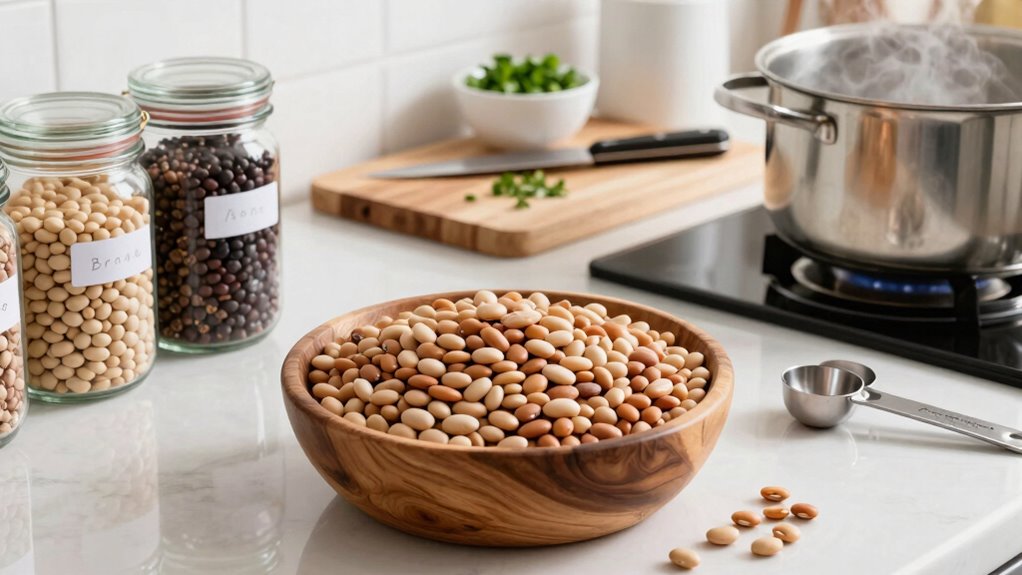

To start batch-cooking beans without guesswork, rinse and soak dried beans overnight or use a quick soak method. Bring them to a boil, then simmer until tender, usually 1-2 hours. Store leftovers in airtight containers in the fridge or freezer for easy meal prep. Reheat with a splash of water or broth. You’ll find this method makes cooking beans simple and reliable—keep going for more tips to perfect your technique.

Get kitchen staples and gadgets delivered free with Prime
- Fast, free delivery on millions of items
- Prime Video, Amazon Music and more included
- Member-only deals all year
Key Takeaways
- Rinse and soak beans overnight or do a quick soak to reduce cooking time and improve digestibility.
- Use a large pot or pressure cooker, ensuring beans are covered with water by a few inches before cooking.
- Simmer beans gently for 1-2 hours, stirring occasionally and adding hot water as needed.
- Cool cooked beans and store in airtight containers, labeling with date for easy batch management.
- Reheat with added water or broth for moisture, and freeze portions for up to three months to save time.
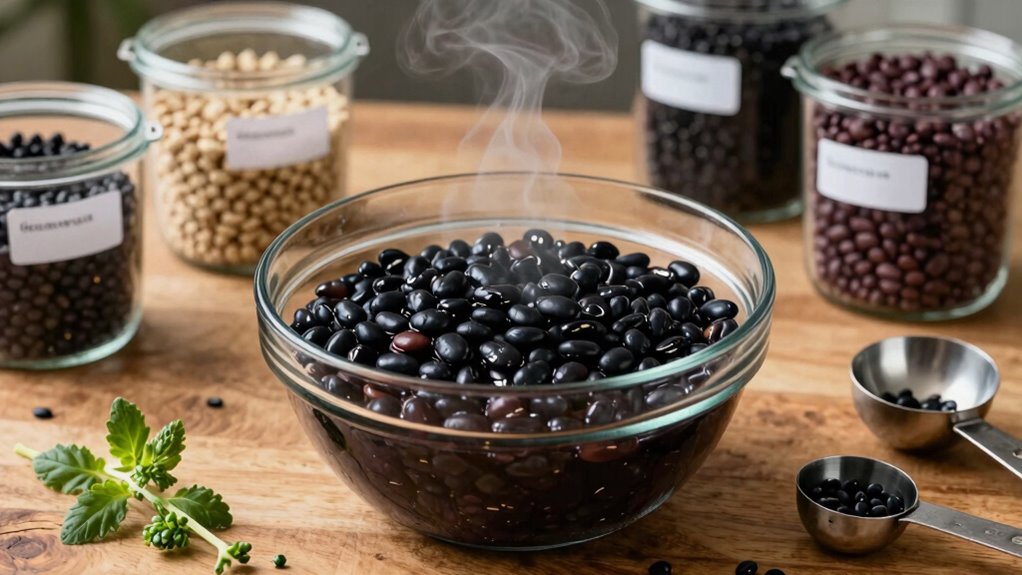
If you’re new to cooking beans, batch-cooking is a game-changer that saves you time and money. Instead of cooking small amounts each time you want beans, you prepare a big batch at once, making meal prep quicker and more efficient. To do this successfully, understanding proper cooking techniques is essential. Start by rinsing your dried beans thoroughly to remove dirt and debris. Soak them overnight or do a quick soak by boiling for a few minutes and letting them sit for an hour. This step reduces cooking time and helps improve digestibility. When it’s time to cook, use a large pot or pressure cooker, adding enough water to cover the beans by a couple of inches. Bring everything to a boil, then reduce the heat to simmer gently, stirring occasionally. Most beans take between 1 to 2 hours to become tender, but cooking times vary depending on the type. Keep an eye on the water level, adding more hot water if needed to prevent sticking or burning. Once cooked, drain the beans and let them cool slightly before portioning. Proper storage tips are crucial for maintaining freshness and flavor. Transfer cooked beans into airtight containers or resealable bags, leaving some space for expansion if freezing. Label each container with the date to keep track of freshness. You can store cooked beans in the refrigerator for up to five days, making them a convenient ingredient for quick meals. For longer storage, freezing is your best option. Divide the beans into smaller portions so you only defrost what you need, and store them in the freezer for up to three months. When reheating, do so over low heat on the stove or in the microwave, adding a splash of water or broth for moisture. Proper storage tips also include keeping beans away from strong-smelling foods to prevent flavor absorption, and always reheating thoroughly to ensure safety. Using the right cooking techniques can make a significant difference in texture and flavor. Incorporating these cooking techniques and storage tips into your routine takes the guesswork out of preparing beans. Once you get the hang of it, you’ll find that batch-cooked beans become a staple in your kitchen, ready to elevate salads, soups, or tacos in minutes. Not only do you save time, but you also cut costs and reduce waste by making the most of every batch. With a little practice, you’ll master the art of batch-cooking beans, turning what once felt like a chore into an effortless and rewarding part of your meal prep routine.
Products Worth Considering
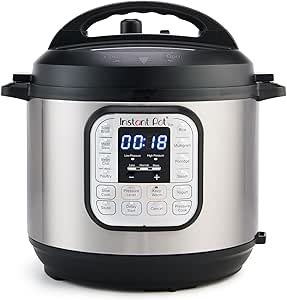
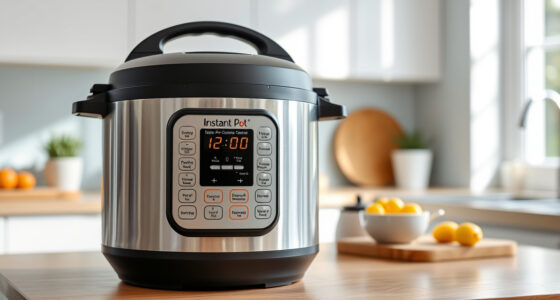
Instant Pot Duo 6-Quart 7-in-1 Electric Pressure Cooker

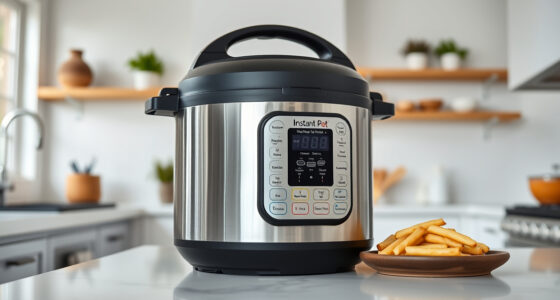
Instant Pot Pro 8-Quart 10-in-1 Electric Pressure Cooker, Black

Instant Pot Pro Plus 6-Quart 10-in-1 Electric Pressure Cooker
As an affiliate, we earn on qualifying purchases.
Frequently Asked Questions
Can I Freeze Cooked Beans for Long-Term Storage?
Yes, you can freeze cooked beans for long-term storage. To do so, let them cool completely, then transfer them into airtight storage containers. This method preserves bean nutrition and prevents freezer burn. Label the containers with the date, so you know how long they’ve been stored. Frozen cooked beans typically last up to six months, making them a convenient and nutritious option for quick meals.
What’s the Best Way to Reheat Batch-Cooked Beans?
To reheat batch-cooked beans, do it gently on the stove or in the microwave to preserve flavor and texture. Add a splash of water or broth to keep them moist and prevent drying out. Stir occasionally for even heating. This method enhances texture and flavor preservation, ensuring your beans stay tasty and tender. Avoid high heat, which can cause them to become mushy or lose their delicate flavor.
Are Canned Beans Suitable for Batch-Cooking?
Canned beans are suitable for batch-cooking, but keep in mind they often have shorter cooking times and less flexibility for flavor variations. You can incorporate spices, herbs, or vegetables during reheating to customize the taste. Since canned beans are pre-cooked, you mainly need to heat them thoroughly. Adjust cooking times accordingly, and use your preferred seasonings to enhance their flavor and make them suit your recipes better.
How Do I Prevent Beans From Becoming Mushy?
“Prevention is better than cure,” they say, and that’s true for beans too. To prevent beans from becoming mushy, focus on proper cooking timing and texture preservation. Don’t overcook them—start checking around the recommended time, and remove them from heat once tender. Using gentle simmering helps maintain their shape and firmness. Drain excess liquid promptly, and avoid overstirring, which can break down beans and spoil their texture.
Can I Cook Different Types of Beans Together?
Yes, you can cook different types of beans together, but you need to take into account flavor combinations and cooking techniques. Some beans, like kidney and black beans, cook at similar rates, making them suitable for mixing. To avoid uneven cooking, soak beans separately if their cooking times differ, then combine them toward the end. Experiment with spices and herbs to enhance flavor, creating delicious, well-balanced dishes.
Conclusion
Now that you’ve uncovered the secrets of batch-cooking beans, you’ll find it’s like having a pantry full of tiny treasures ready to turn any meal into a hearty feast. With just a little prep, you can save time, money, and stress—turning your kitchen into a well-oiled machine of delicious possibilities. So, embrace these tips and let your bean adventures sprout, making every dish a warm hug on a busy day. Happy cooking!