
Growing ancient grains can boost your sustainable farming efforts by increasing crop diversity and strengthening soil health. These grains, like quinoa and millet, often require fewer chemical inputs and are more adaptable to changing climates. They help create resilient farming systems that reduce environmental impact and promote ecological balance. Incorporating ancient grains supports long-term food security while encouraging eco-friendly practices—discover more ways to make your agriculture more sustainable as you explore further.
Key Takeaways
- Ancient grains increase crop diversity, enhancing agricultural resilience and reducing reliance on monocultures.
- They improve soil health through deep root systems, boosting organic matter and soil fertility.
- Many ancient grains are hardy, adaptable, and require fewer chemical inputs, supporting eco-friendly farming.
- Growing these grains aligns with sustainable agriculture by promoting biodiversity and ecological balance.
- Their cultivation helps mitigate risks from pests, diseases, and climate fluctuations, ensuring long-term food security.
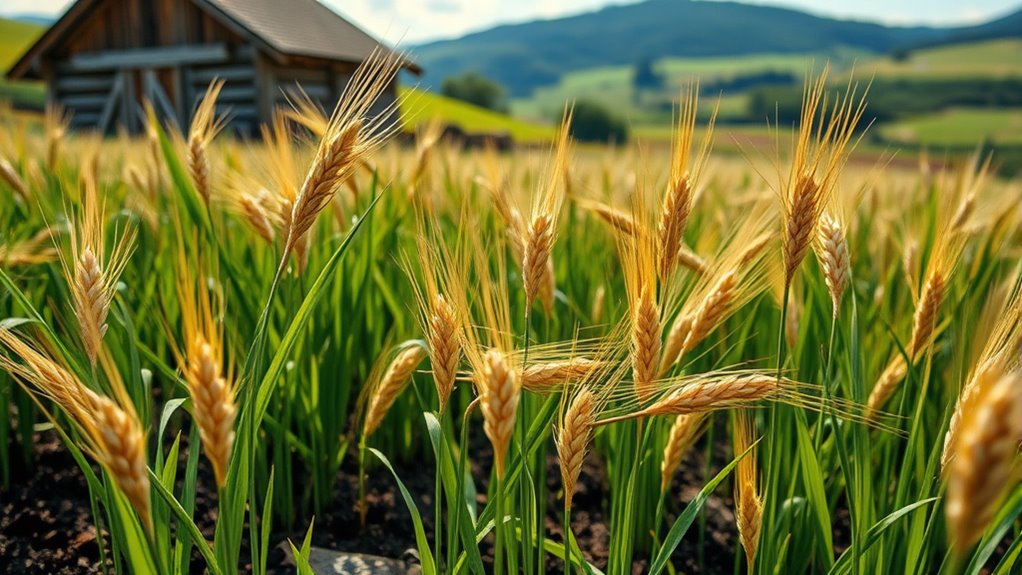
Ancient grains are gaining popularity as a sustainable alternative to modern staples, offering benefits that extend beyond nutrition. One of the key advantages is their ability to promote greater grain diversity in agriculture. Unlike heavily relied-upon crops like wheat, corn, and rice, ancient grains such as quinoa, millet, amaranth, and spelt provide a wider array of plant species. This diversity isn’t just about flavor or culinary variety; it plays a *crucial* role in creating resilient farming systems. When you incorporate a broader range of grains into your cultivation practices, you reduce dependency on monocultures that are vulnerable to pests, diseases, and climate fluctuations. This diversification helps stabilize food production and supports local ecosystems, making agriculture more sustainable in the long run. Incorporating ancient grains also aligns with sustainable agriculture principles by encouraging environmentally friendly practices and biodiversity.
Another significant benefit of growing ancient grains is their positive impact on soil health. These grains often have deeper root systems compared to modern crops, which allows them to access nutrients from lower soil layers. As a result, they can improve soil structure and increase organic matter content, fostering a healthier environment for future planting cycles. In addition, many ancient grains are hardy and adaptable to less-than-ideal growing conditions, meaning they require fewer chemical inputs like fertilizers and pesticides. This reduced reliance on external inputs not only diminishes environmental pollution but also maintains the natural balance of soil microbiota, which is *vital* for nutrient cycling and soil fertility.
Frequently Asked Questions
How Do Ancient Grains Impact Local Biodiversity?
You impact local biodiversity by planting ancient grains, which help preserve genetic diversity. These grains often thrive in diverse habitats, supporting habitat preservation and encouraging varied ecosystems. By choosing ancient grains, you reduce reliance on monocultures, allowing native plants and animals to flourish. This sustainable approach promotes a balanced environment, ensuring that local biodiversity remains resilient and vibrant for future generations.
Are Ancient Grains More Affordable Than Modern Grains?
Ancient grains are generally more expensive than modern grains due to limited market accessibility and higher production costs. You might find that their cost comparison favors modern grains, which are produced on a larger scale and are more readily available. If you’re budget-conscious, sticking with modern grains can be more affordable. However, if you’re interested in nutritional benefits and unique flavors, investing in ancient grains could be worth the extra cost.
What Are the Best Ancient Grains for Gluten-Free Diets?
Imagine you’re searching for gluten-free options, and quinoa immediately comes to mind as an excellent choice. Among ancient grain varieties, quinoa, millet, and amaranth are popular for gluten-free diets. These grains are naturally gluten-free, offering nutritious alternatives for those with gluten sensitivities. You’ll find that incorporating these ancient grains into your meals provides diverse, wholesome options, making your gluten-free diet both tasty and nutritious.
How Do Ancient Grains Influence Soil Health Long-Term?
Ancient grains positively influence soil health long-term by enhancing soil enrichment and promoting sustainable practices like crop rotation. When you grow these grains, they often have diverse root systems that improve soil structure and nutrient levels. By rotating ancient grains with other crops, you reduce soil depletion and break pest cycles, maintaining healthy soil for future planting. This approach supports long-term agricultural sustainability and helps preserve the land’s productivity.
Can Ancient Grains Replace All Modern Staple Crops Sustainably?
You can’t replace all modern staple crops sustainably with ancient grains because doing so could reduce crop diversity and weaken farming resilience. While ancient grains offer nutritional and environmental benefits, relying solely on them might limit food security and adaptability. To promote sustainable agriculture, you should integrate ancient grains alongside modern crops, fostering crop diversity and strengthening resilience against pests, climate change, and soil degradation.
Conclusion
By choosing ancient grains, you’re planting seeds for a sustainable future, much like nurturing a delicate garden that blooms over time. These grains are resilient, eco-friendly, and nourishing, helping reduce environmental impact while supporting local farmers. When you opt for them, you’re not just making a healthy choice—you’re helping build a world where agriculture thrives in harmony with nature. Like a steady stream carving a canyon, your actions can shape a brighter, more sustainable tomorrow.