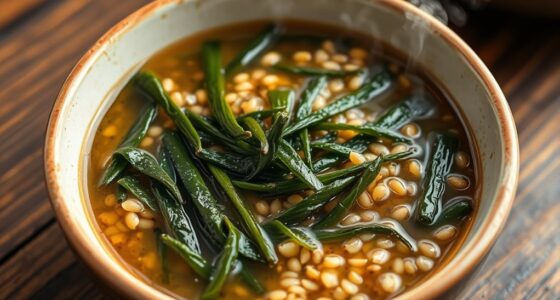
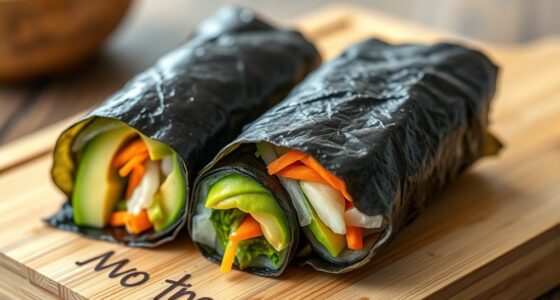
To make a delicious ancient grain pilaf with roasted vegetables, start by rinsing and toasting grains like quinoa, farro, or millet to boost their nutty flavor. Roast colorful vegetables until caramelized, then fold them into the cooked grains for vibrant taste and texture. Use proper water ratios and simmer gently to keep the grains fluffy and tender. If you keep exploring, you’ll discover tips to perfect this wholesome, flavorful dish.
Key Takeaways
- Rinse grains like quinoa, farro, or millet to remove excess starch and prevent stickiness before cooking.
- Toast grains in oil to develop a nutty flavor, then simmer in broth until tender but still chewy or fluffy.
- Roast vegetables such as carrots, bell peppers, or zucchini with olive oil and herbs until caramelized for added flavor.
- Fold roasted vegetables into cooked grains after fluffing to combine flavors while maintaining texture.
- Serve warm, garnished with herbs or nuts, for a nutritious, colorful, and flavorful ancient grain pilaf.

Ancient grain pilaf offers a wholesome and flavorful alternative to traditional rice dishes, combining the nutty taste and chewy texture of grains like quinoa, farro, and millet. These grains aren’t just delicious—they’re packed with grain nutrition, offering a rich source of fiber, protein, vitamins, and minerals that support your overall health. When preparing your pilaf, understanding the right cooking techniques is essential to maximize flavor and texture. Properly rinsing the grains removes excess surface starch, preventing them from becoming overly sticky, while using the correct water-to-grain ratio ensures each bite is perfectly tender. For instance, quinoa needs a quick rinse and a simmer of about 15 minutes, whereas farro benefits from soaking beforehand and longer cooking times to achieve the ideal chewy consistency. Millet, on the other hand, cooks quickly and maintains a fluffy texture, making it a versatile choice for your pilaf.
To start, you’ll want to toast your grains slightly in a hot pan with some oil. This step enhances their nutty flavor and adds depth to your dish. After toasting, add your liquid—be it broth or water—and bring it to a gentle simmer. Cover the pan and let the grains cook undisturbed until they absorb the liquid and reach your desired texture. This controlled approach ensures the grains retain their integrity and don’t become mushy, preserving their inherent nutritional benefits. A key aspect of cooking techniques here is timing: overcooking can diminish the grain’s nutritional value and result in a less appealing texture, while undercooking leaves them hard and unappetizing. Incorporating whole grains into your diet can contribute significantly to your daily fiber intake and overall wellness.
As your grains cook, you can prepare roasted vegetables—think carrots, bell peppers, zucchini, or cherry tomatoes—that will add sweetness and vibrant color to your pilaf. Toss the vegetables with olive oil, salt, and your favorite herbs, then roast them until tender and slightly caramelized. Once the grains are ready, fluff them with a fork and fold in the roasted vegetables. This not only boosts the flavor but also boosts the health benefits of your meal, thanks to the vitamins and antioxidants from the roasted produce.
Frequently Asked Questions
Can I Substitute Different Ancient Grains in the Recipe?
Yes, you can substitute different grain types in the recipe. When doing so, keep substitution tips in mind: cook each grain according to its specific instructions, as cooking times and liquid ratios vary. For example, swap out farro for quinoa or bulgur, but adjust cooking times accordingly. Experimenting with different ancient grains adds variety and nutrition, so feel free to try your favorites or what you have on hand.
What Are Some Suitable Alternative Vegetables for Roasting?
You can try sweet potatoes, zucchini, or Brussels sprouts as alternative vegetables for roasting. These choices complement vegetable flavor combinations well and hold up nicely with roasting techniques. To maximize flavor, toss them with olive oil, salt, and your favorite herbs before roasting. Keep an eye on their cooking times, and remember to stir occasionally for even roasting. This way, your dish remains vibrant and delicious.
How Long Does the Dish Stay Fresh in the Refrigerator?
Think of your dish as a treasure chest; it stays fresh in the fridge for 3 to 4 days. To keep it tasting its best, store it in an airtight container. When reheating, do so gently in the microwave or on the stove, stirring occasionally to prevent uneven heating. This way, you preserve the flavors and textures, ensuring your meal remains delicious for every bite.
Is This Dish Suitable for Gluten-Free Diets?
Yes, this dish is suitable for gluten-free diets if you use gluten-free ingredients like certified gluten-free grains and check for cross-contamination concerns. Be sure to use fresh, uncontaminated vegetables and verify all seasonings or sauces are gluten-free. To avoid cross-contamination, prepare it separately from gluten-containing foods and clean your utensils thoroughly. This way, you can enjoy a safe, delicious gluten-free meal.
Can I Prepare the Pilaf Ahead of Time?
You can definitely prepare the pilaf ahead of time, turning meal prep into a breeze. To keep it tasting fresh, follow storage guidelines by letting it cool completely before transferring it to an airtight container. Reheat gently to preserve texture and flavor. Think of it as planting seeds for a stress-free meal; with proper planning, your dish will be just as delicious when served later as when freshly made.
Conclusion
By choosing this ancient grain pilaf with roasted vegetables, you’re not just preparing a meal—you’re creating a symphony of flavors that could rival the most exquisite culinary masterpieces. Every bite offers a nourishing burst of history and significance, transforming simple ingredients into something truly extraordinary. Once you taste it, you’ll realize this dish has the power to elevate your entire dining experience to legendary status. Enjoy every spoonful of this timeless, wholesome delight!