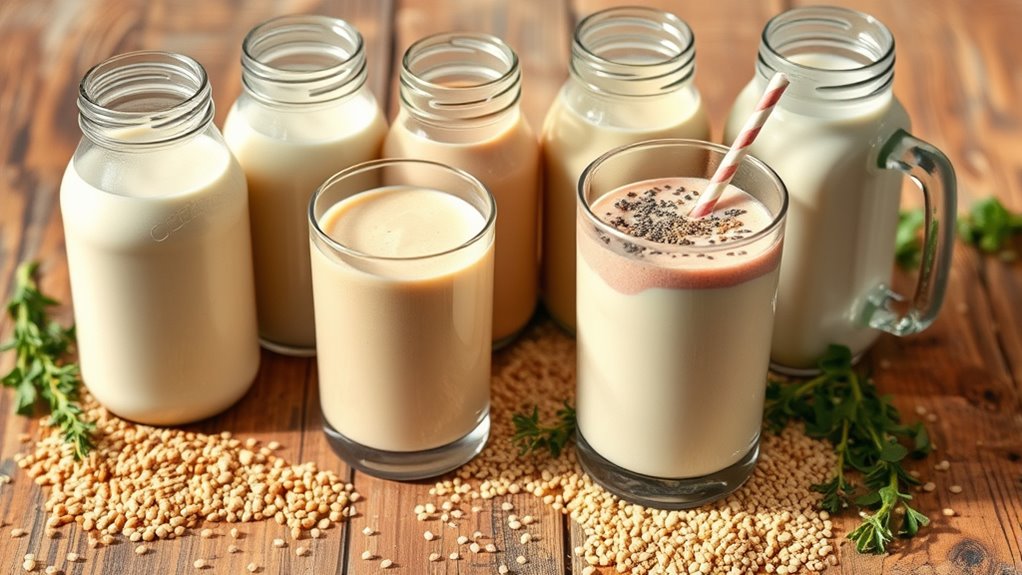

Ancient grain milks and smoothies are a nutritious and flavorful alternative to traditional dairy. You can blend nutrient-rich grains like millet, amaranth, or teff into plant-based milks, which are naturally gluten-free and often fermented for extra probiotics. Adding cooked or soaked grains boosts fiber and protein, creating thick, satisfying drinks. If you explore further, you’ll discover how fermentation and flavor customization make these beverages both healthful and delicious.
Key Takeaways
- Ancient grains like millet, amaranth, and teff are naturally gluten-free and nutrient-dense, making them ideal for milk and smoothie bases.
- Fermenting ancient grains before blending enhances flavor, boosts probiotics, and improves digestibility of the drinks.
- Grain milks can be customized with natural flavors, sweeteners, and added ingredients for personalized taste and nutritional benefits.
- Incorporating cooked or soaked grains into smoothies increases fiber, protein, and mineral content for a wholesome boost.
- Using fermented or soaked ancient grains creates creamy, flavorful, and gut-friendly smoothies rich in antioxidants and nutrients.

Ancient grains have been nourishing people for thousands of years, and today, they’re making a comeback in the form of delicious milk alternatives and smoothies. These grains, like millet, amaranth, and teff, are packed with nutrients and offer a unique flavor profile that elevates your beverage experience. One of the key benefits of using ancient grains in your drinks is the fermentation process. Fermentation not only enhances the digestibility of these grains but also boosts their nutritional value by increasing beneficial probiotics. When you ferment ancient grains to make milk or add them to smoothies, you’re supporting your gut health and improving nutrient absorption. Plus, fermentation can develop complex flavors that add depth to your drinks, making them more satisfying and enjoyable.
Another significant advantage of incorporating ancient grains into your milk and smoothies is that they’re naturally gluten-free options. If you’re sensitive to gluten or have celiac disease, these grains provide a safe and nutritious alternative to traditional wheat-based products. You can blend amaranth or millet into a creamy milk or add teff to your smoothies without worrying about gluten contamination. This makes ancient grain milks an excellent choice for anyone seeking to diversify their diet or explore new plant-based options. They also tend to be less processed than commercial dairy or soy-based alternatives, giving you a cleaner, more natural product.
Making your own ancient grain milk is straightforward and customizable. Soaking and blending grains like millet or teff with water creates a smooth, nutty-flavored milk that can be sweetened or flavored as you like. Fermentation can be incorporated by allowing the grains to ferment slightly before blending, which can improve digestibility and develop a tangy, probiotic-rich flavor. In smoothies, adding cooked or soaked grains can give you a thicker texture and an added nutritional punch, including fiber, protein, and essential minerals. You might also experiment with fermenting grains beforehand to bring out even more benefits, or simply enjoy them as a wholesome addition for a nutrient-dense boost.
Frequently Asked Questions
Are Ancient Grain Milks Suitable for Babies?
Ancient grain milks aren’t recommended for babies, especially under one year old. Their infant digestion isn’t fully developed, making it harder to process these drinks. Plus, they may carry allergen risks, like gluten or nut traces, which could cause reactions. It’s best to stick with breast milk or formula for your baby’s first year and consult your pediatrician before introducing any new foods or drinks.
How Long Do Homemade Ancient Grain Milks Last?
Did you know homemade grain milks can last up to five days? You should always prioritize proper preservation by storing them in airtight containers in the refrigerator. For best quality and safety, consume your homemade ancient grain milk within this time frame. Beyond five days, bacteria can develop, making it unsafe to drink. Always smell and check for any signs of spoilage before use.
Can Ancient Grain Smoothies Replace a Full Meal?
Ancient grain smoothies can serve as a meal replacement if they provide a good nutritional balance. You should include protein, healthy fats, and fiber to keep you full and energized. While they work well for a quick, nutritious option, they might not fully replace a balanced meal every time. Listen to your body’s needs and supplement with solid foods when necessary for ideal health and satisfaction.
Are There Any Allergens Common to Ancient Grain Milks?
About 1 in 10 people with nut allergies might react to ancient grain milks, so cross reactivity concerns are valid. Common allergens include gluten, soy, and nuts, which can cause reactions. Always check allergen labeling requirements carefully, especially if you have sensitivities. If you’re unsure, consult an allergist before trying new grain milk options to avoid unexpected allergic responses.
Do Ancient Grain Milks Contain Added Sugars or Preservatives?
Ancient grain milks typically don’t contain added sugars or preservatives, but it’s essential to verify labels. Many brands keep their products free from added sugars, focusing on natural ingredients, while some varieties might include preservatives to extend shelf life. Always read the packaging to guarantee you’re choosing a product that aligns with your dietary preferences, especially if you prefer minimally processed options.
Conclusion
You might think ancient grain milks and smoothies are just trendy, but they actually pack incredible health benefits backed by history. Some researchers believe consuming these grains can boost your energy and improve digestion, giving you a natural edge. So, next time you blend up a smoothie, consider adding these nutrient-rich grains—your body might thank you for it. Ancient grains aren’t just old; they could be the key to modern wellness.