
🔍 Read the full analysis: Vin Santo And Cantucci: Tuscany's Dip-and-Sip Dessert Ritual on Mad Tasting

Get kitchen staples and gadgets delivered free with Prime
- Fast, free delivery on millions of items
- Prime Video, Amazon Music and more included
- Member-only deals all year
TL;DR
Vin Santo, a Tuscan dessert wine traditionally made from dried grapes, is often served with cantucci, crisp twice-baked almond biscuits. A brief dip is customary, but the pairing is flexible: sweetness and aromas vary by bottle, and the biscuits can also be eaten alongside the wine.
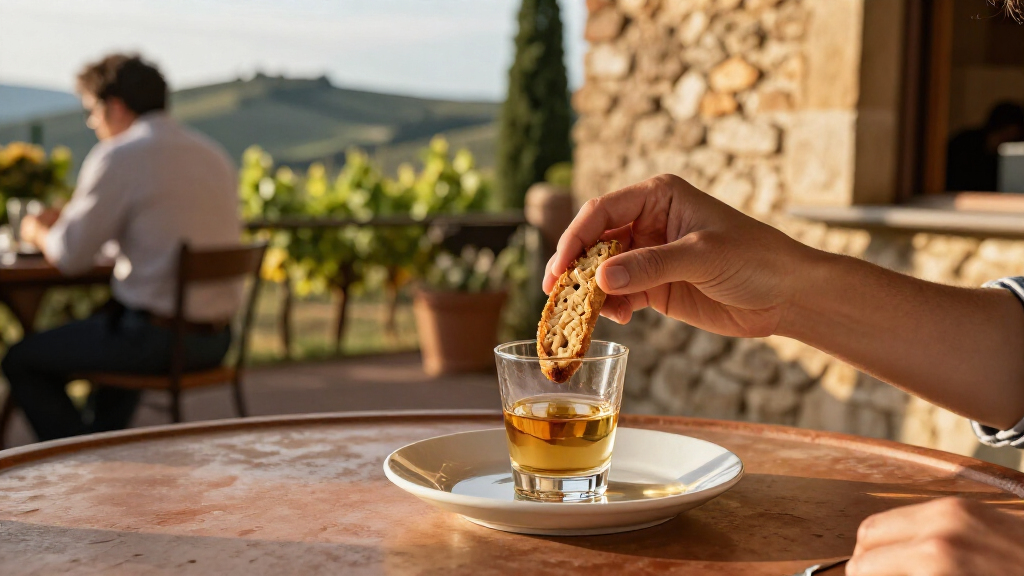
Vin Santo and cantucci remain a familiar Tuscan way to finish a meal: the dessert wine is poured in a modest serving, and a crisp almond biscuit may be dipped briefly before it is eaten. The custom is an invitation rather than a strict rule, and the pairing’s character depends on a wine whose sweetness and aromas can differ from producer to producer.
Vin Santo is traditionally made with grapes dried after harvest, a process that concentrates their sugars and shifts their flavors toward dried fruit. The wine then matures slowly, often in small wooden casks. Trebbiano and Malvasia are among the grapes traditionally used, according to the source material. The finished wine may suggest raisins, honey, nuts or spice, but no single flavor profile applies to every bottle.
The biscuits are known as cantucci and are baked twice. Dough is shaped into logs and baked, then sliced and baked again, leaving the pieces dry and firm. That texture makes a short dip practical: the outside softens while the center stays firmer. Leave a biscuit in the wine too long, however, and it can become soggy or break apart.
Serving advice is uncomplicated: pour a small amount, serve the wine cool, and taste it before deciding whether to dip. A lighter wine may be overwhelmed by a long soak; a richer one may stand up more readily to the toasted almonds. Eating the biscuit alongside the wine is also a reasonable choice. The source does not prescribe a single serving temperature or exact pour size.
A Tuscan after-dinner tradition
Vin Santo & Cantucci
A modest pour of dessert wine, a crisp almond biscuit, and a quick dip if you like. This familiar Tuscan pairing is a flexible way to linger at the end of a meal.
01 / Two traditions meet
What’s in the pairing?
Each element brings a distinct texture and character. Together, they make a simple, unhurried finish to a shared meal.
Made from dried grapes
Grapes traditionally dry after harvest, concentrating sugars and flavor. Vin Santo then matures slowly, often in small wooden casks.
Baked twice for crunch
Cantucci dough is baked in logs, sliced, then baked again. The result is dry and firm, with toasted almonds in many versions.
A choice, not a rule
A short dip softens the outside while the center stays firmer. Or eat the biscuit alongside the wine and enjoy each on its own.
02 / From grape to glass
How Vin Santo gets its character
Traditional methods shape the wine, but producer choices and cellar conditions mean no two bottles are guaranteed to taste alike.
Grapes dry
As water evaporates, sugars and flavors become more concentrated. Trebbiano and Malvasia are among the traditional grapes.
Wine rests in casks
Small wooden casks and cellar conditions can contribute further aromas. Attic spaces and seasonal shifts are part of some traditions.
Styles vary
Raisin, honey, nuts, or spice may appear. Origin names add context, but producer and aging choices shape the result.
03 / A note on names and origins
Tradition offers clues, not guarantees.
Appellations such as Vin Santo del Chianti and Vin Santo del Chianti Classico identify origin context. They do not make every wine taste the same. The name Vin Santo means “holy wine”; accounts linking it to religious settings vary and remain tradition rather than settled history.
Sweetness, weight & aroma
Producer, origin, maturation, and the bottle itself all influence the style. Ask a wine seller or taste before pairing.
No single serving standard
There is no required dipping time, exact pour size, or definitive serving temperature in the source material.
04 / A practical guide
Find your own balance
Use these cues as a starting point. The pairing is at its best when the wine’s style and your preferred texture lead the way.
Traceability / The tasting path
From first sip to final bite
A simple sequence keeps the ritual relaxed and lets guests choose how they want to enjoy the pairing.
05 / Key questions
Quick answers
The essentials for choosing a bottle and serving this classic Tuscan dessert pairing.
What is Vin Santo?
A Tuscan dessert wine traditionally made from dried grapes and slowly matured in small wooden casks. Its style varies by producer and origin.
What are cantucci?
Crisp, twice-baked biscuits commonly made with almonds. Their dry texture makes them suitable for a brief dip.
Should cantucci be dipped?
A quick dip is familiar, but optional. Eating the biscuit alongside the wine works just as well; a long soak can make it soggy.
Does every bottle taste the same?
No. Sweetness, weight, and aroma vary. Serve cool in a modest pour, taste first, and adjust to the bottle and your preference.
A Flexible Finish to the Meal
The pairing shows how a small serving custom can bring together local wine traditions and a simple baked food without requiring elaborate preparation. It is suited to the end of a shared meal, where the slower pace and brief dip can extend conversation rather than introduce another formal course.
For readers choosing a bottle, the main practical point is that Vin Santo is not a uniform style. A named appellation offers information about origin, but the producer and aging choices also shape sweetness, weight and aroma. Asking a wine seller how a particular bottle tastes—or sampling it before dipping—can be more useful than assuming the name alone predicts its flavor.
As an affiliate, we earn on qualifying purchases.
How the Wine Gets Its Character
The wine’s concentrated profile begins with drying the grapes after harvest. As water evaporates, sugars and flavors become more concentrated. Slow maturation in small casks can contribute further aromas, though the result depends on the cask, cellar conditions and producer. The source describes attic spaces and seasonal temperature changes as part of traditional maturation, not as a guarantee about every bottle.
Appellations such as Vin Santo del Chianti and Vin Santo del Chianti Classico provide origin context, but they do not make all wines taste alike. The name Vin Santo means “holy wine.” Stories link the term to religious settings, but the source says accounts of its origin vary, so those explanations are tradition rather than settled history.
What Varies From Bottle to Bottle
The source offers no new announcement, dated event or independent tasting data; it is a description of a food tradition. Exact flavor, sweetness and weight vary by bottle, and the source does not establish one required recipe, serving temperature or dipping time. It also does not substantiate a definitive historical account of why the wine is called Vin Santo.
These limits matter when applying the advice: the brief dip is a practical suggestion, not a formal standard. A bottle’s label can narrow its origin, but the producer’s choices and the drinker’s taste determine how well it works with the biscuits.
Taste Before You Dip
There is no reported upcoming decision or scheduled milestone. For anyone serving the pairing, the next step is simply to taste the wine first, pour a modest amount, and decide whether a quick dip or a bite alongside the glass suits that bottle. Keep the biscuit in the wine only briefly if you want it to hold its shape, and let guests choose their preferred approach.
Key Questions
What is Vin Santo?
Vin Santo is a Tuscan dessert wine traditionally made from dried grapes and matured slowly in small wooden casks. Its sweetness and aromas vary by producer and appellation.
What are cantucci?
Cantucci are crisp, twice-baked biscuits commonly made with almonds. Their dry texture makes them suitable for a brief dip in wine.
Should cantucci be dipped in Vin Santo?
A quick dip is a familiar way to eat them, but it is not a rule. The biscuits can also be eaten beside the wine; a long soak can make them soggy or cause them to crumble.
Does every Vin Santo taste the same?
No. Sweetness, weight and aroma vary with the wine’s origin, producer and maturation. A designation offers context but does not guarantee an identical flavor.
How should Vin Santo be served?
The source recommends serving it cool and in a modest pour, but gives no specific temperature or measure. Taste the bottle first and adjust the pairing to its style.
Source: Mad Tasting
Halloween Picks
halloween
As an affiliate, we earn on qualifying purchases.