
TL;DR

Get kitchen staples and gadgets delivered free — and shop member deals
- Fast, free delivery on millions of items
- Access to Prime Big Deal Days deals on October 6–7
- Prime Video, Amazon Music and more included
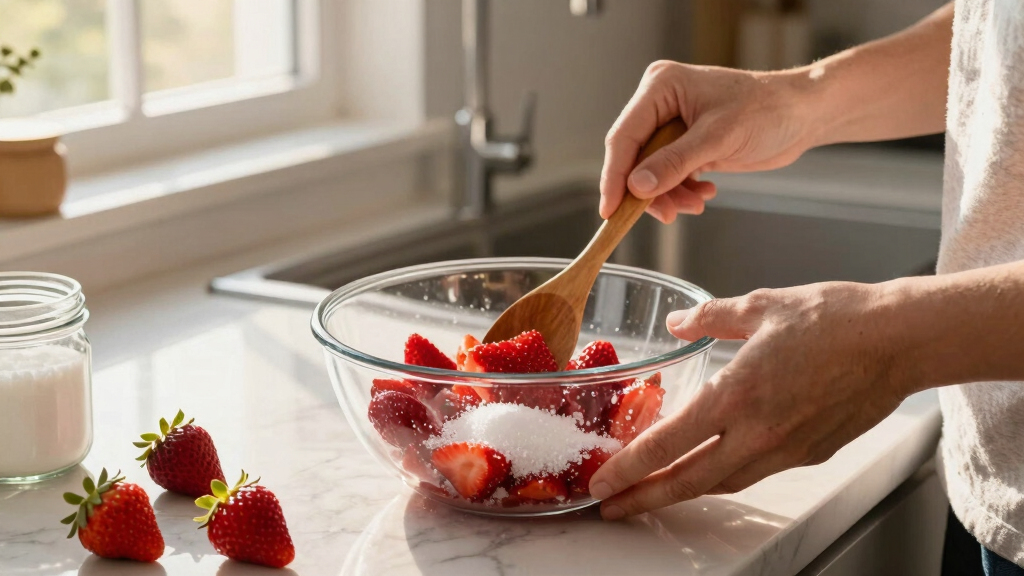
Maceration involves soaking strawberries in sugar to soften and intensify their flavor without heat. This method is quick, versatile, and enhances various desserts. The process is simple but requires some downtime for best results.
Strawberries can be easily enhanced by maceration, a simple process that involves soaking them in sugar to soften and intensify their natural flavor, making peak-season berries even more delicious for a variety of desserts and toppings.
According to Bon Appétit, maceration is a technique where produce, especially fruit like strawberries, sits in a flavorful substance such as sugar, vinegar, or juice. For strawberries, the process draws moisture out, creating a glossy syrup and softening the berries. The recommended ingredients are 1 pound of strawberries and 1 tablespoon of sugar, which should be combined after washing and hulling the berries. The mixture is then refrigerated for at least 30 minutes, with longer times resulting in juicier, more concentrated flavors.
Strawberries can be halved, sliced, or left whole depending on their intended use. The timing varies: 30 minutes yields lightly softened berries, 1-2 hours produces juicier berries with more syrup, and overnight results in very soft fruit with plenty of liquid. Frozen strawberries can also be macerated, although they tend to release more liquid and become softer, making them suitable for toppings like yogurt or smoothies.
Why It Matters
This technique is significant because it enhances the flavor and texture of strawberries without cooking, preserving their fresh taste while adding sweetness and softness. It’s a quick way to elevate simple berries into a versatile ingredient for desserts, breakfast dishes, and more. Understanding how to properly macerate strawberries allows cooks to maximize peak-season produce and create more flavorful dishes.
As an affiliate, we earn on qualifying purchases.
Background
Maceration is a traditional culinary method used to soften and flavor fruit, especially popular during peak strawberry season. The technique has gained popularity as a straightforward way to prepare berries for immediate use or as a component in larger recipes. Previously, maceration was often associated with more complex preparations, but modern recipes emphasize its simplicity and effectiveness, as highlighted by Bon Appétit’s recent guidance in July 2023.
“Maceration is a process in which produce (usually fruit) sits in a flavorful substance such as sugar, vinegar, or juice. The process tenderizes the ingredient and intensifies its natural flavor.”
— Bon Appétit
“Depending on how long they sit, the strawberries can remain slightly firm or become soft and jammy.”
— Bon Appétit
What Remains Unclear
It is still unclear how different types of sugar or additional flavorings might alter the maceration process significantly, and exact timing may vary based on berry ripeness and size. The optimal duration for specific uses also remains somewhat flexible, with personal preference playing a role.
What’s Next
Next steps include experimenting with flavor additions like citrus zest or spices, and integrating macerated strawberries into various recipes. Future guidance may explore variations for different fruits and preferred textures, as well as storage tips for leftovers.
Key Questions
How long should I macerate strawberries for best flavor?
The ideal time depends on desired texture: 30 minutes for lightly softened berries, 1-2 hours for juicier, more concentrated flavor, and overnight for very soft, syrupy berries.
Can I use frozen strawberries for maceration?
Yes, frozen strawberries can be macerated. They tend to release more liquid and become softer, making them suitable for toppings or smoothies after thawing for a few hours in the refrigerator.
What other fruits can I macerate using this method?
Blackberries, raspberries, peaches, plums, cherries, and melons like cantaloupe and honeydew are all suitable for maceration, with timing adjusted based on fruit delicacy.
Can I use sweeteners other than sugar?
Yes, honey, maple syrup, or brown sugar can be used, each adding its own flavor profile to the maceration process.
Source: Bon Appétit
Halloween Picks
halloween
As an affiliate, we earn on qualifying purchases.