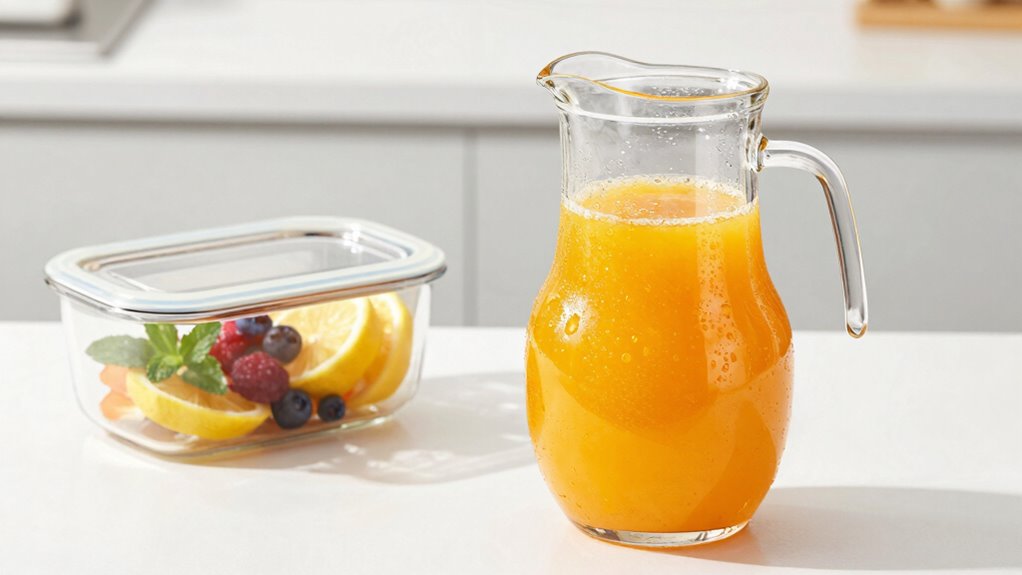
To store fresh juice safely, use airtight, non-reactive containers like sterilized glass jars or food-grade BPA-free plastic bottles. Keep the juice refrigerated at or below 40°F (4°C), filling containers to the top to limit air exposure. Label with the storage date and check for spoilage signs like off smells or mold. Proper handling and storage preserve flavor and safety, but there’s more you can do—keep exploring for additional tips.

Get kitchen staples and gadgets delivered free with Prime
- Fast, free delivery on millions of items
- Prime Video, Amazon Music and more included
- Member-only deals all year
Key Takeaways
- Use airtight, non-reactive containers like glass jars, and thoroughly clean and sterilize them before storing juice.
- Keep juice refrigerated at or below 40°F (4°C), avoiding the fridge door for consistent cold temperatures.
- Fill containers to the top to minimize air exposure and oxidation, and consider vacuum sealing for extended freshness.
- Consume juice within 24-48 hours, and label containers with the storage date to monitor freshness.
- Check regularly for spoilage signs such as sour smell, color changes, or mold to ensure safety and quality.
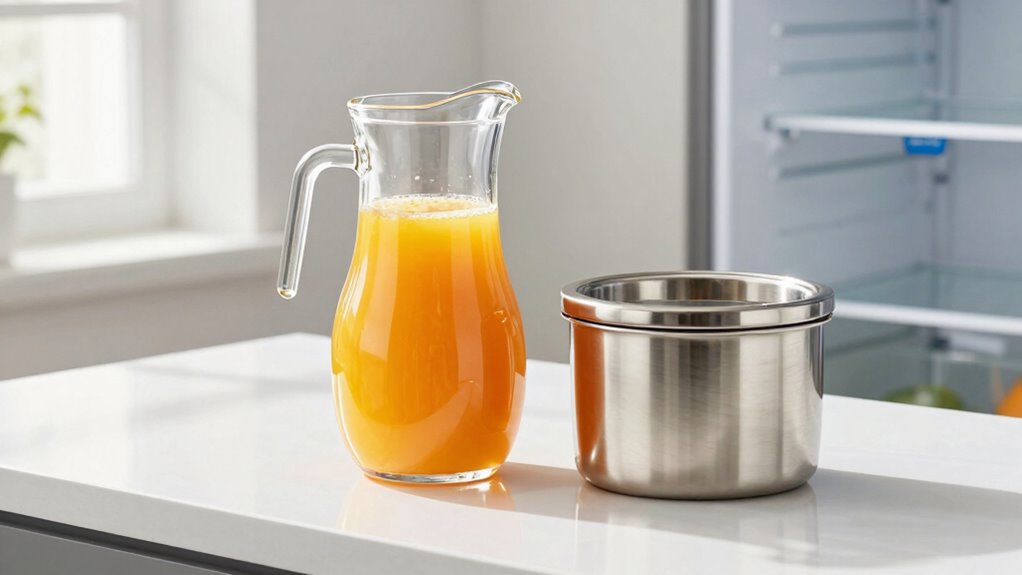
Ever wondered how to keep your fresh juice safe and flavorful for longer? The secret lies in proper storage techniques, which include understanding juice pasteurization and choosing the right storage container. Juice pasteurization, a process that involves heating the juice briefly to kill harmful bacteria and enzymes, is crucial if you want to extend its shelf life without sacrificing safety. While homemade juice might not always go through commercial pasteurization, you can still take steps to mimic its effects by storing your juice at the right temperature and consuming it promptly. Pasteurization slows down spoilage, but it doesn’t make your juice immortal. Consequently, you need to guarantee that your storage methods complement this process to maintain flavor and safety. Additionally, understanding food safety practices can help you prevent contamination and ensure your juice stays fresh longer. Proper handling, such as avoiding cross-contamination during preparation, also plays a vital role in keeping your juice safe. Using appropriate storage methods can further improve your results by minimizing exposure to harmful elements. Choosing the correct storage container is equally critical. You want containers that are airtight, non-reactive, and easy to seal, as these features help prevent contamination and oxidation. Glass jars or bottles are excellent options because they don’t leach chemicals into the juice and are easy to sterilize. Avoid using plastic containers unless they are food-grade and BPA-free, as some plastics can absorb flavors or degrade over time, which might compromise your juice’s taste and safety. Once you’ve selected a suitable container, guarantee it’s thoroughly cleaned and sanitized before pouring in your juice. Residual bacteria or mold spores on unclean containers can spoil your juice quickly, defeating the purpose of pasteurization and proper storage. To further enhance preservation, consider vacuum sealing your juice for extended freshness. Proper sealing methods can also help minimize oxidation, which impacts both flavor and safety. Temperature control is essential for keeping your juice fresh. Always store your juice in the refrigerator, ideally at or below 40°F (4°C). The cold environment slows down bacterial growth and enzymatic activity, preserving the juice’s flavor and nutrients. Fill your storage container to the top to minimize air exposure, which can accelerate oxidation and spoilage. Additionally, keep your juice away from the fridge door, where temperature fluctuations are common due to frequent opening. Consuming your juice within 24-48 hours maximizes its freshness and safety, especially if it’s homemade or hasn’t undergone commercial pasteurization. Proper storage techniques can significantly extend the quality and safety of your juice over time. Label your containers with the date you made or bought the juice, so you always know how long it’s been stored. Remember, even with proper storage, fresh juice won’t last forever. Regularly check for signs of spoilage, such as sour smell, change in color, or mold. By combining the right techniques—juice pasteurization, proper storage container selection, and temperature management—you guarantee your juice stays delicious and safe to enjoy for as long as possible.
Products Worth Considering
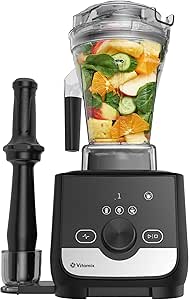
Vitamix Ascent X3 Professional-Grade Blender, 3 Programs, Shadow Black

Vitamix 5200 Professional-Grade Blender, 64 oz. Container, Black

Traeger Woodridge Pro Wood Pellet Grill and Smoker, 970 sq. in., WiFIRE
As an affiliate, we earn on qualifying purchases.
Frequently Asked Questions
Can I Store Juice at Room Temperature Safely?
Storing juice at room temperature isn’t safe long-term because of fermentation potential, which can cause spoilage or harmful bacteria growth. If you want to preserve flavor and guarantee safety, it’s best to refrigerate your juice promptly. At lower temperatures, you slow fermentation and maintain the fresh taste longer. Always consume stored juice within a few days, and avoid leaving it out for extended periods to prevent spoilage and preserve quality.
How Long Does Fresh Juice Stay Fresh Without Refrigeration?
Fresh juice typically stays fresh for just a few hours without refrigeration, like a fleeting breeze. Juice pasteurization helps extend this window, but without it, fermentation risks spike quickly. After about 2-4 hours at room temperature, bacteria can grow rapidly, compromising flavor and safety. To keep your juice fresh longer, store it in a cool, airtight container or refrigerate promptly.
Does Freezing Affect the Juice’s Nutritional Value?
Freezing does have some effects on your juice’s nutritional value, but it’s generally minimal. Nutritional degradation from freezing is limited because it slows down enzyme activity and microbial growth. However, some vitamins, especially vitamin C, can degrade slightly during freezing and thawing. Overall, the freezing effects preserve most nutrients well, making it a good option to extend your juice’s shelf life while maintaining its health benefits.
What’s the Best Container for Storing Fresh Juice?
You should choose glass containers with airtight seals for storing fresh juice. Many worry about plastic leaching chemicals, but glass is inert and won’t affect your juice’s flavor or safety. Look for containers with secure, airtight seals to prevent oxidation and spoilage. Avoid flimsy or porous materials, and always fill containers to the top to minimize air exposure. This guarantees your juice stays fresh, flavorful, and safe longer.
Can I Add Preservatives to Extend Juice Shelf Life?
You can add natural preservatives like lemon juice or apple cider vinegar to extend your juice’s shelf life. These natural options help inhibit bacteria growth, keeping your juice fresher longer. Always remember, though, that natural preservatives may not drastically extend shelf life like commercial preservatives. Store your juice in airtight containers in the refrigerator, and consume it within 24-48 hours for maximum flavor and safety.
Conclusion
Think of your freshly made juice as a delicate butterfly, enthusiastic to flutter freely but vulnerable to the harsh winds of spoilage. By storing it properly, you’re gently guiding that butterfly into a cozy, protected cocoon—your refrigerator—where it stays vibrant and safe to enjoy. Handle your juice with care, keeping it chilled and sealed, so it can emerge from its storage with all its flavor and freshness intact, ready to brighten your day.