To fix uneven chopping with your food processor, make sure you’re not overloading the bowl, as this limits blade movement. Cut ingredients into small, uniform pieces and add them gradually for even results. Regularly check and sharpen the blades, making sure they’re properly aligned. Use pulsing and manual pauses to help ingredients settle evenly. Also, keep your machine clean and well-maintained. Keep going to discover more tips for perfect nut butters and dips.
Key Takeaways
- Overloading the food processor bowl causes uneven chopping; add ingredients gradually in small batches.
- Dull or misaligned blades reduce chopping consistency; regularly inspect and sharpen them.
- Properly cut ingredients into uniform, small pieces to ensure even processing.
- Use pulsing and manual pauses to promote even ingredient distribution and prevent coarse results.
- Keep the appliance clean and well-maintained for optimal performance and consistent chopping.
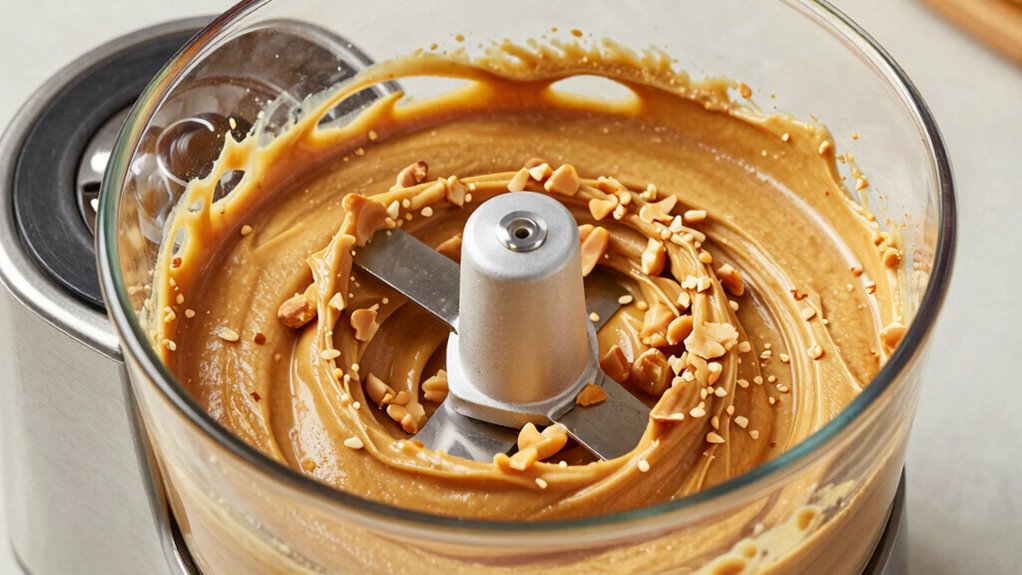
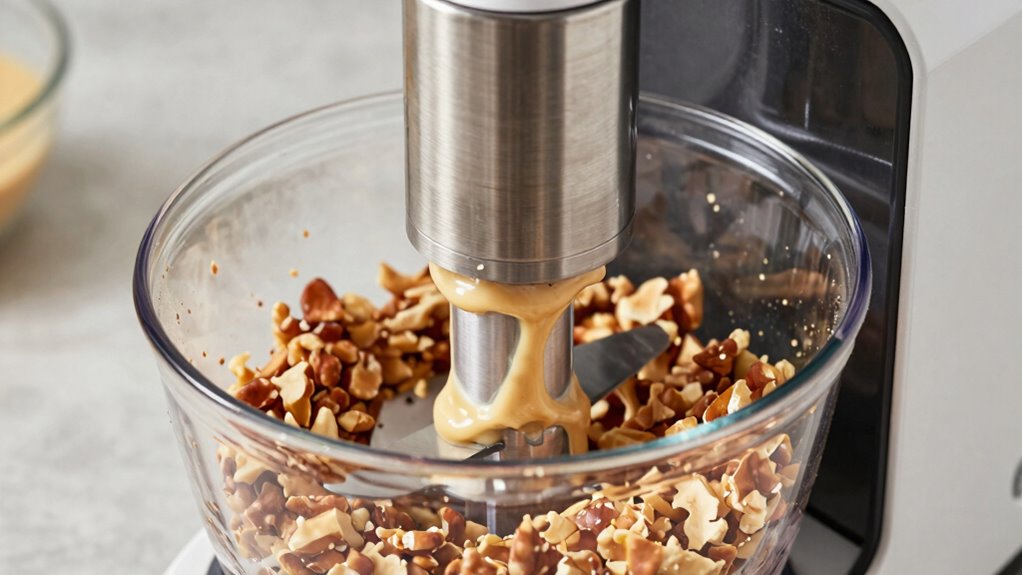
A food processor is an essential tool if you want to make creamy nut butters and flavorful dips at home. However, if your chop is uneven, it can be frustrating, especially when you’re aiming for smooth textures. The good news is that many issues stem from simple mistakes that you can fix with some manual techniques and proper appliance maintenance. First, consider how you load ingredients into the processor. Overloading the bowl can cause uneven chopping because the blades don’t have enough space to circulate ingredients properly. To get consistent results, add ingredients gradually in small batches, allowing the blades to cut evenly. Also, guarantee your ingredients are cut into smaller, uniform pieces before processing. Large chunks tend to get stuck or processed unevenly, leading to inconsistent textures.
Another common cause of uneven chopping is the position and condition of the blades. Over time, blades can become dull or misaligned, which hampers their ability to chop uniformly. Regular appliance maintenance includes inspecting and sharpening blades as needed, ensuring they’re mounted correctly. This simple step can greatly improve your results. When you’re processing, stop periodically to scrape down the sides of the bowl with a spatula. This manual technique redistributes ingredients and exposes unprocessed pieces, promoting even chopping. Don’t just run the processor continuously; manual pauses allow the blades to work more efficiently and prevent uneven chunks from forming. Additionally, blade alignment plays a critical role in achieving consistent results, so checking this regularly is advisable. Using the correct processing techniques can further enhance the quality of your results by giving you better control over texture and consistency. Incorporating the right processing strategies can also help prevent over-processing and ensure even results.
The technique you use during processing also matters. Instead of running the machine at full speed constantly, try pulsing in short bursts. This manual technique gives you better control over the texture and prevents over-processing certain areas while leaving others coarse. Pausing between bursts also helps ingredients settle evenly, reducing the chance of uneven chunks. If your processor has multiple speed settings, experiment with lower speeds for more control, especially when making delicate dips or nut butters where consistency is key. Additionally, a well-maintained blades and motor will perform more effectively, resulting in more uniform chopping. Regularly checking the sharpness of blades can prevent dull blades from causing uneven results and make processing more efficient.
Lastly, keeping your appliance properly maintained extends its lifespan and ensures even chopping. Always clean the bowl and blades thoroughly after each use, removing any leftover residue that could interfere with future processing. Check that the lid fits tightly; a loose lid can cause ingredients to escape or process unevenly. Regularly inspect the motor and other components, following the manufacturer’s maintenance instructions, to keep your food processor functioning at its best. When you combine manual techniques with diligent appliance maintenance, you’ll find that your nut butters and dips come out smooth and evenly textured every time.
food processor blade sharpening kit
As an affiliate, we earn on qualifying purchases.
As an affiliate, we earn on qualifying purchases.
Frequently Asked Questions
Can I Use a Regular Blender Instead of a Food Processor?
Yes, you can use a regular blender instead of a food processor, but keep in mind the differences in equipment. Alternative blending techniques, like pulsing carefully, help prevent overprocessing. A blender usually has a narrower container and sharper blades, which work well for liquids but might struggle with thicker nut butters or dips. For best results, use short bursts and scrape down sides, but a food processor is generally more efficient for these tasks.
How Do I Prevent Nuts From Overheating During Processing?
Your nuts are at risk of overheating, which could turn your delicious snack into a burnt disaster! To prevent this, pulse your nuts in short bursts, giving them time to cool down between sessions. Consider lightly roasting the nuts beforehand for flavor enhancement, but keep the oven temperature low and monitor closely. Using a frozen or chilled bowl can also help keep the nuts cool during processing, preserving their flavor and texture.
What Is the Ideal Processing Time for Smooth Nut Butters?
For smooth nut butters, you should process your nuts for about 10-15 minutes, stopping occasionally to scrape down the sides. The goal is to reach a creamy consistency, which varies depending on your nuts and processor. The ideal processing duration balances achieving the desired nut butter consistency without overheating or over-processing. Keep an eye on your mixture, and adjust processing time as needed for the perfect texture.
Can I Make Dips in a Small Food Processor?
While a small food processor can handle making dips, you might find the results vary based on its small appliance compatibility. To achieve the perfect dip texture, consider pulse control and processing duration carefully. For creamier dips, process in short bursts, and for chunkier textures, give it a little longer. Just be mindful of your appliance’s limitations, and you’ll create delicious dips tailored to your preference.
How Do I Clean a Food Processor After Processing Oily Nuts?
To clean your food processor after processing oily nuts, start by removing the blade and scraping out any nut oil residue. Then, wash the bowl and blade with warm, soapy water, ensuring you scrub away any remaining oil. For stubborn residue, use a mixture of baking soda and water or add a small amount of dish soap and run the processor briefly. Rinse thoroughly, dry, and reassemble.
Conclusion
Now that you’ve learned the tricks to keep your chop even, you’re all set to perfect your nut butter and dip techniques. Remember, practice makes perfect, and with these tips, you’ll avoid the pitfalls of uneven textures. Don’t be afraid to experiment and fine-tune your process—sometimes, it’s the little adjustments that make all the difference. Keep at it, and soon you’ll be whipping up smooth, delicious spreads with confidence.