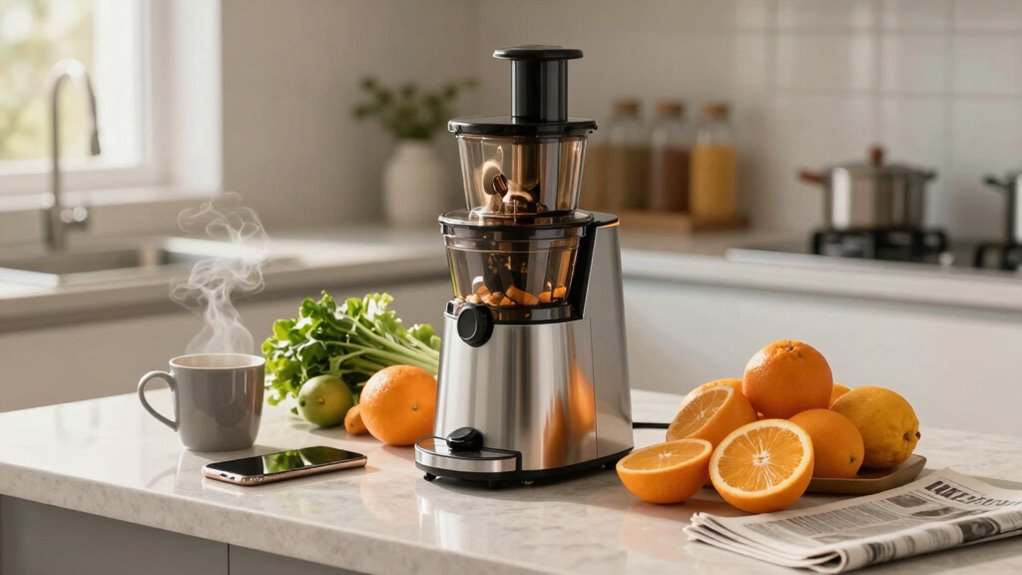
If you’re considering a self-feeding juicer for busy mornings, think again. These machines often struggle with tough produce, slow you down with jams, and require frequent, time-consuming cleaning of multiple parts. Maintenance is necessary to keep performance smooth, but it can quickly become a hassle. Waste and spillage also add to the mess. Before making a decision, it’s helpful to understand these tradeoffs, so you can find a solution that truly fits your routine.
Key Takeaways
- Automatic feeding may slow down prep and jam with tough or fibrous produce, reducing speed during busy mornings.
- Multiple parts require thorough cleaning, making cleanup time-consuming and potentially cumbersome after each use.
- Regular maintenance is necessary to prevent jams and maintain performance, adding to long-term effort.
- Spillage and waste can increase if produce isn’t managed carefully, leading to mess and extra cleanup.
- Overall convenience may be compromised if maintenance and cleaning outweigh the time saved by automatic feeding.
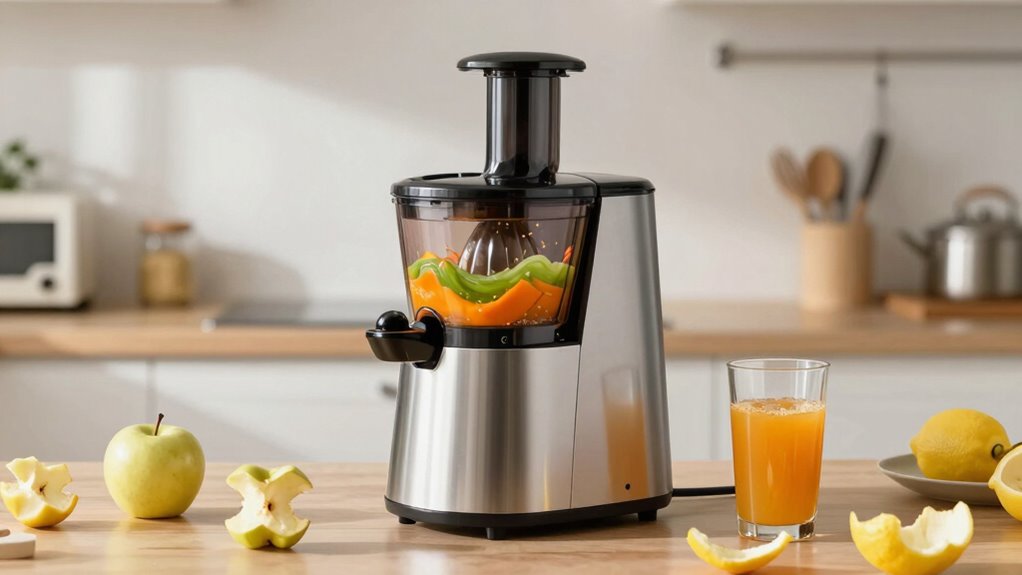
Are self-feeding juicers worth the tradeoffs? If you’re contemplating one for your busy mornings, it’s important to weigh the advantages against the potential drawbacks. These juicers are designed to make juicing easier by automatically feeding produce into the machine, which sounds ideal for quick mornings. But before you invest, consider how they perform in terms of juicing speed and cleanup effort. You might find they don’t always match the convenience you expect, especially when you’re racing against time. Additionally, some models may struggle with tough or fibrous produce, leading to longer processing times and potential jams. Cleanup effort is another significant factor to evaluate. Self-feeding juicers tend to have more parts—such as feed chutes, pulp containers, and blades—which can make cleaning more cumbersome. After each use, you might spend more time disassembling, rinsing, and scrubbing these parts compared to simpler juicers. Proper maintenance requirements can vary significantly between models, impacting how often you’ll need to perform thorough cleanings. Proper maintenance is essential to keep the juicer functioning efficiently and to prevent pulp buildup, which can hinder performance. If you’re pressed for time in the mornings, the extra cleanup can quickly offset any convenience gained from the automatic feed. Keep in mind that automatic feeding features can sometimes lead to additional waste or spillage if not managed properly. Frequent cleaning is essential to prevent pulp buildup and maintain performance, so if you’re not prepared for the extra effort, a self-feeding juicer might become more of a chore than a help.
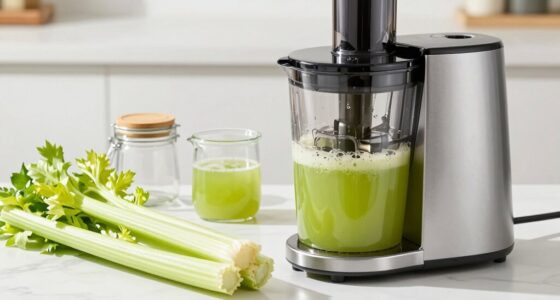
automatic juicer with pulp container
As an affiliate, we earn on qualifying purchases.
As an affiliate, we earn on qualifying purchases.
Frequently Asked Questions
How Much Do Self Feeding Juicers Typically Cost?
Self-feeding juicers typically cost between $150 and $500, depending on features and brand. If you’re on a budget, you might find models around $150 to $250, but higher-end options with advanced functions can reach $500 or more. Consider your daily needs and how much you’re willing to spend. Keep in mind that higher-priced models often offer better durability and juicing efficiency, aligning with your budget considerations.
Are Self Feeding Juicers Easy to Clean?
Cleaning a self-feeding juicer can feel like wrestling a wild beast—there are maintenance challenges, and it’s not always smooth sailing. The parts often trap pulp and residue, making cleanup more time-consuming. Plus, noise levels during cleaning can be startling. While some models have dishwasher-safe parts, expect effort and patience. If you’re short on time, this might turn your morning routine into a noisy, messy adventure instead of a quick refresh.
What Is the Juicing Capacity per Use?
You’ll find that the juicing capacity per use varies, but most self-feeding juicers process enough produce for about 16-20 ounces of juice. Their juicing efficiency depends on how well they extract juice and separate pulp, which can impact the amount you get. Keep in mind, some models may leave more pulp behind, reducing overall capacity. If you’re looking for quick, consistent results, consider how pulp separation affects your preferred juice yield.
Do They Handle All Types of Fruits and Vegetables?
Self-feeding juicers handle most fruits and vegetables, but their flavor versatility varies. They work well with softer produce like berries and oranges, but may struggle with tougher items like carrots or beets. Pulp management is essential, as some models produce thick pulp, affecting juice smoothness, while others separate pulp efficiently. If you want to juice a broad range of produce, check the juicer’s versatility and pulp control features first.
How Long Do Self Feeding Juicers Usually Last?
Think of your self-feeding juicer as a trusty friend that ages gracefully, lasting around 5 to 10 years with proper care. However, maintenance challenges like cleaning parts thoroughly and managing noise levels can wear on your patience over time. If you keep up with regular upkeep, it’ll serve you well. But, expect some minor decline in performance, especially as parts become a bit more temperamental with age.
Conclusion
Before rushing to buy a self-feeding juicer, remember it’s like planting a garden—what seems easy might hide weeds beneath. The tradeoffs are your tools, guiding you to make mindful choices amidst the temptation of convenience. By understanding these tradeoffs, you can harvest fresh, nourishing juice without getting lost in the weeds. Ultimately, it’s about cultivating a routine that nourishes your body and soul, not just your countertop. Choose wisely, and let your mornings bloom.