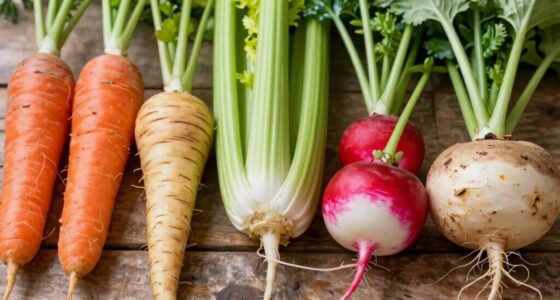
Foods like beef and almonds use the most water, with producing a pound of beef requiring up to 1,800 gallons and almonds up to 1,900 gallons. Crops such as rice and certain grains also demand significant water, especially in intensive farming. By choosing plant-based options and supporting sustainable farming practices, you can reduce your water footprint. Want to discover more about how your food choices impact water resources? Keep exploring to find out how you can make a difference.
Key Takeaways
- Beef has one of the highest water footprints, with up to 1,800 gallons per pound.
- Almonds and rice are water-intensive crops, requiring thousands of gallons per pound.
- Plant-based foods like vegetables and grains generally use less water than animal products.
- Agricultural practices like flooded rice fields significantly increase water use.
- Supporting water-efficient farming and making mindful food choices can reduce overall water consumption.
Understanding your water footprint is key to recognizing how everyday choices impact water resources. When you choose what to eat, you’re not just deciding on flavor or nutrition—you’re also influencing water consumption. Certain foods, especially those that require extensive agricultural practices, consume markedly more water than others. For example, producing a pound of beef can take up to 1,800 gallons of water, largely because of the water needed for growing feed, maintaining cattle, and processing meat. Conversely, plant-based foods like vegetables and grains tend to use much less water, making them more sustainable choices if you’re concerned about water conservation.
Many of the foods with the highest water footprints are tied to intensive agricultural practices. For instance, almonds, while nutritious, demand a lot of water during cultivation—up to 1,900 gallons per pound. Rice, a staple for many, consumes a vast amount of water because of the flooded fields used during its growth. These agricultural practices are often necessary to maximize yield, but they can strain local water supplies, especially in arid regions. By being mindful of how these crops are cultivated, you can better understand the impact of your food choices on global water resources. Additionally, adopting sustainable farming practices can help reduce water use and lessen environmental strain. Implementing water-efficient irrigation techniques like drip irrigation can significantly decrease water consumption in agriculture. Supporting farmers who use water-conserving methods can further promote responsible resource management. Recognizing the importance of efficient water use in agriculture is essential for fostering long-term sustainability.
Being aware of the water footprint of your food can also encourage you to support responsible agricultural practices, which focus on reducing water use and conserving resources. To help reduce your water footprint, adopting water conservation techniques in your daily life is essential. Simple actions like choosing foods that require less water, supporting sustainable farming practices, and reducing meat consumption can make a difference. You can also look for products labeled as water-efficient or produced using responsible agricultural practices. When possible, buy locally grown foods, as transportation and storage add to water usage and overall environmental impact. Additionally, advocating for improved agricultural practices—such as drip irrigation, rainwater harvesting, and crop rotation—can lead to more efficient water use within farming systems.

50FT Drip Irrigation System for Starter: Small Garden Quick Connect 1/4" PE Water Tubing Automatic 11Pcs Sprinkler Kit Adjustable Misting Part Watering Hose Outdoor Raised Bed Plants Flower Greenhouse
Hybrid Design – 1/4" Quick Connected with 360°Automatic Irrigation: this kit combines two of the most trending watering…
As an affiliate, we earn on qualifying purchases.
As an affiliate, we earn on qualifying purchases.
Frequently Asked Questions
How Is Water Footprint Calculated for Different Foods?
You calculate a food’s water footprint by measuring the total water used during its entire lifecycle, from production to consumption. This involves water measurement of irrigation, processing, and transportation. You then compare footprints across foods for a footprint comparison, helping you understand which foods require the most water. This process highlights the environmental impact of your choices and encourages more sustainable eating habits.
Which Countries Have the Highest Water Footprints for Food Production?
You’ll find that countries like India, China, and the United States have the highest water footprints for food production. Coincidentally, these nations face challenges in balancing water conservation with the need for sustainable agriculture. By focusing on efficient water use, adopting sustainable farming practices, and reducing waste, these countries can lower their water footprints, ensuring they meet food demands without depleting essential water resources.
Can Reducing Water Footprint Improve Global Water Scarcity?
Reducing your water footprint can substantially improve global water scarcity by promoting water conservation and food sustainability. When you make mindful choices, like eating less water-intensive foods, you help conserve precious water resources. Your actions encourage sustainable farming practices and lower overall water use. By doing so, you contribute to a healthier planet, ensuring that future generations have access to clean water and nutritious food.
Are Plant-Based Foods Always More Water-Efficient Than Animal Products?
Plant-based myths suggest they’re always more water-efficient, but that’s not always true. Sometimes, crops like almonds or avocados can have a high water footprint, rivaling or exceeding certain animal products. You’re like a water conservation detective—questioning assumptions. To truly save water, it’s essential to look beyond labels and understand each food’s impact. Making informed choices helps you protect water resources, no matter if you choose plants or animals.
How Does Climate Change Impact Water Footprints of Foods?
Climate change increases the water footprints of foods by causing unpredictable weather, droughts, and floods. These events make water sources unreliable, forcing farmers to use more water for irrigation and climate adaptation. To help, you can support water conservation efforts and choose foods with lower water footprints. This reduces strain on water resources and fosters sustainable food production practices despite changing climate conditions.

Build Your Own Farm Tools: Equipment & Systems for the Small-Scale Farm & Market Garden
As an affiliate, we earn on qualifying purchases.
As an affiliate, we earn on qualifying purchases.
Conclusion
Understanding the water footprint of your favorite foods is like peering into a hidden river flowing beneath every bite. By choosing foods with smaller footprints, you become a mindful traveler, conserving this precious resource. Each choice you make is a ripple that can help preserve the planet’s delicate balance. Remember, your plate isn’t just a meal—it’s an essential part of the global water cycle. Make it count, and let your actions flow toward sustainability.

KongNai Kitchen Funnel Set 4 Pack, Small and Large, Kitchen Gadgets Accessories Foldable Silicone Collapsible Funnels for Filling Water Bottle Liquid Transfer Food Grade
Food Grade Kitchen Accessories: Soft and flexible funnels for kitchen use. Heat resistant -40°C to 250°C, No need…
As an affiliate, we earn on qualifying purchases.
As an affiliate, we earn on qualifying purchases.
100 Piece (50 Pack) Meal Prep Containers with Lids, 28 oz Cornstarch Food Storage Containers Plant-based Lunch Box for Salad,BPA Free Plastic Take Out Containers Microwave and Freezer Safe
✅ Corn Starch-Based Plant Containers & Lids: Set includes 50 containers and 50 matching lids. Odor-Free Lunch Box!…
As an affiliate, we earn on qualifying purchases.
As an affiliate, we earn on qualifying purchases.