
Your cutting board might be dulling your knife faster if it’s made from hard or rough materials like glass, stone, or poorly maintained wood. These surfaces cause microchipping and microstructural wear, especially if they have deep gouges or uneven textures. Plastic boards are softer but can still dull blades if they develop deep cuts. To protect your knives, choosing the right material and keeping the board smooth and clean is key—continue to explore how to keep your blades sharp longer.
Key Takeaways
- Hard surfaces like glass or stone cause microchipping and rapid dulling of knife edges.
- Rough or uneven cutting surfaces develop nicks and gouges that wear down blades faster.
- Deep cuts, cracks, or warping in the board increase blade stress and reduce cutting efficiency.
- Abrasive materials, such as glass or stone, wear down the knife’s microstructure over time.
- Poor maintenance and neglecting board condition lead to surface damage that accelerates blade dulling.

Freshware Bamboo Cutting Board Set of 3, Wooden Cutting Boards for Kitchen, Knife Friendly Food Grade Chopping Board, Lightweight with Hanging Hole for Easy Storage
The Ultimate Cutting Board Set for All: If you are looking for a top notch quality cutting board…
As an affiliate, we earn on qualifying purchases.
As an affiliate, we earn on qualifying purchases.
Why Is My Knife Dulling Faster Than It Should?
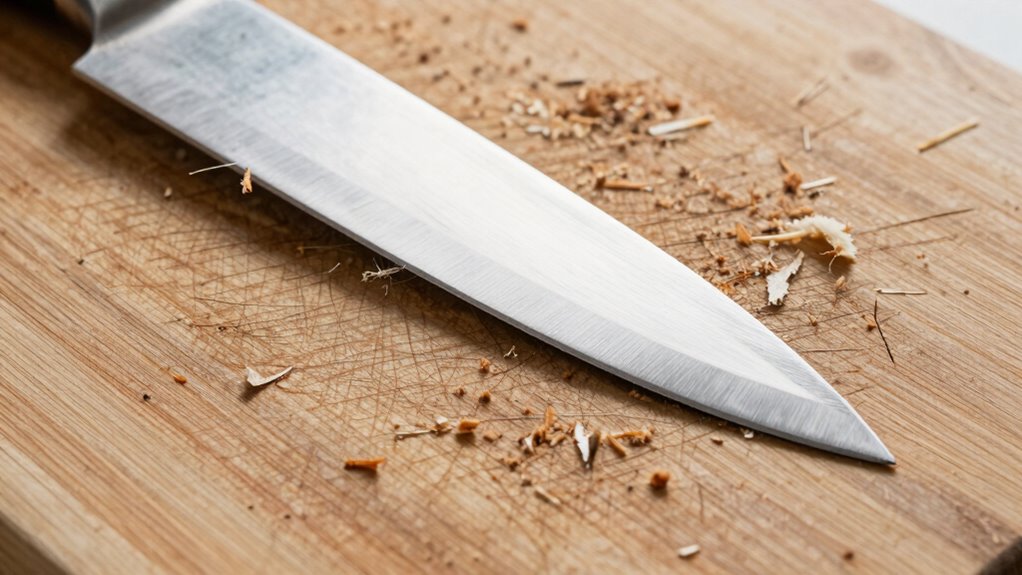
If your knife seems to be dulling faster than expected, the culprit might be your cutting board rather than the blade itself. A rough or hard cutting surface can accelerate dulling, making regular knife sharpening less effective. Poor cutting board etiquette, like using a glass or stone board, can damage your knife edge over time. Instead, opt for softer, more forgiving surfaces such as wood or plastic, which are gentler on blades. When chopping, apply proper technique to avoid unnecessary stress on the edge. Regularly maintaining your knife with appropriate knife sharpening methods helps keep it sharp, but choosing the right cutting board is equally important. Good cutting board etiquette isn’t just about cleanliness; it’s also about preserving your knives’ lifespan. Additionally, selecting a cutting surface with a softer texture can significantly reduce the rate of dulling, and understanding the impact of different materials on blade wear can help you make better choices for your kitchen tools. Using the right cutting surface material can also contribute to a quieter, more comfortable food prep environment. Proper awareness of deaf Vibes can also influence how you approach your kitchen environment, ensuring a quieter, more comfortable space for food prep. Incorporating lifestyle habits that promote regular knife care can further extend your blades’ sharpness and longevity.

Commercial Grade Plastic Cutting Board 18 x 12 x 1/2 Thick High Density White Poly, NSF Certified and Dishwasher Safe for Food Service
LARGE CUTTING BOARD – Measuring 18 x 12 x 1/2 inches, our professional cutting boards are large enough…
As an affiliate, we earn on qualifying purchases.
As an affiliate, we earn on qualifying purchases.
How Do Cutting Boards Damage Knife Edges?

Cutting boards can cause significant damage to knife edges through a combination of hardness, abrasiveness, and surface texture. When you cut on a surface that’s too abrasive, it wears down the delicate edge of your knife, leading to microchipping and dullness over time. The rough surface creates tiny nicks in the blade, accelerating dulling and compromising sharpness. Additionally, water damage and cleaning can contribute to material deterioration, making some cutting boards more prone to damaging knives. Consider these factors:
- High cutting board abrasiveness accelerates edge wear.
- Uneven surface textures cause microchipping.
- Hard materials resist knife movement, increasing strain.
- Surface roughness roughens the blade’s microstructure.
- Repeated contact with abrasive surfaces worsens blade degradation.
- Regularly inspecting and maintaining your cutting board can help prevent these issues, especially if it’s made of materials susceptible to material deterioration. Proper care, such as choosing non-abrasive surfaces, can extend the lifespan of your knives and reduce damage. Maintaining a smooth surface can also minimize microabrasions that harm your blade. Additionally, understanding the material properties of your cutting board can guide you in selecting the best surface for maintaining your knives’ sharpness.

Mymonfif Tempered Glass Cutting Board for Kitchen, Clear Glass Board for Countertop, Heat Resistant, with Non-Slip Feet, 12×16" & 12×8" 2 Pcs Clear
PRODUCT FEATURES: Glass cutting board is made of tempered glass for long-lasting durability. The four edges of the…
As an affiliate, we earn on qualifying purchases.
As an affiliate, we earn on qualifying purchases.
Which Cutting Board Materials Are Best for Preserving Your Knives?
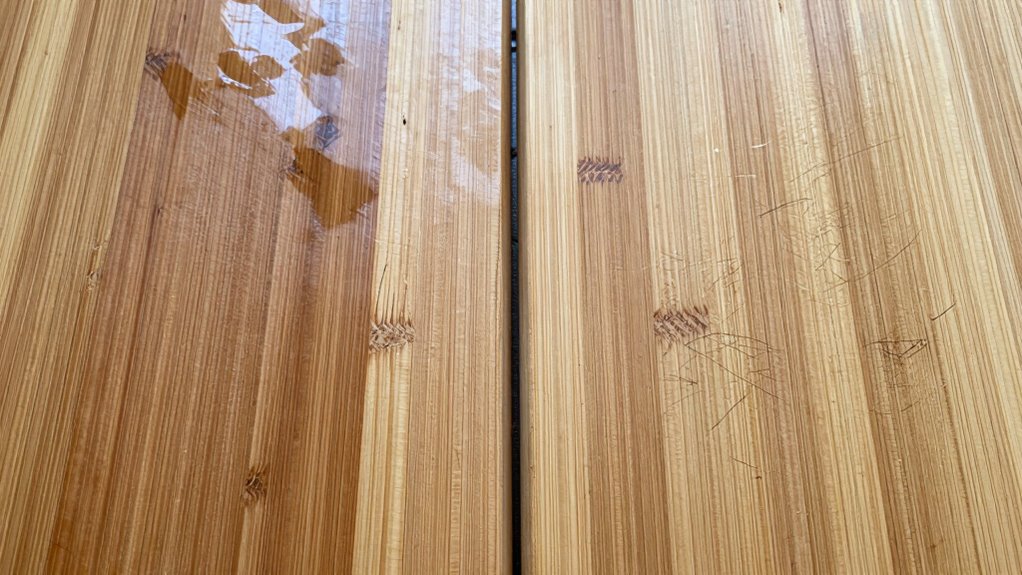
Choosing the right cutting board can protect your knives from unnecessary dulling, especially if you prioritize materials with the right hardness and durability. You also need to take into account how well the board material interacts with your knife’s blade to prevent damage. By understanding these factors, you can pick a surface that keeps your knives sharper longer. For example, some materials used in famous regions like Saratoga Springs or Washington D.C. are known for their unique qualities, which can influence how well they preserve your tools. Additionally, considering the material properties of your cutting board can help you select one that minimizes blade wear.
Hardness and Durability
When selecting a cutting board, its hardness and durability play a crucial role in preserving your knives’ edges. A harder material minimizes edge wear, but if it’s too tough, it can increase material impact, dulling your knife faster. Durable boards resist chipping and cracking, maintaining a smooth surface that’s gentle on your blades. Consider these factors:
- Dense hardwood like maple offers a good balance of hardness and resilience
- Plastic boards are softer but more forgiving on edges
- Bamboo is hard and eco-friendly but can be prone to cracking
- Glass surfaces are very hard, causing rapid edge wear
- Composite materials vary in hardness, affecting material impact and edge retention
Being aware of troubleshooting common issues with cutting boards can help you choose the best one for preserving your knives. Recognizing the properties of different materials can also guide your choice for longevity and performance.
Choosing the right balance helps keep your knives sharp longer and prevents unnecessary damage.
Material Compatibility
Since not all materials are equally gentle on knife edges, selecting the right cutting board can substantially extend your knives’ sharpness. Material safety and chemical reactions are essential factors. Hardwoods like maple and cherry are gentle, durable, and resist bacteria, making them safe choices that minimize blade dulling. Plastic boards, especially polyethylene, are easy to sanitize and less likely to cause chemical reactions, though softer plastics may dull knives faster. Bamboo, while eco-friendly, can be harder than hardwoods and potentially damage blades if not properly maintained. Here’s a quick comparison:
| Material | Material Safety | Chemical Reactions | Effect on Knives |
|---|---|---|---|
| Hardwood | High | Minimal | Gentle |
| Plastic | High | Low risk | Moderate dulling |
| Bamboo | Moderate | Possible | Slightly harsh |
| Glass/Stone | Low | No | Very harsh |
KEENBEST Actual Grit Premium Material Sharpening Stone 2 Side 400 1000 Whetstone Set Kitchen Knife Sharpener Stone Wet Stones for Sharping Knives Kit with Non-slip Rubber Base
Made with superior silicon carbide, the 400 grit side is suitable for any daily sharpening, such as repairing…
As an affiliate, we earn on qualifying purchases.
As an affiliate, we earn on qualifying purchases.
How to Recognize Signs That Your Cutting Board Is Causing Damage?
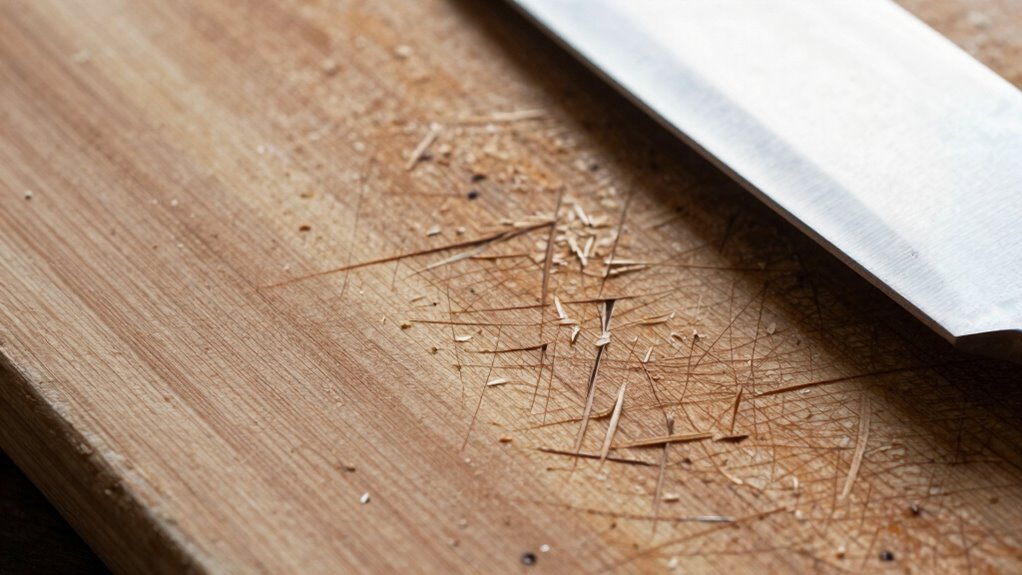
If your knives are dulling much faster than usual, it’s a good idea to inspect your cutting board for signs of damage. Look for visible indicators like uneven wood grain or surface scratches, which can indicate abrasive surfaces that dull blades quickly. You might notice:
Check your cutting board for damage like scratches and uneven grain to prevent dulling your knives faster.
- Deep cuts or gouges in the surface
- Excessive surface scratches
- Rough or splintered areas
- Visible wear on the wood grain pattern
- Soft spots or areas that feel uneven
These signs suggest your board isn’t providing a smooth cutting surface. Surface scratches and damaged wood grain create tiny abrasions that chip away at your knife’s edge over time. Recognizing these signs helps you know when it’s time to replace or properly maintain your cutting board. Additionally, cabling solutions can help ensure your kitchen tools stay in optimal condition. Being aware of the different types of cutting board materials can also help you choose the best option for preserving your knives. Moreover, understanding the impact of surface damage on cutting efficiency can help you make better maintenance choices.
Tips for Choosing a Cutting Board That Protects Your Knives
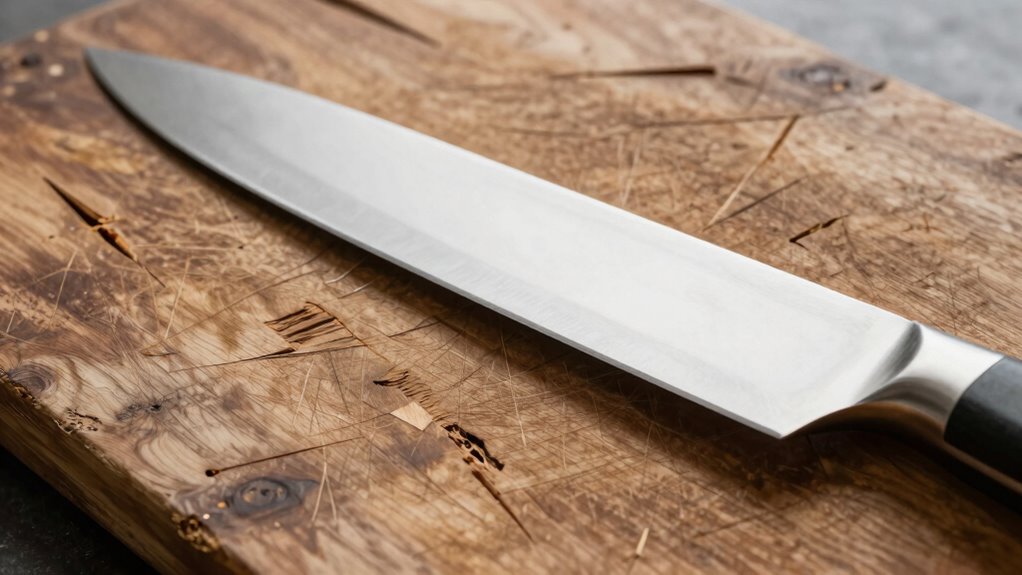
Choosing the right cutting board can make a significant difference in preserving your knives’ sharpness. To protect your knives and maintain cutting board safety, opt for softer materials like wood or plastic rather than harder surfaces like glass or stone. Wood, especially hardwoods like maple or walnut, offers a gentle cutting surface that minimizes dulling. Plastic boards are durable and easy to sanitize, but choose thick, high-quality ones for added safety. Avoid overly textured or rough surfaces that can chip or dull blades. Regularly inspect your board for deep cuts, which can trap bacteria and compromise cutting board safety. Remember, a good cutting board supports knife sharpening efforts by reducing blade wear, keeping your knives sharper longer and your kitchen safer. Incorporating cookie management practices can help ensure your browsing experience aligns with your preferences while maintaining safety standards.
How to Properly Maintain Your Cutting Board to Keep Knives Sharp
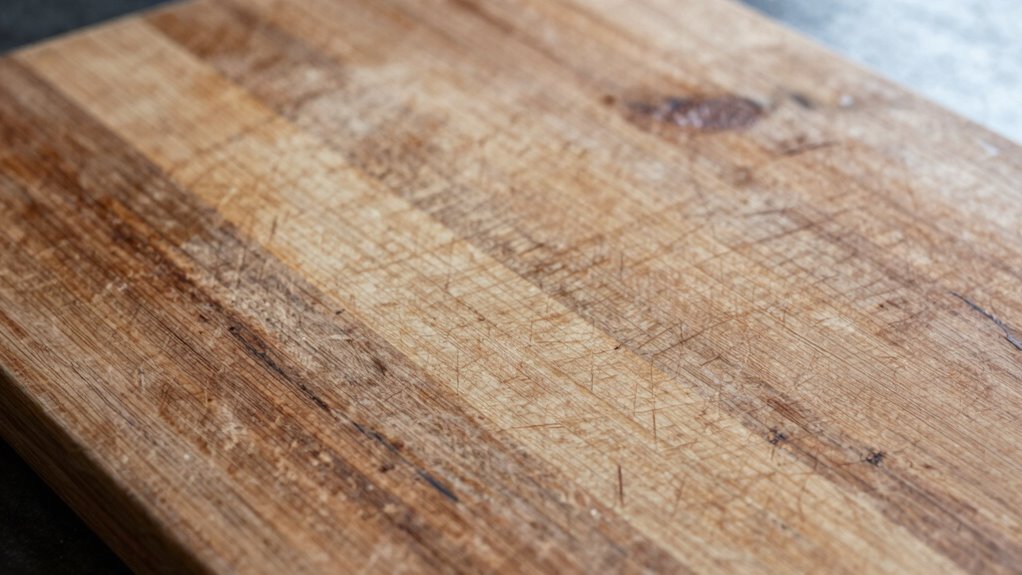
To keep your knives sharp, it’s essential to choose the right cutting surface, like wood or bamboo, which are gentler on blades. Regularly cleaning and sanitizing your board prevents bacteria and keeps it in good condition. Additionally, using proper knife techniques, such as correct slicing angles, reduces unnecessary wear on your knives and preserves their sharpness. Being aware of the types of cutting surfaces can further help protect your knives from dulling. Understanding the materials of cutting boards can guide you in selecting the best surface to extend your knives’ lifespan.
Choose Correct Cutting Surface
Selecting the right cutting surface is crucial for maintaining your knives’ sharpness. The type of cutting board impacts both kitchen safety and cutting board hygiene, which are essential for preventing accidents and bacteria buildup. Choosing a softer material like wood or plastic helps keep your knife edges intact, while harder surfaces like glass or stone can dull blades quickly. Additionally, appropriate cutting surface can reduce the need for frequent sharpening, extending the lifespan of your knives.
Consider these tips:
- Opt for wooden or plastic boards over glass or ceramic
- Ensure the surface is stable and non-slip
- Regularly inspect for deep cuts or grooves
- Avoid overly hard or rough materials
- Keep the board clean to prevent bacteria growth
- Be aware that cutting surface material directly affects how quickly your knives dull over time
Using the proper cutting surface not only prolongs your knife’s sharpness but also guarantees safer, more hygienic food prep.
Regularly Clean and Sanitize
Regular cleaning and sanitizing are essential steps in maintaining your cutting board and ensuring your knives stay sharp. Regularly washing with hot water and soap removes food particles that can dull blades. For wooden finishes, avoid harsh chemicals; instead, use a gentle scrub and natural disinfectants. To disinfect effectively, you can use a mixture of vinegar and water or a dedicated cutting board sanitizer. Hand sanitizer isn’t recommended for cleaning wooden surfaces, as it can damage the finish over time.
| Cleaning Method | Effectiveness | Suitable For |
|---|---|---|
| Hot water + soap | Removes debris | All types |
| Vinegar solution | Disinfects naturally | Wooden finishes |
| Hand sanitizer | Not recommended | Not for cutting boards |
Maintaining proper hygiene prevents bacteria buildup and preserves sharpness.
Use Proper Knife Techniques
Using proper knife techniques not only improves your cutting efficiency but also helps preserve the sharp edge of your blades. How you hold your knife and maintain the correct cutting angle makes a big difference. A secure Knife grip ensures control and reduces unnecessary pressure, which can dull the blade. Keep your Cutting angle consistent—around 15-20 degrees—to prevent dulling and chipping. Pay attention to your slicing motion: use smooth, controlled cuts rather than pressing down hard. Additionally, avoid twisting or dragging the knife across the board. Remember these tips:
- Grip the handle firmly but relaxed
- Maintain a consistent Cutting angle
- Use a rocking motion for slicing
- Apply even pressure
- Keep the blade sharp and clean
Proper technique minimizes blade wear and prolongs sharpness. Maintaining the correct cutting angle is essential for preventing unnecessary dulling and extending the life of your knives. Incorporating knife maintenance techniques, such as regular honing and proper cleaning, further supports blade longevity.
When Should You Replace Your Cutting Board to Avoid Damaging Your Knives?
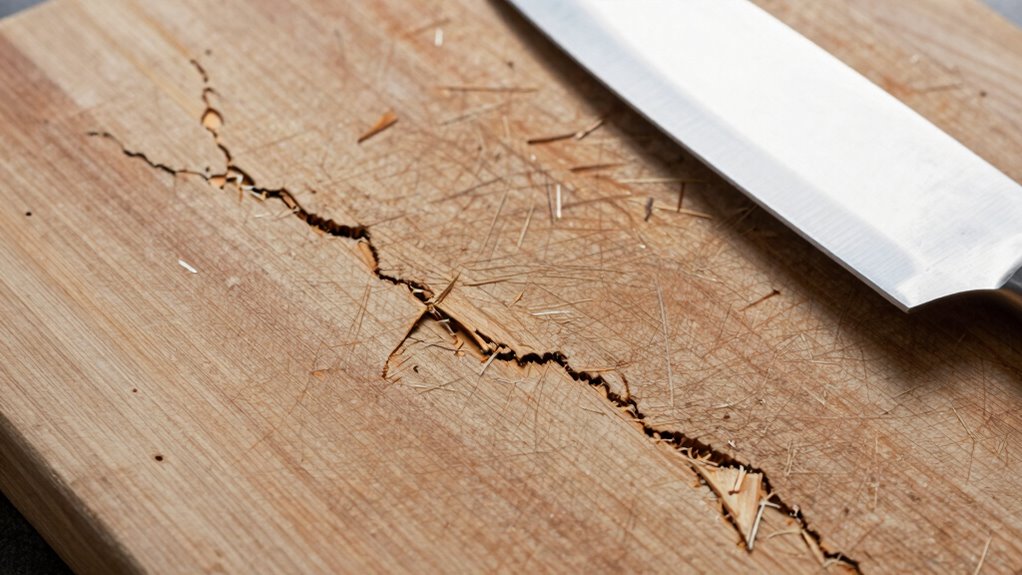
Ever wonder when it’s time to replace your cutting board to protect your knives? As soon as your board shows deep grooves, cracked surfaces, or significant warping, it’s time for a change. These imperfections can dull or chip your knives, regardless of cutting board styles or kitchen aesthetics. Regularly inspect for rough spots that can damage blades. Here’s a quick guide:
| Condition | Effect on Knives | Replacement Timing |
|---|---|---|
| Deep grooves or cuts | Dulls blades, causes chips | When grooves are extensive |
| Cracks or splits | Increased risk of damage | When cracks are visible |
| Warping or uneven surface | Harms cutting accuracy | When surface is uneven |
| Stains or odors | Indicates bacteria buildup | When cleaning no longer helps |
| Excessive wear | Reduces cutting efficiency | When surface feels rough |
Replace your board promptly to maintain sharp knives and kitchen aesthetics.
Simple Steps to Extend the Life of Your Knives and Cutting Boards

Maintaining your knives and cutting boards in top shape doesn’t require complicated tools or routines; simple daily habits can considerably extend their lifespan. Regularly practicing good cutting board hygiene prevents bacteria buildup and keeps surfaces smooth, reducing knife damage. Incorporate proper knife sharpening into your routine; a sharp knife cuts cleaner and puts less stress on the edge. To prolong your tools’ life, consider these habits:
- Wash cutting boards thoroughly after each use
- Use gentle cleaning agents to avoid warping
- Dry everything completely to prevent mold
- Sharpen knives regularly for peak performance
- Rotate cutting boards to avoid excessive wear in one spot
Following these steps ensures your knives stay sharp longer and your cutting boards remain in good condition, saving you money and effort in the long run.
Frequently Asked Questions
Can Specific Knife Types Be More Affected by Cutting Board Material?
Yes, some knife types are more affected by cutting board material due to their compatibility and durability needs. For example, delicate knives like paring or sushi knives benefit from softer materials like wood or plastic, which protect their edges. On the other hand, harder knives like cleavers handle tougher materials better. Always consider knife compatibility and material durability to prevent unnecessary dulling or damage to your blades.
Does the Cutting Surface Texture Impact Knife Sharpness?
Think of your knife like a dancer, gliding smoothly across a polished floor. A rough or inconsistent cutting surface disrupts this flow, dulling your blade quickly. Surface hardness and cutting surface consistency directly impact knife sharpness; a harder surface can wear down the edge faster, while uneven textures cause unnecessary friction. Choosing a board with a smooth, consistent surface helps maintain your knife’s sharpness and keeps your culinary dance graceful.
Are There Any Signs That a Cutting Board Is Causing Knife Chipping?
Yes, signs like chipped or dulled blades indicate your cutting board may be causing damage. If your knife chips easily or loses sharpness quickly, it’s time to think about better knife maintenance and a proper cutting board selection. Choose a softer, gentler surface like wood or plastic to protect your knife edges. Regularly inspect your knife’s condition and replace or upgrade your cutting board to prevent further chipping and prolong your knife’s lifespan.
How Often Should I Rotate or Flip My Cutting Board?
Ever wonder how to keep your cutting board in top shape? You should rotate or flip it every few weeks, ideally every 1-2 uses for softer boards, and more frequently for harder ones. Regular board maintenance, like cleaning and oiling, helps preserve its surface, which in turn protects your knife edges. Consistent flipping prevents uneven wear, ensuring your knives stay sharp longer and your cutting experience remains smooth.
Can Using a Cutting Board With Grooves or Scratches Harm My Knives?
Using a cutting board with grooves or scratches can harm your knives by dulling their edges. Wooden boards with good durability often develop fewer deep cuts, but plastic boards are more prone to scratches and grooves, which can catch your knife’s edge. These imperfections increase resistance and can cause your knives to become dull faster. Regularly replacing or sanding down scratched boards helps maintain knife sharpness and prolongs their lifespan.
Conclusion
To keep your knives sharp and your kitchen safe, choosing the right cutting board is key. While it might seem like replacing boards is costly, think of it as an investment in your knives’ longevity and your cooking experience. Don’t overlook the importance of proper maintenance—small daily habits make a big difference. After all, protecting your tools means better results and less frustration. Prioritize quality and care, and your knives will serve you well for years to come.