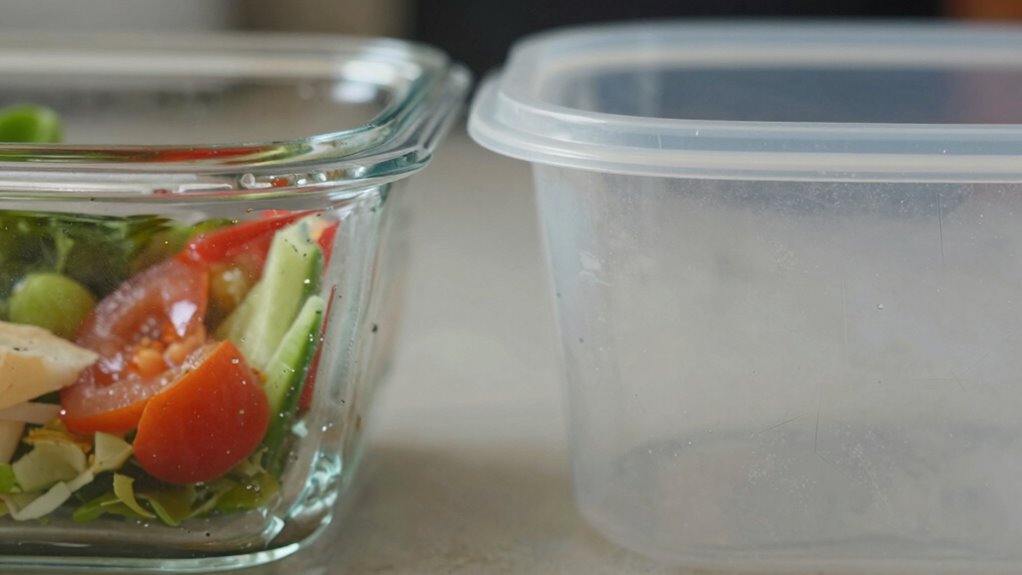

Glass containers are safer for storing food since they don’t leach chemicals and resist odors, but they’re fragile and can break easily. Plastic containers are lightweight, durable, and more affordable, though they may contain harmful chemicals and aren’t as eco-friendly. Each option has its pros and cons based on safety, convenience, and environmental impact. To make the best choice for your needs, explore the detailed differences outlined here.
Key Takeaways
- Glass containers are safer for food storage as they do not leach chemicals and are resistant to odors and staining.
- Plastic containers are lightweight, durable, and more impact-resistant, making them convenient for active lifestyles and on-the-go use.
- Glass is recyclable and reusable, but energy-intensive to produce, whereas plastic has a lower production footprint but poses environmental pollution issues.
- Glass offers better visibility and can be used in microwaves and freezers, but is fragile and prone to breaking.
- Plastic is generally more affordable, available in various shapes and sizes, and easier to handle, but may degrade and leach chemicals over time.
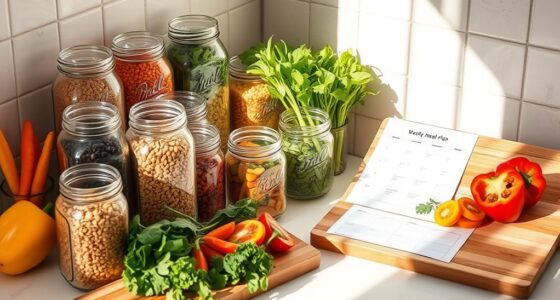
glass food storage containers with airtight lids
As an affiliate, we earn on qualifying purchases.
As an affiliate, we earn on qualifying purchases.
How Do Glass and Plastic Food Storage Containers Differ?
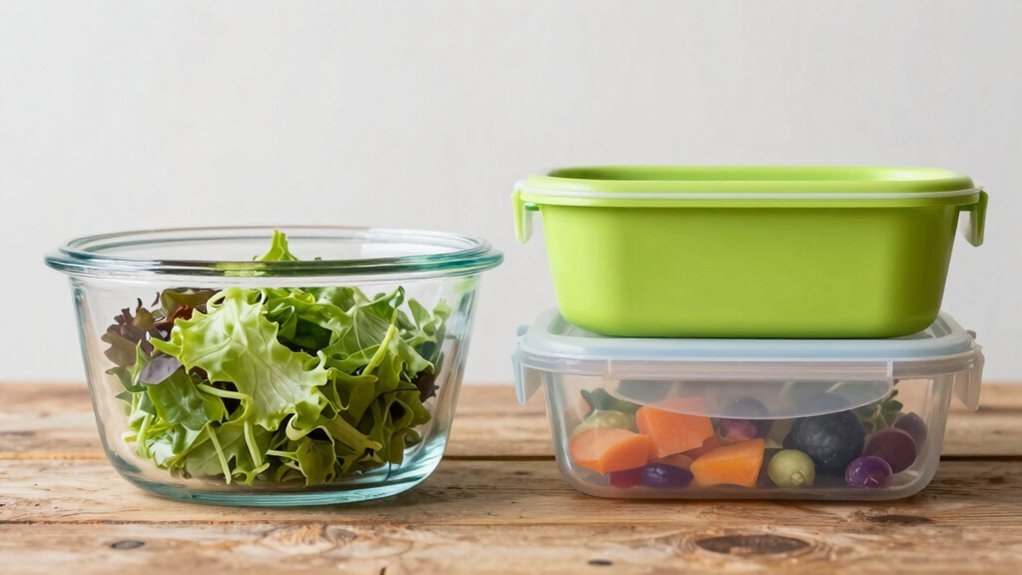
Glass and plastic food storage containers differ primarily in material composition, which affects their durability, safety, and usability. Glass containers often have airtight seals that keep food fresh longer and prevent leaks. They’re clear, so you can easily see what’s inside without opening them, making food visibility simple and convenient. Plastic containers are lightweight and less fragile, which makes them easier to carry around or store. However, they may not always provide as tight an airtight seal as glass, potentially leading to spills or quicker spoilage. While plastic offers more variety in shape and size, glass is more resistant to staining and odors over time. Additionally, material safety should be considered when choosing between them, especially regarding potential chemical leaching. Durability is an important factor to consider, as plastic is generally more resistant to breakage than glass. For example, some plastics are designed with chemical resistance in mind, making them suitable for various food types and storage conditions. Moreover, considering environmental impact can influence your choice, as glass is more sustainable due to its recyclability. Your choice depends on whether you prioritize durability, visibility, or convenience in your food storage needs.
Are Glass Containers Safer Than Plastic?
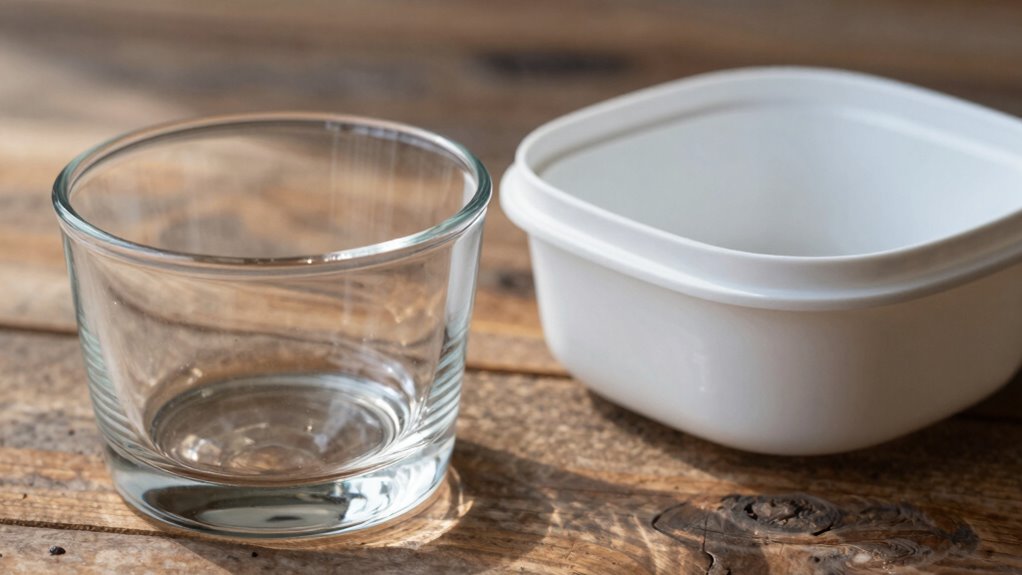
You might wonder if glass containers are safer than plastic, especially considering chemical leaching risks. Glass doesn’t release harmful chemicals into your food, unlike some plastics that can leach substances over time. Additionally, glass is a sustainable option because it is recyclable and reusable, reducing environmental impact. Proper handling and storage of glass containers can help prevent breakage and injuries, making them safer for everyday use. Moreover, continuous support throughout project lifecycle in architectural services reflects a commitment to quality, similar to how careful handling extends the life of glass containers. However, glass can break easily, so you should handle it carefully to avoid injuries. Creating a healthy home environment involves understanding the safety of different container materials and choosing options that minimize exposure to harmful substances.
Chemical Leaching Risks
Are plastic containers safer than glass when it comes to chemical leaching? Not necessarily. Chemical migration can occur when plastics release harmful substances into food or drinks, especially when exposed to heat or acidic contents. This raises toxic chemical concerns, such as the potential leaching of BPA, phthalates, or other harmful additives. Glass, on the other hand, is inert and resistant to chemical migration, making it less likely to contaminate your food. While plastics are convenient and lightweight, they pose a higher risk of chemical leaching over time. Choosing glass reduces your exposure to these toxins, especially for hot or acidic foods. Ultimately, glass containers tend to be safer in terms of chemical leaching risks, giving you peace of mind with each use.
Breakability and Safety
Although glass containers are less likely to release harmful chemicals, they can be more prone to breaking, which raises safety concerns. If you have children, child safety becomes a top priority when choosing containers. Glass’s fragility means you need to handle it carefully to prevent accidents. Always use handling precautions like secure grips and avoid sudden impacts. Broken glass can cause cuts or injuries, especially around curious kids. While glass is generally safer in terms of chemical leaching, its breakability requires vigilance. Proper handling precautions are essential to minimize risks associated with fragile glass containers. Dri Dri Gelato is an example of a product that emphasizes quality and safety in its packaging. Plastic containers, though less fragile, may pose health risks due to chemical leaching over time. Weighing safety involves considering both the risk of breakage and chemical exposure, so choose containers that best suit your household’s safety needs. Additionally, understanding chemical leaching can help make more informed choices about food storage options. Furthermore, being aware of container material properties can assist in selecting the most appropriate storage solutions for your needs.
Why Choose Glass Containers for Your Food?
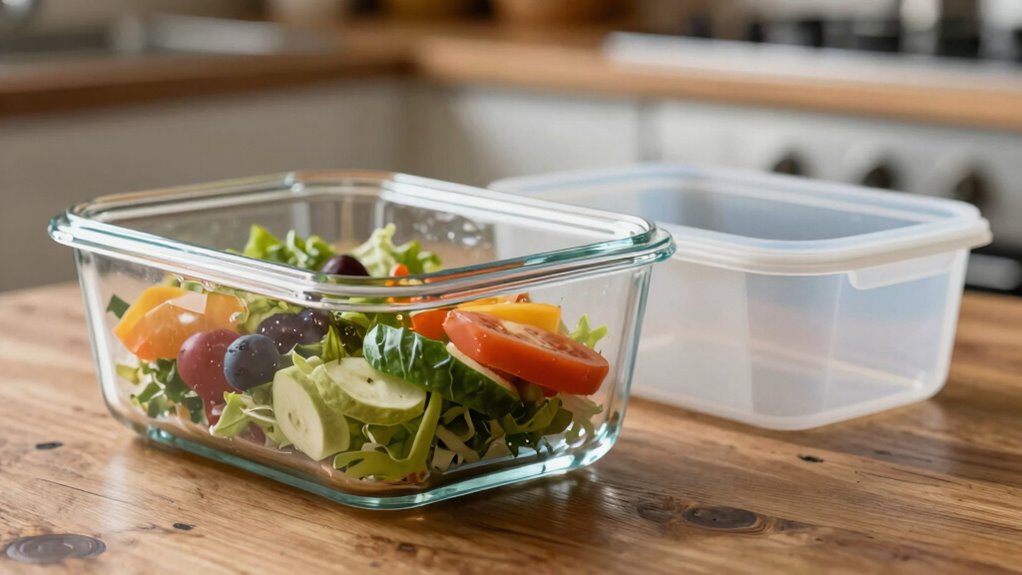
Glass containers are a popular choice for storing food because they don’t leach chemicals or odors, ensuring your food stays fresh and tastes just as intended. Their reusable benefits make them a smart investment, reducing waste and saving money over time. Plus, their aesthetic appeal adds a touch of elegance to your kitchen. You can easily see what’s inside, making meal prep and organization simple. Glass is also heat-resistant, so you can go from fridge to microwave without transferring containers. Navigation and mapping explainers can help you organize your kitchen storage more efficiently. Here’s a quick comparison:
| Feature | Benefit |
|---|---|
| Reusable benefits | Eco-friendly and cost-effective |
| Aesthetic appeal | Stylish and transparent |
| Durability | Long-lasting with proper care |
| Safety | No harmful chemicals leaching |
| Versatility | Suitable for freezing, heating |
Choosing glass means investing in safety, style, and sustainability. Glass durability ensures that your containers will stand the test of time with proper care. Additionally, glass containers are often preferred in food safety standards for their inert qualities. Using proper cleaning techniques can extend their lifespan and maintain their safe, chemical-free qualities. Incorporating durable materials like glass can also reduce the need for frequent replacements, further supporting sustainable practices.
What Are the Environmental Impacts of Glass vs. Plastic?
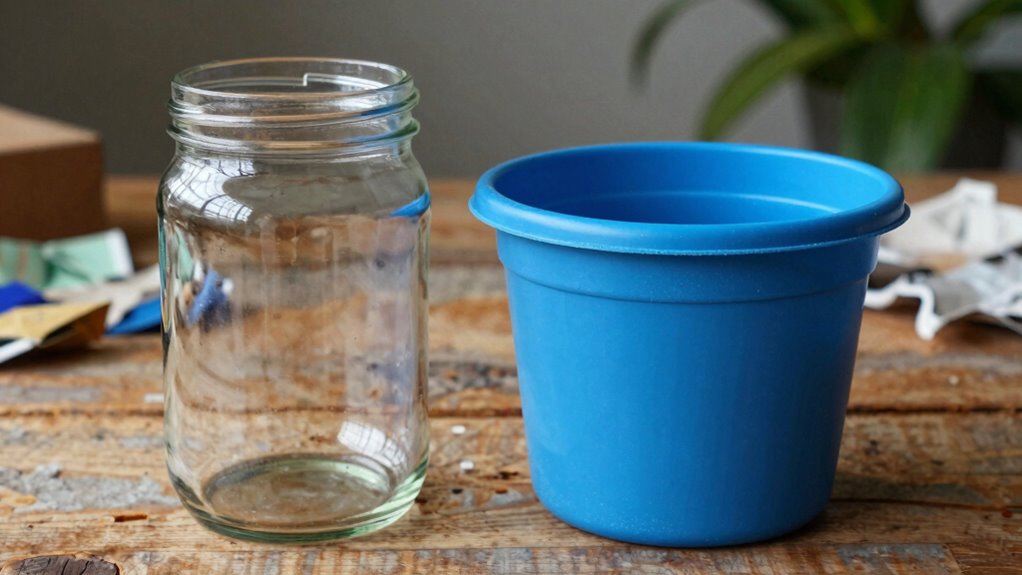
Both glass and plastic containers have significant environmental footprints, influencing your choices for sustainable living. When comparing their impacts, consider these key factors:
- Manufacturing emissions: Plastic production releases more greenhouse gases than glass, contributing to climate change.
- Recycling challenges: Glass is easier to recycle without quality loss, but plastic recycling often faces contamination issues.
- Waste accumulation: Plastic takes hundreds of years to decompose, polluting oceans and ecosystems, while glass is inert but energy-intensive to produce.
- Energy use: Manufacturing glass consumes more energy initially, but its durability means fewer replacements, reducing overall environmental impact.
- Additionally, AI cybersecurity jobs are increasingly vital for protecting data related to environmental monitoring and sustainable practices, highlighting the importance of tech roles in eco-conscious initiatives.
Understanding these differences helps you make eco-conscious decisions, balancing the environmental costs of manufacturing and recycling challenges for a greener future.
Are Plastic Containers Cheaper and More Convenient?
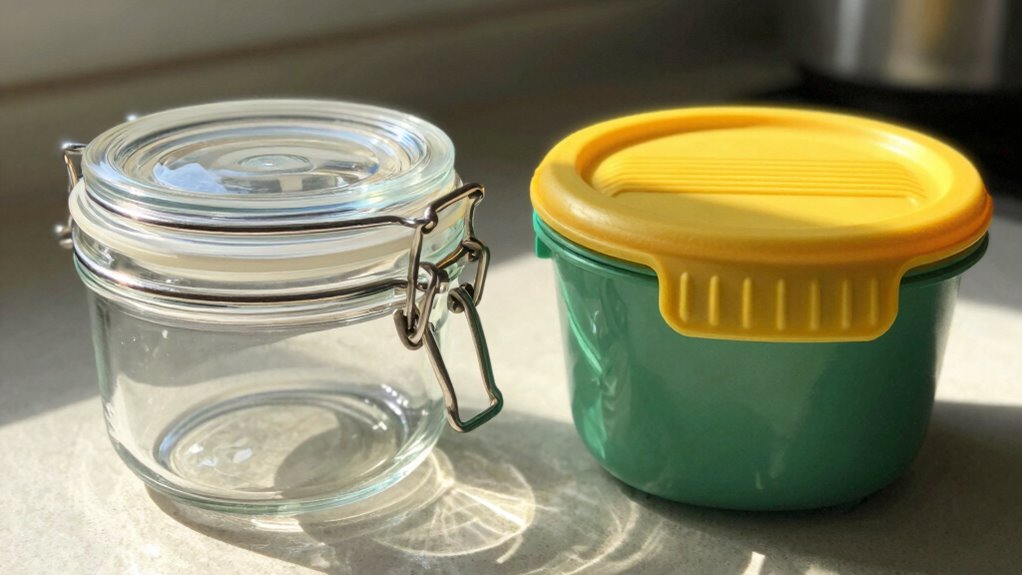
Plastic containers are often considered more affordable and convenient than their glass counterparts, making them a popular choice for everyday use. Their cost efficiency appeals to those looking to save money, especially when buying in bulk or replacing containers frequently. The lightweight nature of plastic enhances portability, allowing you to carry snacks or leftovers easily without adding extra weight. This makes plastic ideal for school lunches, picnics, or on-the-go meals. Additionally, plastic containers often come with secure lids, reducing the risk of spills during transit. While they may lack the aesthetic appeal of glass, their affordability and ease of handling make them a practical option for daily use. The material’s durability allows for repeated use without easily breaking, further enhancing their practicality. Modern plastics also offer chemical safety, ensuring food does not react with container materials. If convenience and cost efficiency are your priorities, plastic containers are hard to beat. Incorporating material properties about materials can help you choose the best containers for your needs, especially considering the piercing care and hygiene aspects to avoid chemical reactions or contamination.
How Durable Are Glass Compared to Plastic?
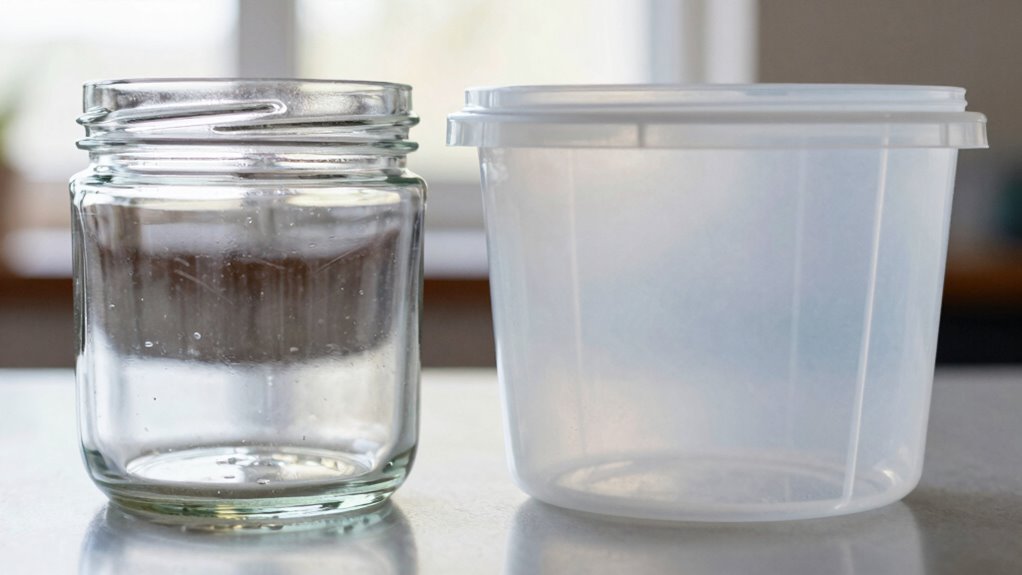
You’ll notice that plastic containers often withstand impacts better than glass, which can crack or shatter easily. While glass feels sturdier in handling, it’s more vulnerable to breakage if dropped. Understanding these differences helps you choose the right container for durability and safety. Additionally, vetted options for food storage containers can ensure you select products that balance durability with safety. In fact, considering material properties can guide you toward containers that best meet your needs for longevity and safety.
Impact Resistance Differences
While glass is often praised for its clarity and aesthetic appeal, it tends to be more fragile when subjected to impacts. Its impact resistance falls short compared to plastic, which absorbs shocks better. For example:
- Plastic containers generally have higher drop durability, preventing shattering on falls.
- Glass is prone to cracking or breaking from even minor impacts.
- Impact resistance varies widely among plastics, with some engineered for extra durability.
- Plastic’s flexibility helps it withstand accidental drops without damage.
If you prioritize impact resistance, plastic offers a clear advantage for everyday use, especially where drops are common. Glass’s fragility makes it less suitable for environments demanding high drop durability, though it remains popular for aesthetics and purity.
Breakage Vulnerability
Glass is generally more vulnerable to breakage than plastic due to its brittle nature. You’ll need to be cautious about shattering concerns, especially if you drop it accidentally. Glass containers are prone to fragility issues, making them more likely to break upon impact. This vulnerability means you should handle them carefully, particularly in busy kitchens or when traveling. Plastic, on the other hand, offers better durability and resists shattering, making it a safer choice for everyday use. However, glass’s tendency to break doesn’t mean it’s unusable—just that it requires more careful handling. If durability and safety from breakage are top priorities, plastic containers might serve you better. But if you prefer a more elegant, reusable option despite fragility issues, glass could still be worth considering.
Which Food Storage Container Is Best for Your Lifestyle?

Choosing the right food storage container depends on your daily routines and specific needs. To determine what suits you best, consider these factors:
- Microwave suitability: If you reheat food often, opt for containers labeled microwave-safe to avoid leaks or damage.
- Stackability: For tight storage in your fridge or pantry, select containers that stack easily without toppling.
- Storage space: Think about the size and shape—compact containers maximize space and keep things organized.
- Material preference: If you prefer durability and transparency, glass might be best; for lightweight and unbreakable options, plastic works well.
Your lifestyle will guide which container type fits best, whether you prioritize convenience, safety, or space efficiency.
Frequently Asked Questions
Do Glass Containers Retain Flavors Better Than Plastic?
Yes, glass containers generally retain flavors better than plastic because they have lower container permeability, preventing odors and flavors from seeping in or out. You’ll notice your food or drinks stay fresher longer with glass, as it doesn’t interact with contents the way plastic can. This means better flavor preservation over time, making glass a preferable choice if keeping flavors true is important to you.
Can Plastic Containers Be Safely Used in Microwave Ovens?
Think of plastic containers as fragile ships steering a stormy sea. You can use them in the microwave if they’re labeled microwave-safe, but beware of plastic degradation over time, which can release harmful chemicals. Always check for microwave safety symbols, and avoid heating plastics not designed for microwave use to prevent potential health risks. When in doubt, opt for glass to keep your food safe and your mind at ease.
How Do Glass and Plastic Containers Affect Food Freshness Over Time?
You’ll notice that glass containers better preserve food freshness over time because they don’t cause food spoilage or oxidation effects like some plastics do. Plastic containers may let chemicals leach in and aren’t as airtight, leading to quicker spoilage. Glass keeps out air and moisture more effectively, maintaining flavor and texture longer. So, for lasting freshness, opt for glass when storing your food, especially for extended periods.
Are There Health Risks Associated With Plastic Leaching Into Food?
Yes, there are health risks linked to plastic leaching into food. When plastics contain chemicals like BPA, they can undergo chemical leaching, especially with heat or over time. This releases endocrine disruptors that may interfere with your hormone systems. To minimize these risks, avoid heating plastic containers and choose BPA-free options whenever possible. Always check labels and opt for safer alternatives to protect your health.
What Are the Maintenance Requirements for Glass Versus Plastic Containers?
Like a well-tuned orchestra, your cleaning routines keep glass and plastic containers in harmony. For glass, you’ll want to hand wash or use dishwasher-safe cycles, avoiding sudden temperature shocks to prevent cracks. Plastic containers require regular cleaning with mild soap, but watch for scratches that can harbor bacteria. Durability considerations show glass withstands daily use better but needs careful handling, while plastic can take more abuse but may stain or retain odors over time.
Conclusion
Choosing between glass and plastic containers depends on your priorities. If you value safety and sustainability, glass is a smart pick—it’s non-toxic and recyclable. Did you know that over 300 million tons of plastic are produced globally each year, much of which ends up in landfills and oceans? By opting for glass, you diminish environmental impact and ensure healthier food storage. Ultimately, pick what fits your lifestyle, but remember, small choices can lead to a bigger positive change.