Freezer burn happens when your frozen food is exposed to air and temperature changes, causing dehydration and quality loss. It usually develops from poor packaging, frequent door openings, or inconsistent storage temperatures. You’ll notice ice crystals, dry edges, or discoloration, which affect texture and flavor but not safety. To prevent it, wrap food tightly, use airtight containers, and keep your freezer at a steady temperature. Keep exploring to learn more ways to keep your food fresh.
Key Takeaways
- Freezer burn occurs when food surface dehydrates due to air exposure and temperature fluctuations, causing dryness and texture changes.
- It results from poor air circulation, inadequate packaging, and frequent freezer door openings, leading to ice crystal formation.
- Signs include frost, icy patches, discolored edges, and leathery textures, indicating moisture loss and dehydration.
- To prevent it, tightly wrap foods, use airtight containers, fill the freezer, and minimize door openings to maintain consistent temperature.
- Freezer burn doesn’t make food unsafe but reduces quality; proper storage extends freshness and preserves flavor.

Rubbermaid Brilliance Tritan Plastic Food Storage Containers BPA Free Airtight Lids Ideal for Lunch Meal Prep & Leftovers Set of 5 (3.2 Cup)
- Leak-proof Seal: Guaranteed no-spill lid and secure latches
- Crystal-clear Material: Stain and odor resistant Tritan plastic
- Lightweight & Durable: Easy to carry and sturdy for daily use
As an affiliate, we earn on qualifying purchases.
As an affiliate, we earn on qualifying purchases.
What Is Freezer Burn: And How Does It Affect Your Food?
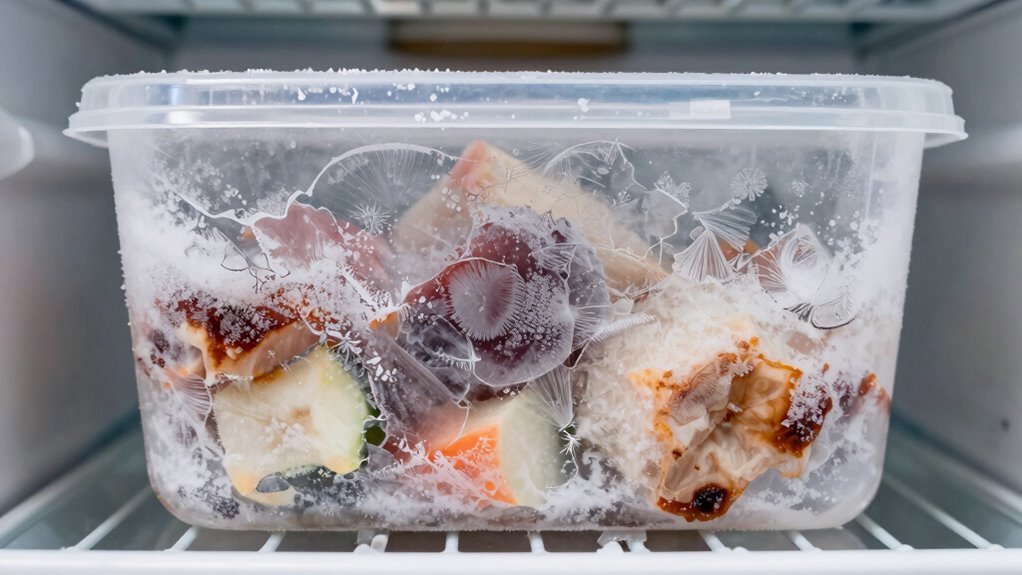
Freezer burn occurs when the surface of your frozen food becomes dehydrated due to exposure to air and temperature fluctuations. This dehydration affects the food’s texture, making it dry, tough, or leathery, which compromises its overall quality. As the moisture escapes, the food can develop icy crystals and irregular patches, leading to uneven preservation. Freezer burn also impacts flavor preservation, causing the food to taste stale, bland, or off-putting. You might notice a loss of freshness and a noticeable change in aroma. While freezer-burned food isn’t unsafe to eat, the altered texture and flavor diminish its appeal. To keep your food tasting and feeling its best, understanding how freezer burn affects these qualities is essential for proper storage. Proper freezer maintenance can help prevent the onset of freezer burn and extend the shelf life of your frozen items. Maintaining an optimal freezer temperature and minimizing temperature fluctuations are key factors in preventing moisture loss and food spoilage.
What Causes Freezer Burn? Key Factors Explained
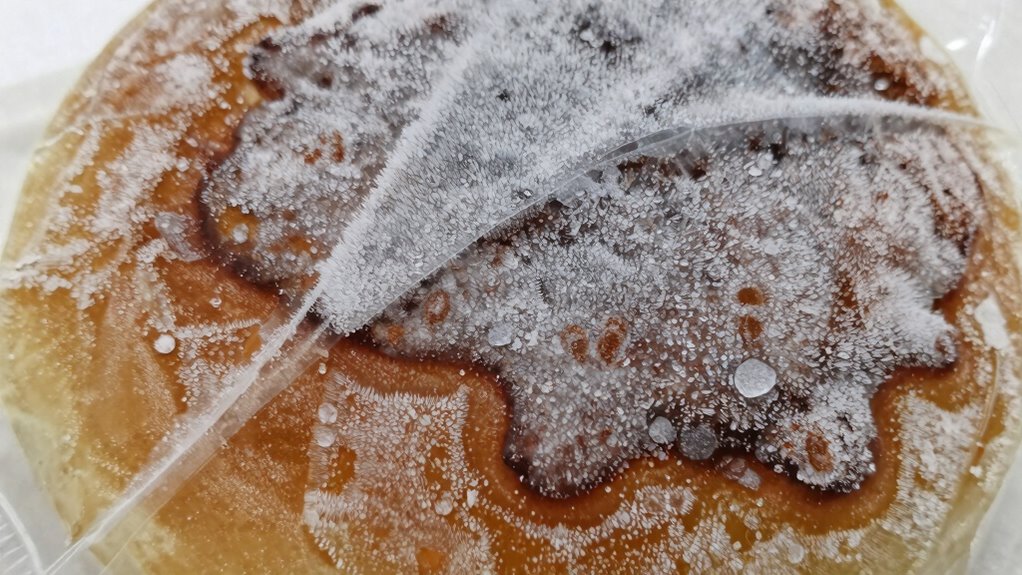
Understanding what causes freezer burn helps you prevent it from happening in the first place. The main factors include:
- Poor air circulation: When air isn’t circulating evenly, moisture builds up on some areas, leading to dehydration and ice crystals. Proper freezer organization ensures better airflow and reduces this risk. Additionally, maintaining airflow by avoiding overpacking can significantly improve freezer performance. Using proper storage techniques minimizes exposure to air and helps prevent moisture loss. Ensuring consistent temperature control is also crucial, as fluctuations can contribute to freezer burn over time.
- Temperature fluctuations: Frequent opening and closing the freezer cause temperature changes that allow ice to melt and refreeze, damaging your food.
- Packaging issues: Inadequate or loose packaging exposes food to air, speeding up dehydration.
- Extended storage time: The longer food sits in the freezer, the more likely it is to develop freezer burn, especially if conditions aren’t ideal.
- Proper freezer maintenance and regular upkeep can help ensure consistent temperature and airflow, reducing the risk of freezer burn.
How to Recognize Freezer Burn on Your Food
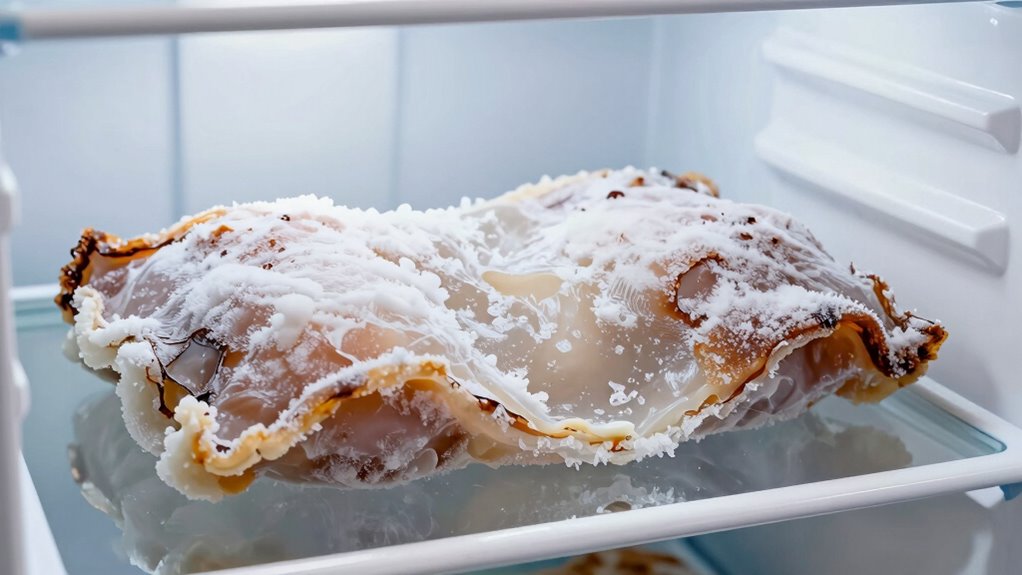
Look closely at your frozen foods for signs of freezer burn. You’ll notice visible frost or ice crystals on the surface, which indicate moisture loss. Also, check for discolored or dried edges that can signal the damage caused by freezer burn. A vacuum-sealed environment can help prevent filtration efficiency issues that lead to freezer burn. Maintaining proper storage techniques, such as eliminating excess air and using airtight containers, can further protect your food from freezer burn. Incorporating energy alignment practices, like visualizing positive outcomes for your food preservation, can enhance your overall storage success. Additionally, understanding best storage practices can inspire new ways to organize and optimize your freezer space.
Visible Frost or Ice
When your food develops visible frost or ice, it’s a clear sign that freezer burn has set in. This occurs when moisture escapes and refreezes on the food surface, often due to poor air circulation or incorrect freezer temperature. To recognize freezer burn through frost or ice:
- Look for icy patches or frost crystals that cover food.
- Notice uneven ice buildup, indicating inconsistent temperature control.
- Check for a thick layer of ice on packaging or exposed surfaces.
- Observe if frost appears more prominently on foods stored near vents or air circulation points.
Maintaining proper air circulation and keeping your freezer at the right temperature helps prevent excessive frost formation, reducing freezer burn and preserving food quality.
Discolored or Dried Edges
Discolored or dried edges are clear signs that freezer burn has affected your food. You’ll notice discolored edges as areas that appear dull, grayish, or brownish compared to the rest of the item. Dried edges often look shriveled or leathery, indicating moisture loss. These signs happen when air reaches the food’s surface, causing dehydration and oxidation. If you see these discolored or dried edges, it’s a good indication that the food has been exposed to air for too long and has begun to deteriorate. Proper packaging can help prevent freezer burn by limiting air exposure. Additionally, understanding the material of packaging can improve your storage practices and help maintain food quality. Using airtight containers or vacuum sealing can significantly reduce exposure to air and moisture. Choosing the right storage containers is essential for protecting your food from freezer burn. While preserved food is usually safe to eat, the texture and flavor might be compromised. To prevent further damage, store food tightly wrapped and use it promptly once freezer burn is visible. Ensuring proper freezer temperature also plays a role in minimizing the risk of freezer burn and maintaining food freshness.
How Long Can Food Last Before Freezer Burn Sets In?
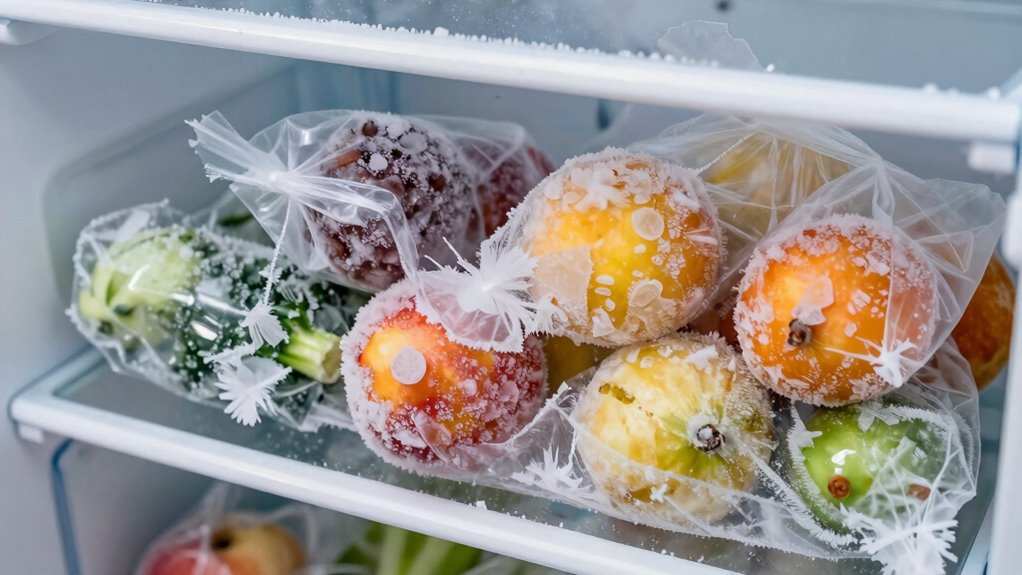
Most foods can stay in the freezer for several months before freezer burn becomes a concern, but the exact time varies depending on the type of item and how well it’s packaged. Proper storage duration helps minimize spoilage risks and maintain quality. For example:
Most foods last several months in the freezer, depending on type and packaging.
- Meat and poultry: 6 to 12 months
- Fish: 3 to 6 months
- Fruits and vegetables: 8 to 12 months
- Bread and baked goods: 3 to 6 months
Keeping food within these time frames reduces spoilage risks and preserves freshness. Overextending storage duration increases the chance of freezer burn and compromised texture or flavor. Always label and date your items, and use airtight packaging to maximize storage life and maintain food quality. Additionally, choosing appropriate body jewelry materials like titanium or surgical steel can prevent contamination and potential spoilage during storage. Proper freezer temperature control is also essential to prevent moisture loss and freezer burn, ensuring your food stays fresh longer. Understanding freezer airflow and avoiding overpacking your freezer can also help maintain consistent temperatures and prevent uneven freezing, further protecting your stored items. Additionally, adopting traditional Indigenous wellness practices, such as mindful food preparation and respecting natural cycles, can promote better preservation and health benefits. Ensuring proper freezer organization helps improve airflow and temperature regulation, which is key to reducing freezer burn.
Simple Ways to Prevent Freezer Burn
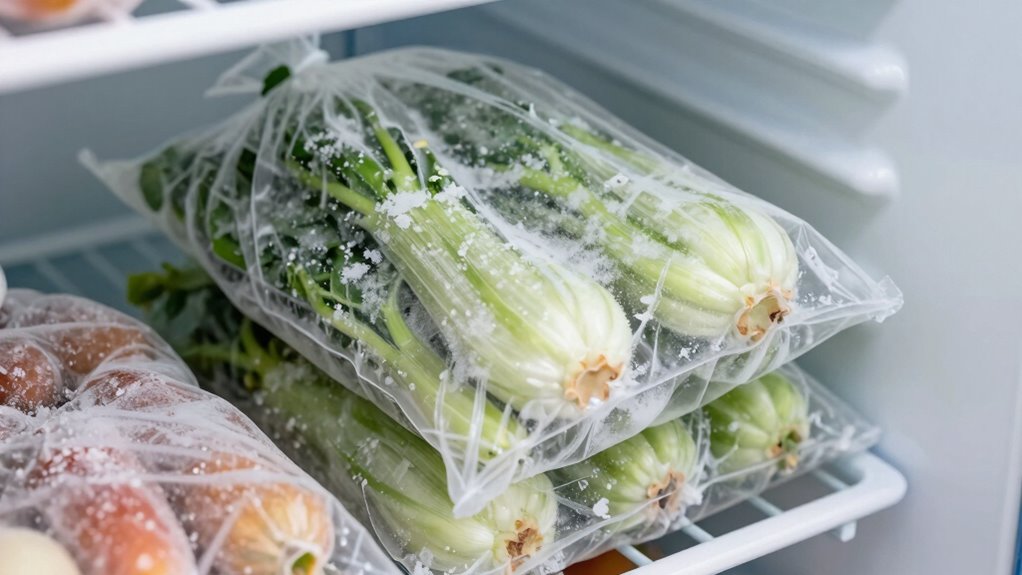
To prevent freezer burn, make sure you wrap your items tightly using proper packaging methods. Keeping your freezer as full as possible helps maintain a consistent temperature and reduces air exposure. Small steps like these can considerably extend the quality of your frozen foods. Additionally, understanding food preservation techniques can help you choose the best methods to protect your items from freezer burn. Proper airtight sealing is essential to prevent moisture loss and air contact that lead to freezer burn. Employing freezer organization strategies can also help you keep track of food and minimize the time items are stored unnecessarily.
Wrap Items Properly
Properly wrapping your food is one of the simplest and most effective ways to prevent freezer burn. Using airtight packaging creates a barrier that keeps moisture in and air out, preserving quality. Follow these steps for proper wrapping:
- Use sturdy, moisture-resistant wraps like plastic wrap or aluminum foil.
- Squeeze out excess air before sealing to minimize air exposure.
- Place items in airtight containers or resealable bags for added protection.
- Label and date your packages to keep track of freshness.
Keep Freezer Full
Keeping your freezer reasonably full helps prevent freezer burn by reducing the amount of air that circulates around your food. When your freezer has enough items, there’s less space for air to move freely, which minimizes dehydration and oxidation. To maximize this benefit, guarantee proper sealing of all containers and packaging. Proper sealing prevents moisture loss and keeps air from entering, which is vital in avoiding freezer burn. Additionally, a full freezer promotes consistent temperatures, reducing temperature fluctuations that can lead to ice crystal formation. If you have extra space, consider filling it with water bottles or freezer-safe items to maintain an even temperature and limit air circulation. This simple step helps keep your food fresher longer and protects it from the damaging effects of freezer burn.
Best Storage Methods to Keep Food Fresh and Free of Freezer Burn
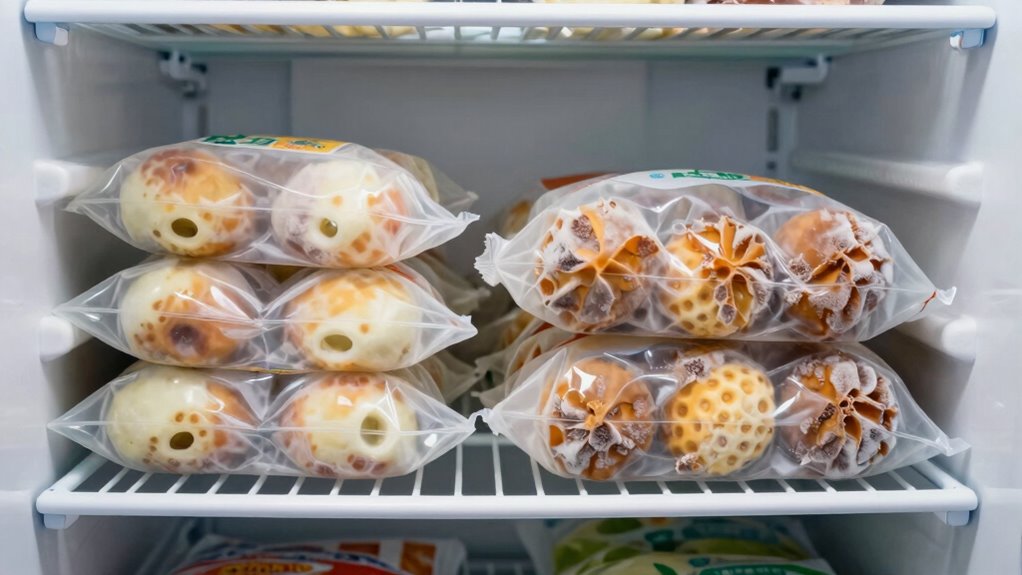
Effective storage methods are essential to keep your food fresh and prevent freezer burn. To avoid improper sealing and minimize air exposure, follow these tips:
- Use airtight containers or heavy-duty freezer bags, removing as much air as possible before sealing.
- Wrap items tightly with plastic wrap or aluminum foil before placing them in containers.
- Label everything with dates to track freshness and prevent unnecessary freezer time.
- Store food in the coldest part of your freezer and avoid opening the door frequently, which exposes food to fluctuating temperatures.
Common Mistakes That Lead to Freezer Burn: And How to Avoid Them
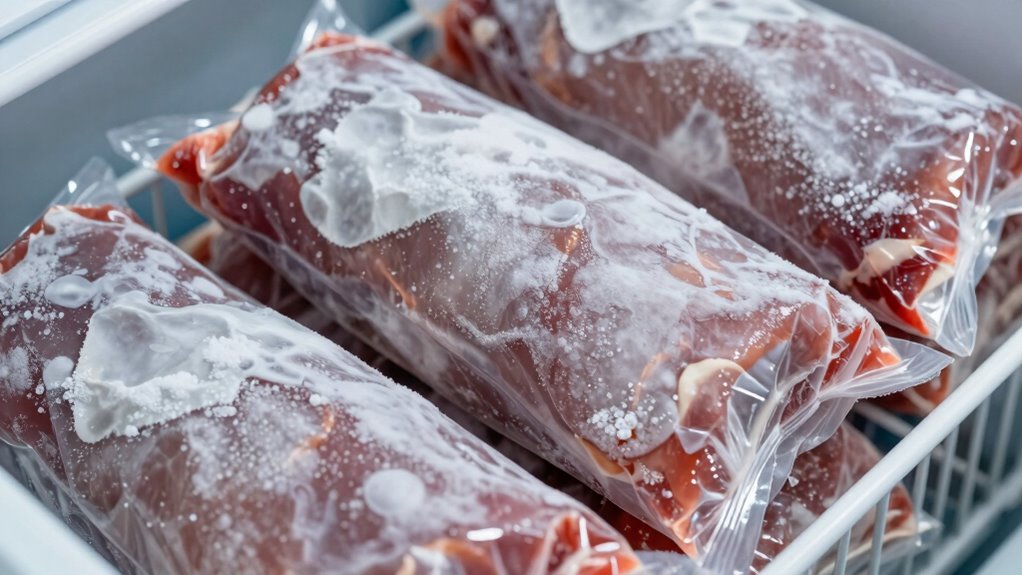
One of the most common mistakes that leads to freezer burn is not sealing food properly, which allows air to reach the surface and cause dehydration. To prevent this, always use airtight packaging designed for freezing. Vacuum-sealing bags or heavy-duty foil and plastic wrap work well to keep air out. Additionally, avoid loose wrapping or inadequate sealing, which can let moisture escape. Proper labeling is also vital; it helps you track how long food has been stored, reducing the risk of freezing items for too long. When you label packages with dates and contents, you guarantee timely use, preventing freezer burn caused by extended storage. By focusing on airtight packaging and proper labeling, you considerably reduce the chances of freezer burn developing.
Is Freezer Burn Safe? What You Need to Know About Eating Frozen Food
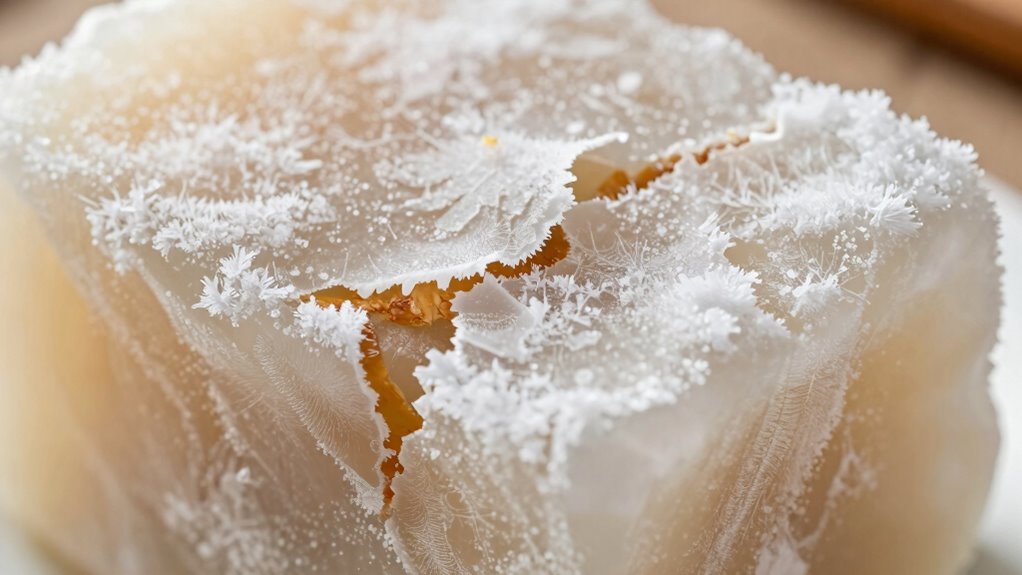
Although freezer burn affects the quality of your food, it doesn’t make it unsafe to eat. The main concern is the potential impact on food safety and nutritional value. Freezer-burned food may have a dry, tough texture and loss of flavor, but it’s generally safe if stored properly. Here’s what you should know:
- Food safety isn’t compromised unless the food shows signs of spoilage or off-odor.
- The nutritional impact is minimal; some vitamins may degrade, but most nutrients remain.
- To minimize risks, discard any food with strange smells, colors, or slimy textures.
- Always follow proper storage guidelines to prevent freezer burn and maintain quality.
Frequently Asked Questions
Can Freezer Burn Affect the Nutritional Value of Food?
Freezer burn can cause some nutritional degradation and vitamin loss in your food, but it usually doesn’t make it unsafe to eat. When ice crystals form on the surface, they damage cell walls, leading to moisture loss and nutrient reduction. While the flavor and texture might suffer, your food’s nutritional value remains mostly intact. To minimize this, store food properly and use it within recommended timeframes.
Does Freezer Burn Impact the Taste and Texture of Different Foods?
Freezer burn can markedly impact the taste and texture of your foods. Ice crystal formation causes the surface dehydration that results in dry, leathery textures, especially on meats and fruits. You might notice a dull flavor and a crumbly consistency. To minimize this, wrap foods tightly and remove excess air, reducing exposure to air and moisture that lead to ice crystals and surface dehydration, keeping your foods fresher and tastier longer.
Is There Any Way to Repair or Reduce Freezer Burn on Food?
You can’t fully repair freezer burn, but you can salvage some food by trimming off the affected areas. To reduce its impact, use proper thawing techniques like gradual thawing in the fridge or cold water. These methods help preserve texture and flavor, making your food more palatable. Remember, while you can’t completely fix freezer burn, careful handling and trimming can make your food more enjoyable and extend its usability.
How Does Humidity Influence the Development of Freezer Burn?
Humidity considerably impacts freezer burn by influencing humidity control and moisture migration. When humidity levels are high, moisture escapes from your food, leading to dehydration and freezer burn. To minimize this, you should maintain proper humidity control in your freezer and ensure food is tightly wrapped. This prevents moisture migration, keeps the food’s texture intact, and reduces the chances of freezer burn developing over time.
Are Certain Types of Packaging More Effective in Preventing Freezer Burn?
When it comes to preventing freezer burn, certain packaging materials and air-tight containers are your best allies. Think of them as a fortress, shielding your food from moisture loss and air exposure. Vacuum-sealed bags and heavy-duty aluminum foil are more effective than flimsy wraps. Using high-quality, airtight containers keeps air out, ensuring your food stays fresher longer and free from those pesky ice crystals.
Conclusion
By understanding what causes freezer burn and how to prevent it, you can keep your food fresher longer. Remember, proper storage and handling are your best allies—think of them as the guardians of your frozen treasures. Don’t let freezer burn quietly steal your food’s quality; instead, take action to preserve flavor and texture. After all, isn’t your effort worth savoring every bite and avoiding waste? Stay vigilant, and your frozen foods will thank you.