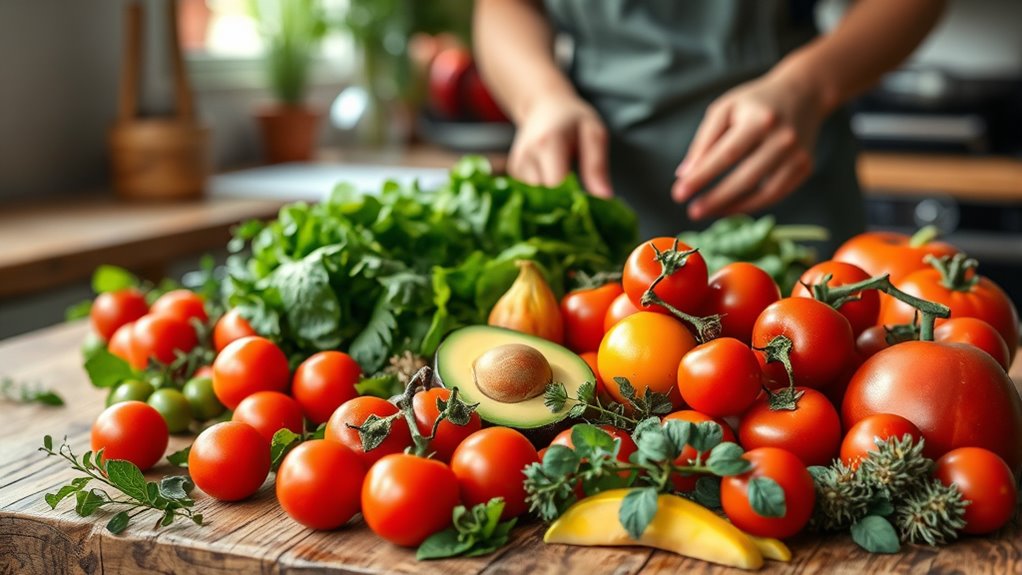

Many myths about plant-based diets are false when you plan carefully. Plant proteins, when combined properly, can match or surpass animal sources in quality. Nutrient absorption issues, like iron and calcium, can be managed with simple techniques such as soaking or pairing foods with vitamin C. A balanced plant-based diet provides enough calories and essential nutrients with variety and thoughtful choices. Keep exploring, and you’ll discover how to confidently meet all your nutritional needs plant-based.
Key Takeaways
- Properly combined plant foods provide complete proteins, dispelling myths that plant proteins are inferior or incomplete.
- Nutrients like iron, zinc, and calcium are absorbed efficiently when consuming phytate-reducing methods and vitamin C-rich foods.
- A diverse, plant-based diet supplies sufficient calories and energy for growth and daily activity, countering misconceptions of deficiency.
- Essential nutrients such as B12 and omega-3s can be obtained from fortified foods, supplements, or plant sources like algae oil.
- Myths about plant-based diets lacking nutrients are outdated; informed planning ensures all nutritional needs are met.
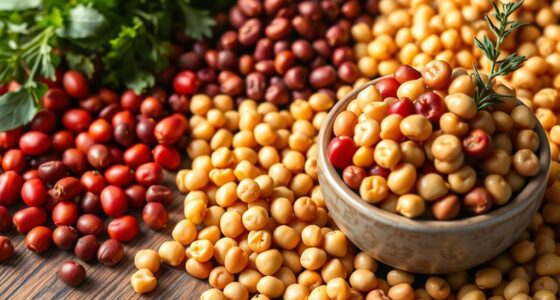
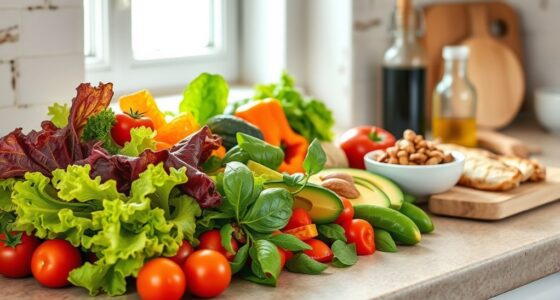
Many myths surround plant-based nutrition, leading people to question whether it can truly meet their dietary needs. One common concern is whether plant foods provide enough high-quality protein to support your body’s functions. The truth is, plant-based sources can deliver excellent protein quality, especially when you consume a variety of foods. Legumes, grains, nuts, seeds, and vegetables all contain essential amino acids, and by combining different sources—like rice and beans—you guarantee you get a complete amino acid profile. Far from being incomplete or inferior, plant proteins can match or even surpass animal proteins in quality when your diet is well-planned. Another worry is nutrient absorption; some believe that plant foods hinder your body’s ability to absorb crucial nutrients like iron, zinc, and calcium. While it’s true that some plant compounds, such as phytates and oxalates, can slightly inhibit absorption, this doesn’t mean you’re missing out on essential nutrients. In fact, your body adapts, and absorption can be improved through simple strategies. For example, soaking, sprouting, or fermenting grains and legumes reduces phytate levels, enhancing mineral availability. Additionally, consuming vitamin C-rich foods alongside plant-based iron sources, like spinach or lentils, markedly boosts absorption. You might also worry about whether you’re getting enough calories or energy from plant foods, but many plant-based diets are rich in complex carbohydrates, healthy fats, and fiber, providing sustained energy levels. When you include a variety of nutrient-dense foods, you can meet or exceed your caloric needs comfortably. Moreover, some skeptics argue that plant-based diets lack essential nutrients like vitamin B12, omega-3 fatty acids, or certain minerals. The good news is, with proper planning, you can obtain these nutrients from fortified foods, supplements, or plant sources like algae oil for omega-3s. This guarantees you’re not missing out on vital nutrients that support your overall health. Additionally, understanding vertical storage solutions and organizing your pantry can help ensure you always have a variety of nutrient-dense foods accessible, making balanced eating easier. Overall, many of these myths stem from misconceptions or outdated information. With a little knowledge and intentional food choices, you can confidently follow a plant-based diet that provides high-quality protein, promotes effective nutrient absorption, and supports your health goals. It’s not about limiting yourself but about choosing a diverse array of plant foods that work together to meet all your nutritional needs. You’ll find that a well-balanced plant-based diet is entirely capable of supporting your energy, growth, and overall wellness, dispelling the myths and proving that plant foods can indeed be complete and nourishing.
Frequently Asked Questions
Can Vegans Get Enough Omega-3 Fatty Acids From Plant Sources?
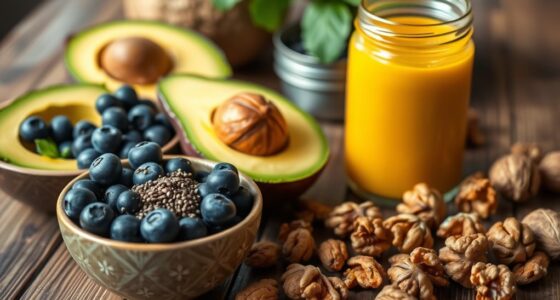
Yes, you can get enough omega-3s from plant sources. Flaxseeds, chia seeds, walnuts, and hemp seeds are rich in alpha-linolenic acid (ALA), a type of omega-3. Your body converts ALA into EPA and DHA, essential for brain and heart health. Incorporate these plant sources into your daily diet to guarantee you meet your omega-3 needs and enjoy the health benefits they offer.
Is a Plant-Based Diet Suitable for Athletes Needing High Protein Intake?
A plant-based diet can be your secret weapon, fueling high-performance athletes like a well-oiled machine. You just need to master protein timing and choose plant sources rich in complete proteins, like quinoa or soy. Focus on post-workout meals to optimize muscle recovery, ensuring your body rebuilds stronger each time. With the right approach, your plant-based diet becomes a powerful tool to support your athletic goals.
How Do Vegans Ensure Adequate Calcium for Bone Health?
You can guarantee adequate calcium for bone health by including calcium-rich plant foods like fortified plant milks, leafy greens, and tofu. To maximize calcium absorption, pair these foods with vitamin D sources or get sunlight exposure. Regularly consuming enough calcium helps maintain bone density, reducing the risk of osteoporosis. Keep track of your intake and consider supplements if needed, but focus on diverse, nutrient-dense plant-based options for ideal bone health.
Are Plant-Based Diets Safe for Children and Pregnant Women?
Yes, plant-based diets can be safe for children and pregnant women when you focus on nutritional adequacy through careful diet planning. You need to include a variety of nutrient-rich foods like legumes, whole grains, fruits, vegetables, and fortified products to meet essential nutrient needs. Consulting with healthcare providers or registered dietitians guarantees you’re covering all bases, supporting healthy growth and development during these vital life stages.
Can a Plant-Based Diet Effectively Support Weight Loss Goals?
Yes, a plant-based diet can effectively support your weight loss goals. Focus on proper meal timing and portion control, rather than relying solely on calorie counting. Incorporate nutrient-dense foods like vegetables, fruits, and legumes, which help you feel full longer. By balancing your meals and staying consistent, you’ll see progress without feeling deprived, making your weight loss journey sustainable and healthy.
Conclusion
So, next time someone claims plant-based diets lack protein, remember that over 70% of plant foods contain all essential amino acids. Don’t let myths discourage you from exploring this healthy, sustainable way of eating. With facts on your side, you can confidently debunk misconceptions and enjoy the numerous benefits of plant-based nutrition. Embrace the truth—your body and the planet will thank you!