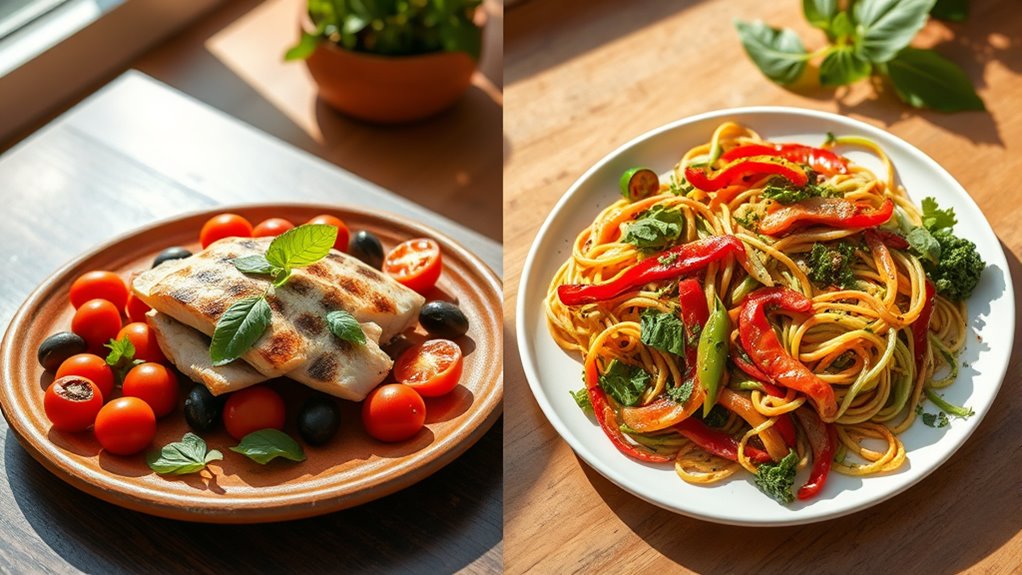

The Mediterranean diet emphasizes regional, traditional foods like olive oil, vegetables, and seafood, making it naturally plant-based with limited meat. In contrast, the flexitarian approach is more flexible, blending global cuisines and allowing occasional meat, focusing on personalized, plant-centered meals. If you’re curious about how these diets incorporate vegetarian principles differently—and how cultural influences shape them—keep exploring to see which might suit your lifestyle best.

Get kitchen staples and gadgets delivered free — and shop member deals
- Fast, free delivery on millions of items
- Access to Prime Big Deal Days deals on October 6–7
- Prime Video, Amazon Music and more included
Key Takeaways
- The Mediterranean diet emphasizes traditional regional ingredients and authentic flavors, often including fish and dairy, with limited meat.
- The flexitarian approach is more flexible, focusing on plant-based foods but allowing occasional meat and diverse global culinary influences.
- Mediterranean meal planning centers around regional herbs, spices, and seasonal produce specific to Mediterranean countries.
- Flexitarian diets prioritize variety, combining dishes from multiple cuisines and adapting recipes to personal preferences.
- Both diets promote health and sustainability, but the Mediterranean diet offers cultural authenticity, while flexitarian emphasizes global adaptability.
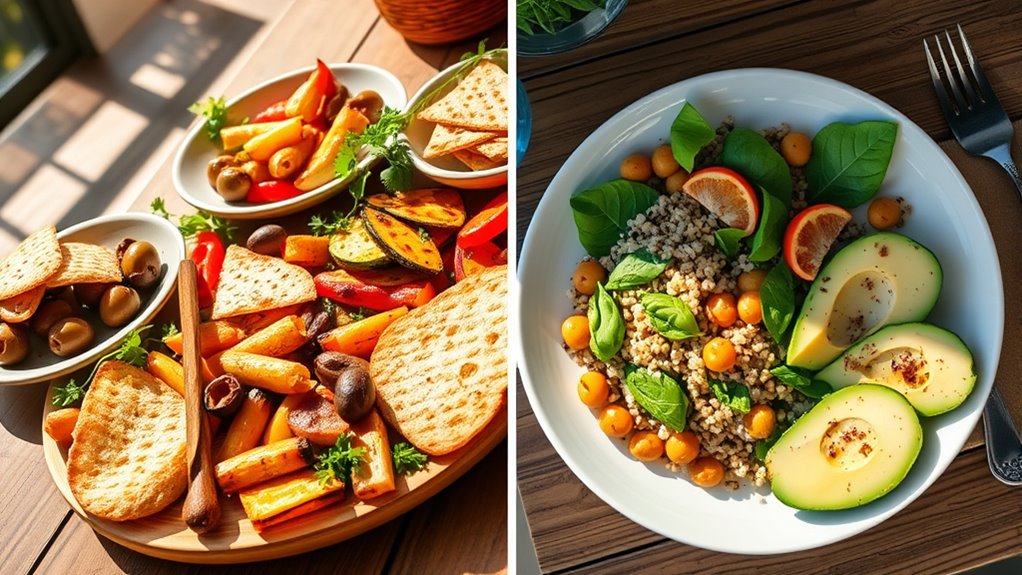
Are you trying to decide between the Mediterranean and flexitarian diets? Both offer flexible, health-conscious ways to eat, but they differ in their roots and how they influence your daily meal planning. Understanding the cultural influences behind each diet can help you choose what suits your preferences and lifestyle best.
The Mediterranean diet draws heavily from the culinary traditions of countries bordering the Mediterranean Sea, like Greece, Italy, and Spain. These cultures emphasize fresh vegetables, fruits, whole grains, nuts, seeds, olive oil, and moderate amounts of fish and dairy. The cultural influences are evident in the vibrant, flavorful dishes that often include herbs, spices, and communal eating practices. When planning meals, you’ll find yourself incorporating ingredients that are staples in these regions, such as Mediterranean vegetables like eggplant and zucchini or seafood like sardines and anchovies. Meal planning becomes about balancing the richness of olive oil with the freshness of produce, focusing on seasonal and locally sourced ingredients that reflect the region’s culinary heritage. Incorporating a variety of traditional herbs and spices enhances the authentic flavors and supports cultural authenticity.
In contrast, the flexitarian diet isn’t tied to a specific culture but is more of a flexible approach to eating that emphasizes plant-based foods while allowing for occasional meat consumption. Its cultural influences are broader, borrowing from various cuisines and encouraging a personalized, adaptable framework. When planning meals on a flexitarian plan, you focus on maximizing plant-based ingredients like legumes, vegetables, grains, and fruits. You can easily adapt recipes from different cultural backgrounds to suit your taste, adding or omitting animal products as desired. This approach offers more freedom in meal planning because you’re not restricted to specific traditional dishes; instead, you craft a diverse menu that aligns with your nutritional goals and cultural preferences. You might choose to include Asian stir-fries with tofu, Mediterranean hummus bowls, or classic American veggie burgers, depending on your mood and available ingredients.
The flexitarian diet offers global culinary flexibility, blending plant-based eating with adaptable, personalized meal choices.
Both diets incorporate cultural influences, but they do so differently. The Mediterranean diet emphasizes traditional regional foods, which can make meal planning feel like a culinary journey through the Mediterranean. Conversely, the flexitarian approach offers greater versatility, allowing you to blend influences from around the world into your meals without strict adherence to a particular cuisine. Whichever you choose, understanding these cultural and practical differences can help you create a sustainable, enjoyable eating pattern that fits your lifestyle. Ultimately, your decision may hinge on whether you prefer the regional authenticity of the Mediterranean or the adaptable, global nature of a flexitarian plan.
As an affiliate, we earn on qualifying purchases.
Frequently Asked Questions
How Do Cultural Differences Influence Mediterranean and Flexitarian Diets?
Cultural differences shape your Mediterranean and flexitarian diets by influencing your food choices through cultural food customs and regional eating habits. In Mediterranean regions, you’re often influenced by traditional dishes emphasizing olive oil, fresh vegetables, and seafood, reflecting local customs. Flexitarian diets are more adaptable, shaped by regional preferences and individual lifestyle choices. These cultural nuances encourage diverse, balanced eating patterns that honor local traditions while promoting health and sustainability.
Are There Environmental Benefits Unique to One Diet Over the Other?
You’ll find that the Mediterranean diet generally has a lower environmental impact due to its emphasis on plant-based foods, healthy fats, and sustainable agricultural practices. In contrast, a flexitarian diet offers flexibility, which can reduce meat consumption but may still involve higher environmental impacts depending on how foods are produced. Overall, the Mediterranean approach often promotes more sustainable agricultural practices, making it more environmentally friendly for reducing your ecological footprint.
What Are Common Challenges People Face When Adopting These Diets?
When adopting these diets, you often face challenges like meal planning, especially balancing variety and nutrition. Dietary restrictions can make it hard to find suitable ingredients or recipes that fit your lifestyle. You might also struggle with social situations or dining out, where options are limited or unclear. Staying consistent requires flexibility and planning, but understanding your preferences helps you overcome these hurdles and make sustainable changes.
How Do These Diets Impact Long-Term Health Outcomes?
You might think swapping diets is just a trend, but they actually boost your long-term health by promoting nutritional balance and lifestyle sustainability. Ironically, choosing a Mediterranean or flexitarian approach can reduce chronic disease risk, improve heart health, and support weight management. By sticking to these diets, you’re investing in your future well-being, proving that sometimes, the best health advice is simply eating smarter and living more sustainably.
Can These Diets Be Combined or Personalized for Individual Needs?
Yes, you can combine or personalize these diets using personalization strategies and dietary customization. Focus on your specific health goals, preferences, and lifestyle, then adjust the balance of plant-based foods, healthy fats, and proteins accordingly. Incorporate elements from both diets that resonate with you, and seek guidance from a nutritionist if needed. This way, you create a sustainable eating plan tailored precisely to your individual needs.
Conclusion
Choosing between Mediterranean and flexitarian diets lets you enjoy diverse, plant-rich meals tailored to your lifestyle. Did you know that adopting a Mediterranean diet can reduce heart disease risk by up to 30%? Whether you prefer the rich flavors of the Mediterranean or the flexible approach of a flexitarian plan, both offer delicious ways to improve your health. So, pick what suits you best and enjoy the journey toward a healthier, more sustainable diet.
NFL season / tailgating Picks
team gear
As an affiliate, we earn on qualifying purchases.