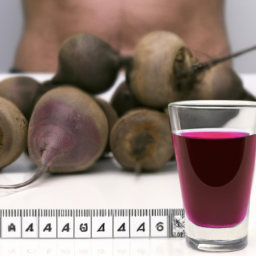
By using carrot tops and beet greens in your root-to-stem juices, you maximize nutrients, reduce food waste, and support eco-friendly habits. Incorporate these greens into smoothies or ferment them to boost probiotics and flavor. Washing thoroughly before juicing or fermenting helps preserve nutrients and guarantees safety. Continuing this approach lets you enjoy vibrant, healthful drinks while minimizing waste—discover more ways to incorporate every part of your produce.
Key Takeaways
- Carrot tops and beet greens are nutrient-dense parts often discarded but can be used in juices for added vitamins and minerals.
- Incorporating these greens into root-to-stem juices reduces food waste and promotes sustainable, eco-friendly practices.
- Blending or fermenting carrot tops and beet greens enhances probiotic content and extends shelf life naturally.
- Thoroughly wash greens before juicing or fermenting to ensure safety and maximize nutrient retention.
- Using these parts in juices supports a healthy lifestyle by maximizing nutrition and minimizing produce waste.
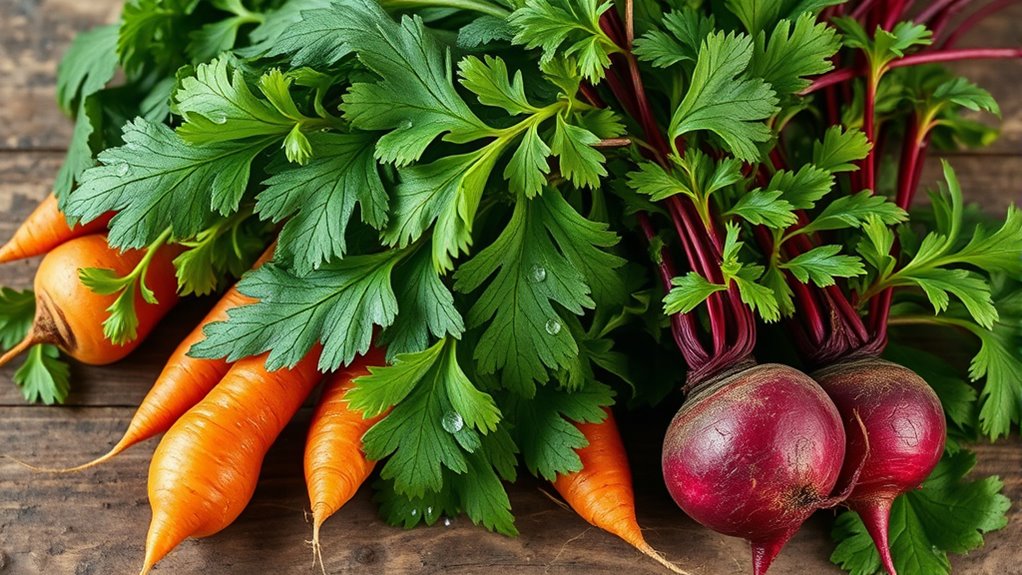
Root-to-stem juices are an innovative way to maximize nutrition and reduce waste by using every part of vegetables and fruits. When you incorporate this approach into your daily routine, you’re not just getting more nutrients—you’re also supporting sustainable farming practices. By utilizing parts of produce that are often discarded, like carrot tops and beet greens, you’re helping reduce food waste and promote a more eco-friendly lifestyle. This method aligns well with the principles of sustainable farming, which emphasize minimal waste and efficient use of resources.
One of the most exciting aspects of creating root-to-stem juices is experimenting with fermentation techniques. Fermentation not only preserves the nutrients in your vegetables and fruits but also enhances their probiotic content, making your juices even healthier. When you ferment leftover vegetable scraps or greens, you’re engaging in a natural process that boosts flavor and extends shelf life. Using fermentation in your juice preparation allows you to transform what might seem like waste into delicious, health-boosting drinks. Plus, the tangy, complex flavors that fermentation imparts can elevate your juice game, making each glass a unique experience.
To get started, gather your carrot tops and beet greens—both are rich in vitamins, minerals, and antioxidants. Instead of tossing them out, wash them thoroughly and prepare them for juicing or fermenting. If you prefer fresh juices, blend the greens with other vegetables and fruits for a nutrient-dense drink. For fermentation, you can create a brine or fermenting mixture, submerging the greens in a saltwater solution to encourage natural fermentation. This process encourages beneficial bacteria to develop, which supports your gut health and enhances the nutritional profile of your juice. Additionally, understanding nutrient preservation techniques can help you retain maximum vitamins and minerals during storage and processing.
As an affiliate, we earn on qualifying purchases.
Frequently Asked Questions
Are Root-To-Stem Juices Safe for Children?
Root-to-stem juices can be safe for children if prepared properly, but you should consider pediatric safety first. Always wash and source organic produce to reduce pesticide exposure. Keep flavor preferences in mind, as kids might be sensitive to strong tastes from greens like beet greens or carrot tops. Introduce these juices gradually, blending them with fruits, and consult your pediatrician if you’re unsure about specific ingredients or quantities.
Can These Juices Be Stored Long-Term?
You can store root-to-stem juices long-term if you use proper storage methods and preservation techniques. Refrigerate the juices in airtight containers and consume within 24-48 hours for freshness. For longer storage, consider freezing them in small portions or using preservation methods like pasteurization or adding natural preservatives. These techniques help maintain quality and safety, ensuring you enjoy nutritious juices over an extended period.
Do They Contain Any Allergens?
Think of your health as a treasure chest—you want to protect it. These juices may contain allergen concerns, especially if you’re sensitive to greens like carrot tops or beet greens. Cross reactivity can trigger reactions if you’re allergic to related plants. Always check ingredient sources and consult with a healthcare professional if you’re unsure. Being cautious keeps your wellness safe, like guarding precious gems.
How Do They Compare Nutritionally to Conventional Juices?
You’ll find that root-to-stem juices, like those with carrot tops and beet greens, offer superior nutritional benefits compared to conventional juices. They’re packed with vitamins, minerals, and antioxidants that support your health. Plus, they have unique flavor profiles—earthy, fresh, and slightly bitter—that add variety to your diet. By choosing these juices, you get more nutrients and a richer taste experience, making them a smart, flavorful alternative to standard options.
Are There Any Taste Differences With Different Varieties?
You’ll notice distinct taste variations with different varieties of root-to-stem juices. For example, carrot tops tend to have a slightly bitter, herbal flavor, while beet greens offer a more earthy, robust taste. The variety influences the overall flavor profile, so experimenting with different types can help you find your preferred balance. These differences make each juice unique, encouraging you to explore and enjoy the diverse flavors nature provides.
Conclusion
By using carrot tops and beet greens in your juices, you’re not only reducing waste but also boosting nutrition. Some experts believe that incorporating these often discarded parts can even enhance the health benefits of your drinks, thanks to their rich antioxidants and vitamins. So next time you juice, consider embracing the whole plant—it’s a simple way to support sustainability and potentially reveal extra health perks. After all, nature often hides its best treasures where we least expect them.