
🔍 Read the full analysis: Vitello Tonnato: The Cold Veal Classic That Confuses Everyone At First on Mad Tasting

Get kitchen staples and gadgets delivered free with Prime
- Fast, free delivery on millions of items
- Prime Video, Amazon Music and more included
- Member-only deals all year
TL;DR
Mad Tasting’s guide describes vitello tonnato, a Piedmont-associated Italian antipasto of thinly sliced chilled veal covered in tuna sauce. It outlines the dish’s traditional ingredients and preparation, while noting that its fish-and-meat combination can surprise first-time diners.
Mad Tasting has published a guide to vitello tonnato, an Italian antipasto associated with Piedmont that pairs thinly sliced, chilled veal with a creamy tuna-based sauce. The dish can seem like an unusual combination to diners encountering it for the first time, and the guide explains how its mild meat, savory fish and sharp accents are intended to balance one another.
Mad Tasting explains that the name combines the Italian words for veal and tuna-style, reflecting the dish’s defining pairing. In the guide’s description, the veal is gently cooked, cooled and sliced thin before being dressed with sauce made from tuna, commonly with anchovies and capers. Lemon and olive oil are also used; some versions add egg yolk or mayonnaise for a smoother, richer texture.
The guide says each ingredient plays a different role. Veal’s mild flavor provides a restrained base, while tuna adds body and savory depth. Anchovies intensify that savory quality, and capers and lemon bring salt and acidity to offset the oil and richness. Mad Tasting notes that blending the tuna into a sauce helps the flavors come together rather than presenting fish as a separate topping.
For a home preparation, Mad Tasting recommends gently simmering a lean veal roast with aromatics, then cooling it in its cooking liquid before slicing. The sauce is blended separately and adjusted to taste. The veal is coated, covered and refrigerated for at least two hours, with overnight resting offered as an option. The guide describes this as a make-ahead dish, while cautioning that excessive chilling can make the meat feel firmer and mute aromas.
A Piedmontese classic · Cold antipasto
Vitello Tonnato: The Cold Veal Classic That Confuses Everyone At First
Thin slices of chilled veal meet a silky tuna sauce. Mad Tasting’s guide explains how savory depth, bright acidity and a gentle hand bring this unexpected pairing into balance.
01 / Why the pairing works
Each ingredient has a job.
Balance is the point: the sauce should support the veal, not overwhelm its mild flavor.
Veal
Gently cooked, cooled and sliced thin. Its mild flavor gives the sauce room to shine.
Tender · restrainedTuna
Blended into a creamy sauce, it adds moisture and savory depth to lean, chilled meat.
Savory · richAnchovies
A measured amount intensifies the sauce’s savory character without taking over.
Salty · umamiCapers & lemon
Salt and acidity cut through the oil and richness, keeping each bite bright.
Sharp · fresh02 / Home preparation
Cook gently. Cool completely. Dress ahead.
The guide describes a make-ahead platter: the rest lets the flavors come together before serving.
Simmer
Cook a lean veal roast gently with aromatics. About 1–1½ hours is an estimate; check doneness.
Cool
Let the veal cool in its cooking liquid, then slice it thinly for a tender, even platter.
Blend
Blend tuna with anchovies, capers, olive oil and lemon. Egg yolk or mayonnaise is optional.
Rest
Coat the slices and refrigerate at least two hours; overnight resting is also suggested.
Serve
Garnish with capers, lemon and parsley. Keep chilled until service.
03 / Fine-tune the sauce
Adjust in small steps.
Blend the sauce, then taste before adding more salt, acid or oil. Start modestly: too much anchovy, caper or lemon can dominate the veal, while excess oil can weigh the sauce down.
Egg yolk or mayonnaise can make the sauce fuller and creamier; a lighter version can skip both. Resting helps flavors meld, but excessive chilling can firm the meat and mute aromas.
Let the platter sit briefly outside the refrigerator before serving, while avoiding extended time unrefrigerated. Follow reliable food-safety guidance for cooked meat and leftovers.
04 / What the guide establishes
A regional classic with room to vary.
Mad Tasting presents the dish as associated with Piedmont, while noting that kitchens use different proportions and methods.
Cold veal with tuna sauce
Thinly sliced cooked veal served beneath a creamy tuna-based sauce as an Italian antipasto.
No—it’s optional
Some versions use egg yolk or mayonnaise for a richer texture. The guide does not establish one definitive recipe.
Recipes vary by kitchen
Anchovy, caper, lemon and oil amounts differ. The guide gives no dated origin story or single authoritative formula.
Yes, keep it chilled
Rest the sauced veal for at least two hours or overnight. Refrigerate until service and handle cooked meat safely.
Why the Veal-and-Tuna Pairing Works
Mad Tasting addresses a practical question raised by the dish’s name and appearance: why serve fish sauce over meat? The guide’s explanation is that the ingredients have complementary roles. Lean, gently flavored veal can seem dry or plain when cold; the tuna sauce contributes moisture and savory richness. Meanwhile, lemon and capers keep the sauce from tasting overly heavy.
That balance also makes preparation matter, according to the guide. Mad Tasting advises using a gentle simmer to avoid tightening the meat and adding strongly flavored ingredients in measured amounts. Too much anchovy, caper or lemon can dominate the veal, while too much oil can weigh down the sauce. For cooks planning a meal, the resting time described in the guide offers convenience, but it also calls for refrigerator space and attention to when the dish is served.
As an affiliate, we earn on qualifying purchases.
A Piedmontese Antipasto, Served Cold
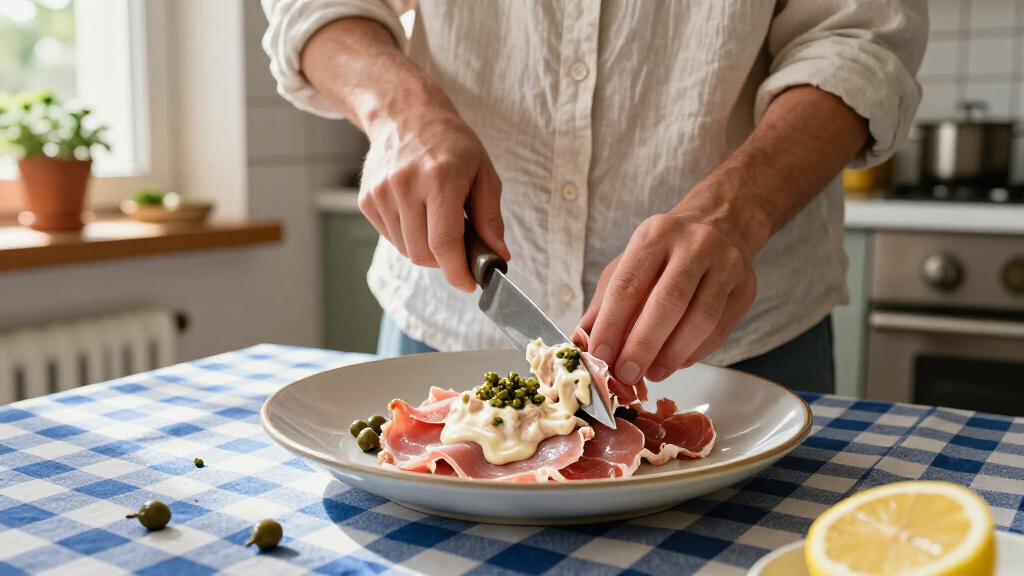
Mad Tasting presents vitello tonnato as a classic antipasto associated with Piedmont, in northwestern Italy. In the guide’s description, it is not a warm roast served with a fish side: the veal is cooked first, cooled, sliced and served beneath a blended tuna sauce. Cooling firms the meat enough to make thin slices easier to cut and gives the assembled dish time to rest.
The guide describes a traditional approach using gently cooked veal and a sauce built from tuna, anchovies and capers. Olive oil and lemon are common components, while egg yolk or mayonnaise may be used to make the sauce creamier. Mad Tasting does not provide a dated origin story or document a single definitive recipe, so its regional association should not be taken as proof that every version follows the same formula.
Recipe Details Vary by Kitchen
Mad Tasting’s source does not identify a particular restaurant, chef, historical document or newly announced event; it is a food guide rather than a report on a change in the dish’s status. The guide also does not establish one authoritative recipe. Ingredients and proportions can vary, especially whether cooks use egg yolk or mayonnaise and how much anchovy, caper, lemon or oil they add.
The suggested cooking time of about one to one-and-a-half hours is an estimate in the guide, not a substitute for checking the meat’s doneness. The material does not give a food-safety temperature or a specific storage limit for leftovers. Readers should follow reliable food-safety guidance for cooking and refrigerating cooked meat, and keep the dish chilled until service.
Serving and Preparing the Dish
Mad Tasting’s practical next step is to prepare the veal and sauce ahead, then slice, coat and garnish the meat before serving. The guide recommends allowing the assembled platter to rest in the refrigerator for at least two hours and suggests garnishing with capers, lemon and parsley. Before serving, cooks can let the platter sit briefly out of the refrigerator so the flavors are not as muted by very low temperatures, while avoiding leaving perishable food unrefrigerated for an extended period.
No later development or follow-up from Mad Tasting is specified. For readers trying the dish, the guide’s key recommendation is to balance the sauce against the veal: begin with modest amounts of salty and acidic ingredients, taste, and adjust rather than covering the meat with an overpowering layer.
Key Questions
What is vitello tonnato?
Mad Tasting describes it as an Italian antipasto associated with Piedmont: thinly sliced cooked veal served cold with a creamy sauce made primarily from tuna.
Why is tuna sauce served with veal?
According to the guide, the mild, lean veal provides a base for the tuna’s savory richness. Anchovies add depth, while capers and lemon bring salt and acidity to balance the sauce.
Does the sauce always contain mayonnaise?
No. Mad Tasting describes mayonnaise or egg yolk as optional additions for a fuller, creamier texture. A lighter version can be made without them.
Can vitello tonnato be prepared ahead?
Yes. The guide recommends refrigerating the sauced veal for at least two hours, with overnight resting as an option. Keep it refrigerated until service and follow safe handling practices for cooked meat.
Source: Mad Tasting
Halloween Picks
halloween
As an affiliate, we earn on qualifying purchases.