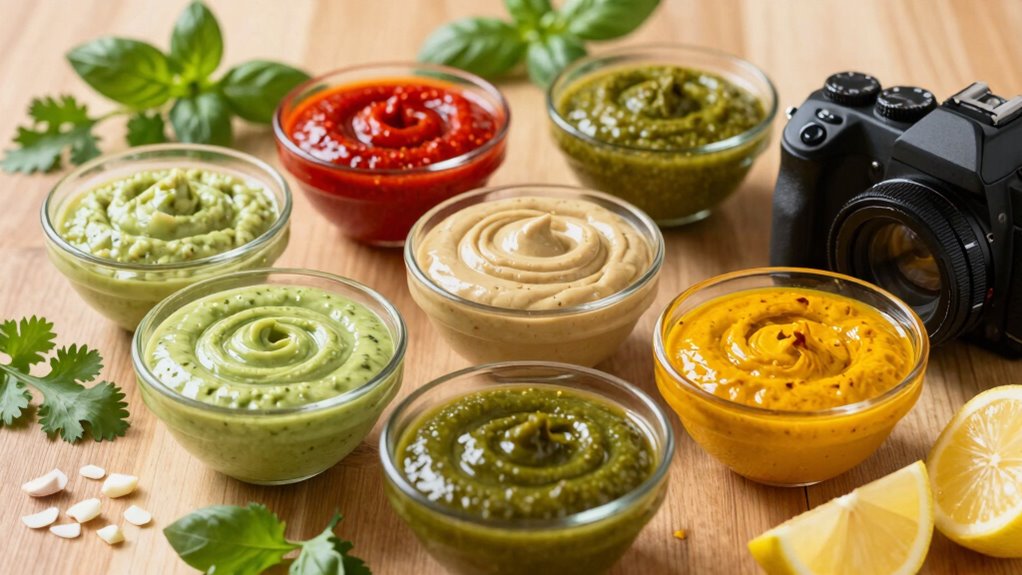

To build bold vegan sauces fast, focus on balancing acidity, sweetness, saltiness, and umami with ingredients like soy sauce, miso, tahini, or nutritional yeast. Start by sautéing garlic or spices early for aroma, then add liquids gradually to control flavor and consistency. Brighten your sauce with citrus juice and adjust seasonings as you go. Adding fermented ingredients or smoky spices enhances depth. Keep experimenting, and you’ll discover how to create rich, satisfying flavors quickly.

Get kitchen staples and gadgets delivered free with Prime
- Fast, free delivery on millions of items
- Prime Video, Amazon Music and more included
- Member-only deals all year
Key Takeaways
- Use small amounts of liquids like water or broth to control consistency and enhance flavor during blending.
- Incorporate umami-rich ingredients such as miso, soy sauce, or nutritional yeast early for depth.
- Brighten flavors with citrus juice or vinegar, adding acidity to balance the sauce quickly.
- Add fermented ingredients and spices like smoked paprika or cayenne to boost complexity and richness.
- Taste and adjust salt, sweetness, or acidity frequently to achieve a harmonious, well-balanced flavor.
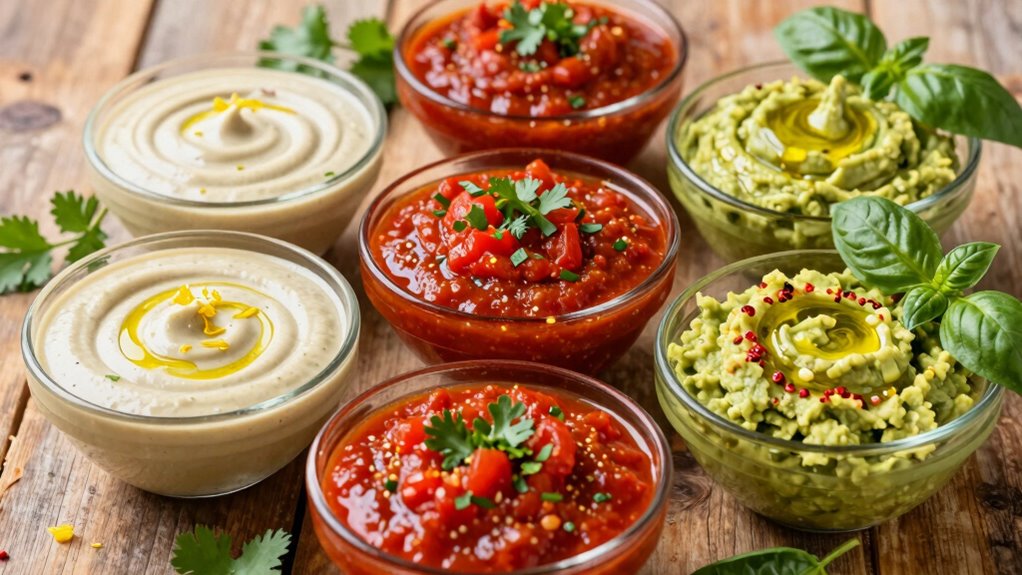
If you’re looking to elevate your plant-based dishes, mastering vegan sauces is essential. These sauces not only add depth and richness but also serve as a key way to incorporate plant-based alternatives into your meals, making dishes more satisfying and complex. When you focus on flavor enhancement, you can turn simple ingredients into culinary masterpieces. Vegan sauces are versatile and can be tailored to suit any cuisine or taste preference, so learning how to build them quickly becomes a powerful tool in your kitchen arsenal.
Start with the basics: a good vegan sauce balances acidity, sweetness, saltiness, and umami. Using ingredients like tahini, nut butters, soy sauce, or miso can provide a solid umami foundation. These plant-based alternatives are packed with flavor and serve as excellent bases for creating sauces that are both rich and savory. To amplify flavor, consider adding garlic, ginger, or spices early in the cooking process. These aromatics release their essence, infusing the sauce with layers of taste that make every bite more satisfying. Don’t shy away from experimenting with different herbs—cilantro, basil, or thyme can transform a simple sauce into something memorable.
Build flavorful vegan sauces with a balance of acidity, sweetness, saltiness, and umami using herbs and aromatics.
A quick way to build flavor fast is to leverage fermented ingredients, such as tamari or nutritional yeast. They offer a salty, cheesy depth that’s hard to achieve with fresh ingredients alone. Incorporating fermented ingredients can significantly boost the overall flavor profile of your sauces. When blending your sauce, start with a small amount of liquid—water, plant-based milk, or broth—and gradually add more until you reach your desired consistency. This approach prevents over-thinning and ensures you maintain control over the flavor concentration. A splash of citrus juice, like lemon or lime, can brighten the sauce instantly, providing a fresh contrast to richer elements. Additionally, understanding flavor balancing techniques can help you create sauces that are harmonious and well-rounded.
To ensure your vegan sauces are both flavorful and cohesive, taste as you go. Adjust salt, acidity, or sweetness to balance the flavors perfectly. If the sauce feels dull, a pinch of maple syrup or agave can add a touch of sweetness that enhances other flavors without overpowering. For extra depth, incorporate smoked paprika or cayenne pepper—these spices add complexity and a hint of heat that elevates the overall profile.
Mastering the art of building vegan sauces quickly means understanding how to combine plant-based alternatives with strategic flavor enhancers. With practice, you’ll be able to craft sauces that are not only vibrant and flavorful but also quick to make, giving your plant-based dishes the boost they deserve. Whether drizzled over grains, tossed with vegetables, or used as dips, these sauces will become your go-to for adding richness and excitement to every meal.
Frequently Asked Questions
Can Vegan Sauces Replace All Traditional Sauces?
Vegan sauces can often replace traditional sauces, thanks to their flavor versatility and ingredient variations. You can create rich, tangy, or spicy flavors without animal products, making them suitable for most dishes. While some classic sauces like creamy aioli or cheesy Alfredo might need alternatives, many vegan sauces adapt well across cuisines. With a bit of creativity, you’ll find vegan sauces can effectively mimic or even enhance traditional flavors.
Are Vegan Sauces Suitable for All Dietary Restrictions?
Vegan sauces are generally suitable for most dietary restrictions, thanks to their flavor versatility and ingredient variety. They can accommodate gluten-free, soy-free, and nut-free needs when you choose ingredients carefully. However, always check labels or prepare homemade to avoid allergens or specific restrictions. If you’re cautious, vegan sauces can be a flexible, delicious addition that aligns well with many dietary requirements.
How Long Do Vegan Sauces Typically Last?
Imagine your vegan sauce as a lively garden; its shelf life depends on how well you care for it. Typically, it lasts 4-7 days in the fridge. Proper storage tips include keeping it in an airtight container and avoiding cross-contamination. If it smells off or shows mold, it’s time to toss it. With good care, your sauce stays fresh and flavorful longer, like a well-tended garden blossoming anew.
Can Vegan Sauces Be Stored at Room Temperature?
No, you shouldn’t store vegan sauces at room temperature for safety reasons. Proper storage safety involves keeping most vegan sauces in the fridge to prevent spoilage. Typically, their shelf life in the refrigerator is about 3-7 days, depending on ingredients. Leaving vegan sauces out can lead to bacterial growth, risking foodborne illness. Always check for signs of spoilage before use, and refrigerate promptly to extend their freshness.
Are Vegan Sauces Always Gluten-Free?
Vegan sauces aren’t always gluten-free, so you need to check labels carefully. Gluten cross contamination can happen during processing, so look for certified gluten-free options if you’re sensitive. When making your own, use vegan ingredient substitutions that are naturally gluten-free, like coconut aminos instead of soy sauce. Always read ingredient lists to avoid hidden gluten, ensuring your sauce stays safe and suitable for your diet.
Conclusion
Now that you’re armed with the basics of vegan sauces, you’re ready to turn any dish into a flavor explosion. Think of your pantry as a toolbox, each ingredient a tool to craft delicious, plant-based magic. With a little creativity, you’ll find that building bold sauces is as easy as painting with a vibrant palette. So go ahead—dive in and let your taste buds dance in a symphony of flavor!
Fall Picks
fall essentials
As an affiliate, we earn on qualifying purchases.