🔍 Read the full analysis: Torta Sbrisolona: Mantua's Crumbly Almond Cake You Break By Hand on Mad Tasting

Get kitchen staples and gadgets delivered free with Prime
- Fast, free delivery on millions of items
- Prime Video, Amazon Music and more included
- Member-only deals all year
TL;DR
Torta sbrisolona is a traditional cake from Mantua, Lombardy, made with a coarse mixture of flour, sugar, butter and almonds; many versions also use cornmeal. It is meant to cool completely and be broken into irregular pieces by hand, not cut into neat slices. Recipes and accounts of its origins vary, and no single formula or origin story is established in the supplied source.
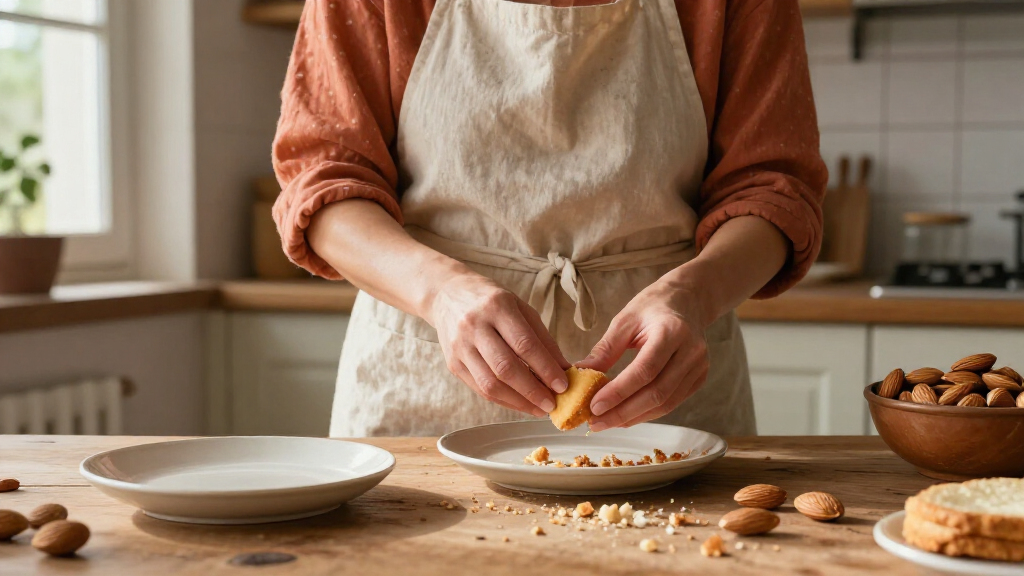
Torta sbrisolona, Mantua’s crisp almond cake, is designed to be broken by hand into rough pieces rather than sliced with a knife, according to a guide from Mad Tasting. The regional sweet is made from a coarse mixture of flour, sugar, butter and almonds, often with cornmeal; its crumbly texture is a defining feature, not a baking flaw.
The cake comes from Mantua in Lombardy, northern Italy. Its dry, sandy crumb differs from the soft texture of a conventional layer cake. Wheat flour and cornmeal appear together in many versions, while almonds provide the characteristic nutty flavor. Some recipes add lemon zest or vanilla, and the almonds may be chopped into the mixture, left whole, or scattered across the top. The guide describes variation among household and bakery recipes rather than one standard formula.
The name is linked to brisa, a Mantuan dialect word for “crumb.” Sbrisolada is another local name cited by the guide. Both point to the way the cake breaks apart: a cooled piece snaps into irregular chunks and may leave crumbs behind. Mad Tasting advises letting the cake cool fully before handling it, since the butter-rich mixture needs time to firm up after baking.
For the intended texture, the ingredients are mixed only until they form coarse crumbs. The mixture is scattered into a pan instead of being kneaded into smooth pastry or pressed into a perfectly even layer. Once baked until golden and cooled, the cake can be broken into small portions. The guide suggests serving it with coffee or a dessert drink, including as a shareable sweet after a meal.
Torta Sbrisolona Mantua’s cake to break by hand
This traditional Mantuan almond cake is defined by its coarse, brittle crumb. It is served in irregular pieces, not neat slices.
A crumbly regional classic
The dry, sandy texture is part of the cake’s character, not a baking flaw.
Coarse and nutty
Flour, sugar, butter and almonds form the base; many versions also use cornmeal.
Made to crumble
The mixture stays coarse rather than becoming smooth pastry.
Mantua, Lombardy
This longstanding regional specialty comes from northern Italy.
From mixing to serving
Keep the crumb coarse, then let the baked cake firm up fully.
Combine ingredients only until coarse crumbs form.
Scatter the mixture in the pan instead of kneading it smooth.
Wait until fully cooled; serve small hand-broken pieces with coffee or a dessert drink.
Tradition allows variation
Household and bakery versions differ, so no single formula is established.
- Wheat flour with or without cornmeal
- Almonds chopped, whole or scattered on top
- Optional lemon zest or vanilla
- Exact origin and beginnings
- A single inventor or date
- One definitive recipe
A Cake Made for Sharing
Sbrisolona’s serving custom is closely tied to its structure: it is offered in pieces, not presented as a cake that must hold a clean wedge. Breaking it at the table makes portioning informal and suits a sweet intended to be shared with coffee or after a meal. The rough edges and scattered crumbs are part of the experience described by the source, not signs that a baker has failed to produce a tidy slice.
For readers buying or making the cake, that distinction is practical. A knife may reduce a brittle cake to loose crumbs, while waiting until it has cooled gives it a better chance of snapping into pieces that can be picked up. Its straightforward pantry ingredients and durable, dry texture also distinguish it from cream-filled desserts, though storage conditions still matter: the source advises proper storage but does not give a specific shelf life or storage method.
Products Worth Considering

Ninja Luxe Café Premier 3-in-1 Espresso, Drip Coffee, and Cold Brew Machine

KitchenAid 5.5-Qt Bowl-Lift Stand Mixer, Porcelain White

Le Creuset Heritage Rectangular Stoneware Baking Dish Set, 3-Piece, Marseille
As an affiliate, we earn on qualifying purchases.
Mantuan Roots and Recipe Variations
The guide describes sbrisolona as a longstanding Mantuan specialty associated with the surrounding countryside and pantry cooking. Earlier versions are often characterized as humble household or farm food, while later recipes are said to have incorporated more butter, sugar and almonds. These are broad historical descriptions in the source, not a documented chronology with a named inventor or firm date.
Accounts of exactly when and how the cake began differ, Mad Tasting says, so the material does not support a single origin story. The cake’s continuing identity instead rests on a recognizable combination of almonds, coarse crumb and hand-breaking. Local bakers and families vary the flour balance, amount and form of almonds, and flavorings. The source presents those differences as part of the tradition, rather than evidence of one definitive recipe.
“The coarse crumb is the cake’s signature.”
— Mad Tasting guide
Origins and Storage Details Remain Open
The supplied guide does not establish one precise origin date, inventor or definitive account of how sbrisolona began. It also does not provide a single authoritative recipe: flour ratios, cornmeal use, almond preparation and flavorings vary among versions. Readers should not treat any one variation described here as the only traditional method.
The source recommends proper storage and notes that the cake is dry and sturdy compared with soft, cream-filled desserts, but it gives no specific storage temperature, container guidance or safe shelf-life window. It also does not identify a particular bakery, new product launch or recent event. This is a food guide, not a report of a newly announced development, and no independently dated news event is supplied.
Cool, Break and Serve
For anyone baking the cake, the next steps are practical: follow a tested recipe, mix only until coarse crumbs form, scatter the mixture in the pan, and bake until golden. Let it cool completely before breaking a test piece from the edge. If it snaps and crumbles rather than bending, it has reached the texture described in the guide. Serve small pieces with coffee or a dessert drink.
Readers seeking a particular bakery’s version, exact recipe proportions or a confirmed historical account will need more specific sources; the supplied guide does not name a bakery or settle those questions. Until additional sourcing is available, the clearest description is of a varied regional cake whose defining traits are its almond-rich crumb and informal, hand-broken serving style.
Key Questions
What is torta sbrisolona?
It is a traditional cake from Mantua in Lombardy, made from a coarse mixture of flour, sugar, butter and almonds. Many versions also include cornmeal.
Why is sbrisolona broken by hand?
Its dry, brittle texture makes neat slices difficult, and the guide describes irregular hand-broken pieces as the customary way to serve it. A knife can leave a plate of crumbs.
Does every recipe use cornmeal?
No. The guide says many versions combine wheat flour and cornmeal, but recipes vary. It does not give one formula that applies to every bakery or household.
How should I tell when the cake is ready to break?
Let it cool completely after baking so the butter-rich crumb can firm up. A test piece should snap and crumble rather than bend like a soft cookie.
What is known about the cake’s origin?
The guide identifies sbrisolona as a longstanding Mantuan specialty, but says accounts of its precise beginnings differ. It does not establish a single inventor or date.
Source: Mad Tasting