
Many cookware labels don’t clearly show if your pots and pans work on induction stoves. To check, use a magnet—if it sticks firmly, your cookware is likely compatible, especially if made of magnetic materials like cast iron or stainless steel. Flat, thick bases improve heating. Look for symbols like coil icons. If you want detailed tips on choosing the best options or testing your cookware, exploring further can give you the clarity you need.

Get kitchen staples and gadgets delivered free with Prime
- Fast, free delivery on millions of items
- Prime Video, Amazon Music and more included
- Member-only deals all year
Key Takeaways
- Labels may show induction symbols, but confirm the magnetic base with a magnet test for accuracy.
- Not all ferromagnetic cookware is fully compatible; base thickness and flatness affect performance.
- Some cookware with magnetic layers may still have poor heat distribution, impacting cooking efficiency.
- Manufacturers might not specify magnetic layer details, making visual or magnet tests essential.
- High-quality induction-compatible cookware often combines durability, flatness, and strong magnetic properties.
induction compatible cookware set
As an affiliate, we earn on qualifying purchases.
As an affiliate, we earn on qualifying purchases.
Will My Existing Cookware Work on an Induction Stove?

Wondering if your current cookware will work on an induction stove? It all comes down to material compatibility. Induction cooking requires cookware with a magnetic base, so if your pots and pans are made of stainless steel or cast iron, they’re likely suitable. However, aluminum or copper cookware usually won’t work unless they have a magnetic layer. Heat distribution is also important; good induction-compatible cookware heats quickly and evenly, preventing hot spots. If your existing pots and pans don’t meet these criteria, they may not perform well on an induction stove. To save time and money, check if a magnet sticks to the bottom of your cookware—if it does, you’re good to go. Otherwise, you might need to upgrade for ideal cooking results.
How to Test If Your Pots and Pans Are Induction-Compatible
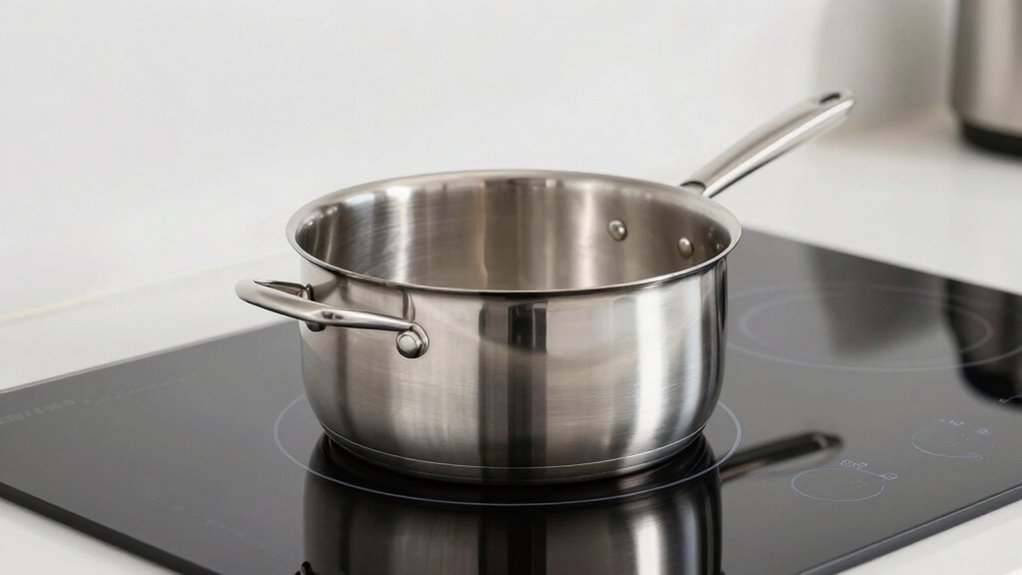
To determine if your pots and pans are induction-compatible, the simplest method is to perform a magnet test. If a magnet sticks firmly to the bottom, your cookware has the right magnetic properties for induction cooking. This is a quick way to assess compatibility through material testing. Place the magnet on the base of the cookware; if it doesn’t adhere, the material likely isn’t suitable. Keep in mind that some cookware might have a magnetic layer only on the bottom, so test the entire base. This magnetic property check is reliable and easy to do at home, saving you time and effort before investing in new cookware. Remember, strong magnetic attraction indicates induction compatibility, while weak or no attraction suggests otherwise. Additionally, understanding the material composition of your cookware can help determine its suitability for induction.
What Are the Key Factors That Affect Induction Compatibility?
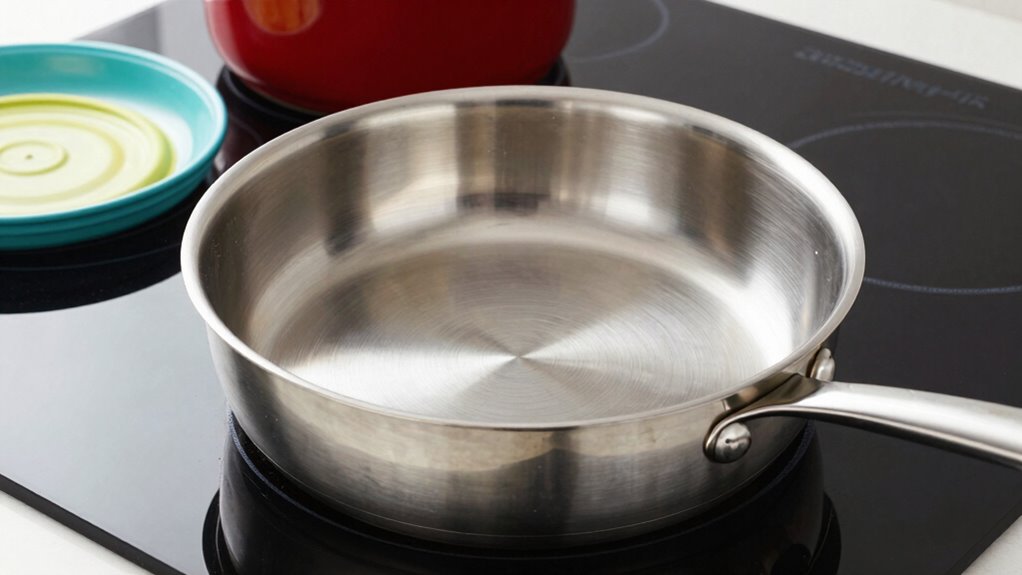
Several key factors determine whether your cookware will work with induction cooktops. The most important is magnetic properties—your pots and pans must be made of ferromagnetic material. Materials like cast iron and certain stainless steels have the necessary magnetic qualities. The material composition also plays a role; cookware with a magnetic base guarantees even heat transfer and compatibility. Non-magnetic materials like aluminum or copper won’t work unless they have a magnetic layer added to their base. Additionally, the thickness and flatness of the cookware affect performance; a flat, thick base promotes better contact and heat responsiveness. Ensuring that your cookware has a magnetic layer is essential for reliable induction compatibility. Understanding these factors helps you choose cookware that’s truly induction-compatible, avoiding frustration and ensuring efficient cooking. magnetic properties are crucial because they determine whether the cookware can effectively interact with the magnetic field generated by the induction cooktop. Incorporating backyard transformation essentials like proper cookware setup can enhance your cooking experience and backyard ambiance.
Understanding Induction Labels and Symbols
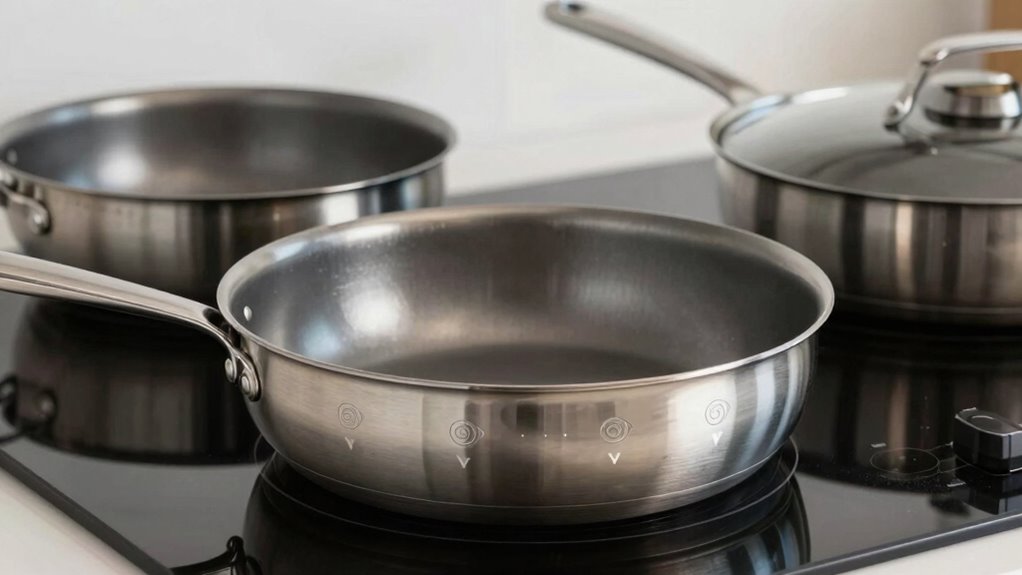
Understanding induction labels and symbols is essential for identifying cookware that’s compatible with your induction cooktop. Look for compatibility symbols, often a coil icon or specific labels, to confirm. Magnetic materials are key—if your cookware contains ferrous metals like cast iron or certain stainless steels, it’s likely induction-compatible. Some cookware may display a symbol indicating induction compatibility, simplifying your choice. Always check for these signs before purchasing or using new pots and pans. Below is a quick reference:
| Compatibility Symbols | Magnetic Material Indicator |
|---|---|
| Coil icon | Ferrous (magnetic) materials |
| Induction compatible | Non-magnetic materials are not suitable |
| Specific brand labels | Confirm with manufacturer |
Knowing these symbols helps guarantee your cookware works perfectly on induction.
Tips for Choosing the Best Induction-Compatible Cookware
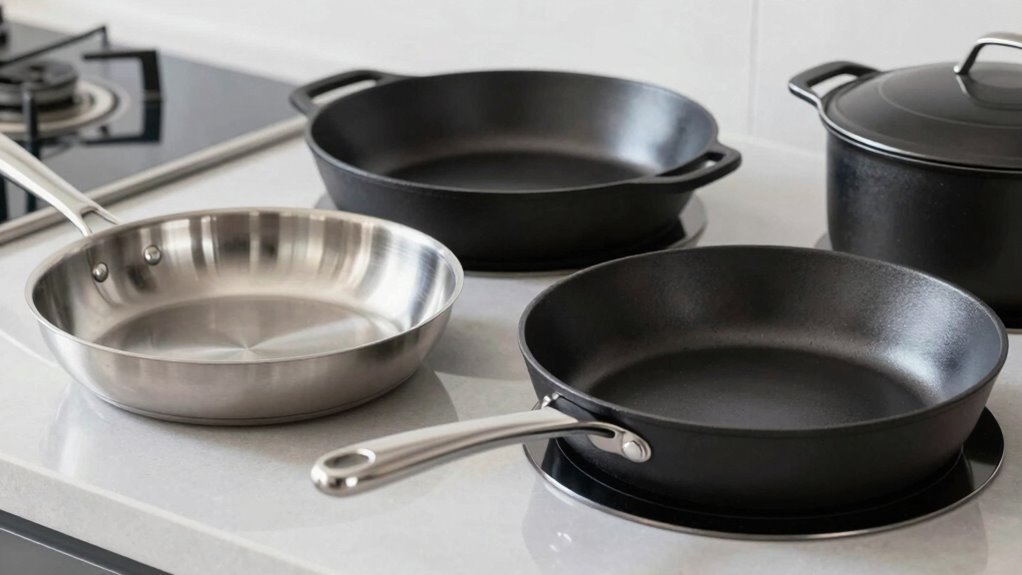
Choosing the right induction-compatible cookware involves considering several key factors to guarantee ideal performance and durability. First, prioritize induction safety by selecting pots and pans with a magnetic base, assuring efficient energy transfer and reducing safety risks. Look for high-quality materials like cast iron or stainless steel, which are durable and easy to maintain. When shopping, check for flat-bottomed cookware to assure full contact with the induction cooktop, optimizing heat distribution. Keep cookware maintenance in mind by choosing items that are dishwasher safe or easy to clean by hand. Additionally, consider the weight and handle design for comfortable use and safe handling. Properly maintained cookware extends its lifespan, performs better, and keeps your kitchen safer. Incorporating sustainable materials into your choices can also help support environmentally conscious practices. Being aware of household safety can help prevent accidents related to cookware use and handling. Paying attention to induction compatibility ensures your cookware is suitable for your specific cooktop, maximizing efficiency and safety. Furthermore, understanding the impact of indoor air quality can help you select cookware and kitchen practices that minimize dust and microplastic contamination. Using the right cookware also contributes to energy efficiency, reducing overall utility costs and environmental footprint.
Frequently Asked Questions
Can Non-Metallic Cookware Be Used on Induction Stoves?
Non-metallic cookware can’t be used on induction stoves because they lack magnetic properties, which are essential for heat transfer through induction. Induction stoves generate heat directly in cookware with magnetic properties, while non-metallic options don’t respond to magnetic fields. To use non-metallic cookware, you’d need a different heat source like gas or electric. So, if you want efficient heat transfer on induction, choose cookware with the right magnetic qualities.
Do Induction-Compatible Pots Require Specific Handles or Lids?
Induction-compatible pots typically don’t require specific handles or lids, but handle design matters for safety and comfort. Look for heat-resistant, sturdy handles that stay cool and are easy to grip. Lid compatibility is essential; verify the lid fits snugly to trap heat efficiently. Some cookware comes with specially designed handles and lids, making cooking safer and more convenient. Always check product details to ensure proper fit and safety features.
How Durable Is Induction-Compatible Cookware Over Time?
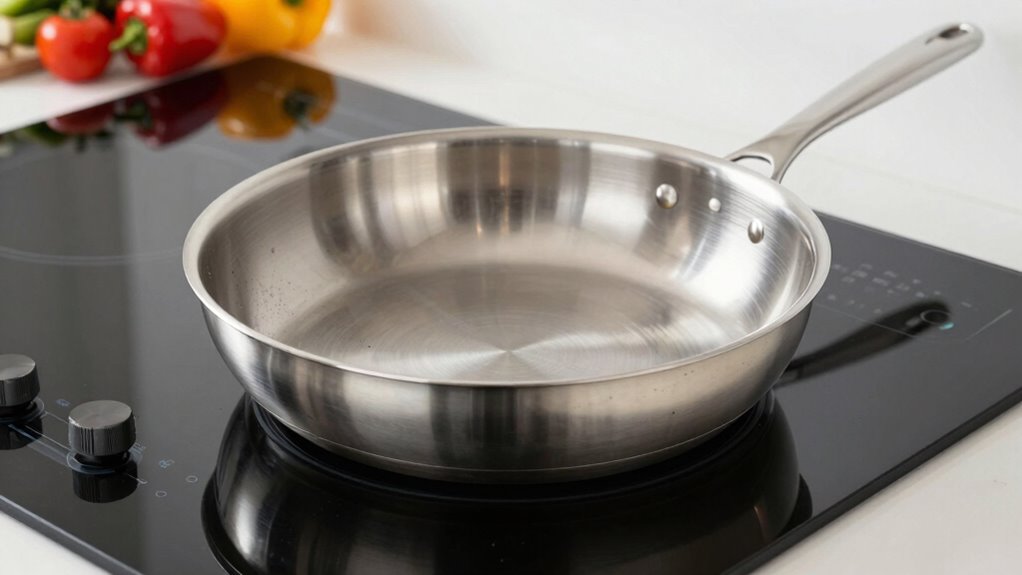
Imagine a sturdy, polished skillet that withstands the test of time. Induction-compatible cookware‘s durability depends on its material composition and how well it handles heat distribution. Quality pieces, made from stainless steel or cast iron, resist warping and corrosion, maintaining their performance over years. Proper care, like avoiding sudden temperature changes, keeps them resilient. With consistent use, your cookware can become a long-lasting kitchen companion, enduring many flavorful meals.
Are There Health Concerns With Induction-Compatible Materials?
There are minimal health risks with induction-compatible materials, especially when you choose high-quality, food-grade options. Materials like stainless steel and cast iron are generally safe and don’t leach harmful substances into your food. However, avoid cheap, poorly manufactured cookware, as some low-quality materials might contain unsafe coatings or alloys. Always check for food safety certifications to verify material safety and reduce potential health concerns.
Is Maintenance Different for Induction-Compatible Versus Traditional Cookware?
Imagine your cookware as a trusted partner, needing just the right care. Maintenance for induction-compatible pots is similar to traditional ones, but pay attention to their magnetic properties; cleaning with gentle, non-abrasive materials preserves material longevity. Regularly check for warping or scratches, which can affect performance. Overall, both types require routine cleaning and careful storage, ensuring your cookware stays efficient and durable, ready for countless cooking adventures.
Conclusion
Now that you know the basics of induction compatibility, you can confidently choose cookware that’s truly tailored to your stove. By understanding labels, testing tools, and key compatibility factors, you avoid unnecessary expenses and guarantee efficient cooking. Don’t let doubts diminish your culinary confidence—delve into details, decipher symbols, and select the best. With a little knowledge, you’ll master your kitchen, making every meal more manageable, more marvelous, and more memorable.
Fall Picks
fall essentials
As an affiliate, we earn on qualifying purchases.