This checklist is for anyone planning a homemade sushi night and gathering the basics before cooking begins. It covers rice, nori and rice vinegar, plus a few tools and serving pieces that can help with rolling, slicing and serving.

Get kitchen staples and gadgets delivered free with Prime
- Fast, free delivery on millions of items
- Prime Video, Amazon Music and more included
- Member-only deals all year
The sections follow the shopping list from core ingredients to equipment and tableware. Some slots are advice only, while the product picks are listed by their names so you can check their dimensions and features against your plans.
Use the advice to decide what suits your menu, then check fit and compatibility before buying. Consider how much you plan to prepare, the space you have for tools, and whether each item works with the way you intend to serve sushi.
Sushi rice
Rice is the foundation of the meal, so choose a type specifically intended for sushi rather than assuming any rice will give the texture you want. Check the package description and cooking directions before adding it to your basket. The amount to buy depends on how many rolls or servings you plan to make, so estimate your menu first and avoid buying more than your storage space allows.
A common mistake is overlooking preparation: sushi rice needs rinsing and careful cooking, and the finished rice is seasoned before it is used. Read the directions for the rice you choose and make sure you have a suitable pot or cooker. For a first sushi night, keep the selection simple and focus on consistent cooking rather than buying several varieties. The right choice is the one whose intended use and instructions match your recipe and kitchen setup.
What to look for:
- Rice labeled for sushi use
- Package cooking and rinsing directions
- A quantity suited to your planned servings
- Instructions that fit your cooking equipment
Nori sheets
Nori provides the outer layer for many rolls, so check the package type and sheet format against the sushi you plan to make. Whole sheets are useful when you want to control how much seaweed surrounds each roll, while recipes may call for sheets cut to a particular size. Read the product description and make sure the package contains sheets rather than a different nori format.
It is easy to buy a quantity that does not match your menu or storage needs. Estimate how many rolls you expect to make, then check the number of sheets in the package. Keep nori dry and follow the package storage guidance; exposure to moisture can make sheets harder to handle. If you are new to rolling, choose sheets that work with your mat and recipe, and have scissors available if the instructions call for trimming. A simple, clearly labeled package makes it easier to shop for the right format.
What to look for:
- Whole sheets suitable for rolling
- A package count matched to your menu
- Clear product and storage information
- Sheet dimensions compatible with your recipe
Bamboo rolling mat
A rolling mat gives you a structured surface for shaping rolls, which can make the wrapping step more manageable. The Pat & Doris Professional Non-stick Sushi Mat measures 10.5 x 9.8 inches. Compare those dimensions with your counter space and the sheet size used in your recipe so the mat feels workable for your setup.
One common buying mistake is assuming that every mat fits every recipe or working style. Check the listed size, how the mat is described, and any care instructions before choosing it. A non-stick description may be appealing when handling rice, but follow the product guidance for cleaning and use rather than assuming a particular coating or maintenance method. If you are making several rolls, consider whether you have room to lay out the mat, ingredients and finished rolls together. Choose based on usable dimensions and care, not the product title alone.
What to look for:
- Listed dimensions of 10.5 x 9.8 inches
- A surface size compatible with your nori
- Care and cleaning instructions
- Enough counter space for rolling and ingredients
Pat & Doris Professional Non-stick Sushi Mat, 10.5 x 9.8 inches

This non-stick sushi rolling mat is designed for both professional chefs and home users, featuring a durable plastic construction that resists dirt and odors. It offers an easy-to-clean surface that helps create perfect sushi rolls efficiently, with a long-lasting design suitable for frequent use.
Pros:
- Non-stick surface for easy rolling and cleaning
- Durable construction with long lifespan
- Food grade material meeting safety standards
Cons:
- May require proper care for commercial longevity
- Limited to specific size, may not fit all sushi types
Best for: Home cooks who want a dedicated rolling surface
Not ideal for: Kitchens with limited counter space for a mat
Bottom line: The 10.5 x 9.8-inch dimensions make this a size to compare with your recipe and work area.
Rice vinegar
Rice vinegar is used to season sushi rice, so choose a product identified as rice vinegar and check its label before buying. Do not assume that another vinegar is interchangeable just because it is also used in cooking. Recipes differ in how they season rice, so use the directions for your chosen recipe to guide both the product and the amount.
A frequent mistake is overlooking whether the vinegar is seasoned or unseasoned. Read the ingredient and product descriptions, then compare them with your recipe so you can account for the form you have. Also check bottle size and storage guidance; a large bottle may be inconvenient if you only make sushi occasionally. Keep the seasoning step in mind when planning the rest of the ingredients, and avoid making substitutions based only on a similar-looking label. The best fit is a clearly labeled product that matches the recipe you intend to follow.
What to look for:
- A label identifying rice vinegar
- Seasoned or unseasoned type specified
- A bottle size suited to your cooking plans
- Product details compatible with your recipe
Sashimi knife
A suitable knife can help with clean, controlled slicing when your menu includes ingredients that need knife work. The listed pick is the Japanese Chef Knife 8‑Inch Handcrafted with Damascus VG10 Steel. Its name gives an 8-inch length; consider whether that size feels manageable and whether it suits the ingredients and cutting tasks in your recipe.
Do not choose a knife based on material wording alone. Check the full product details for blade dimensions, handle information, care guidance and any sharpening instructions, since these affect how it fits your kitchen and experience. An 8-inch blade may feel different from the knife you already use, so think about your grip, cutting board space and storage before purchasing. A common mistake is buying a specialized knife without a clear need for it; decide first whether your menu calls for slicing tasks that your existing knife cannot comfortably handle. Prioritize safe handling and upkeep that you can manage.
What to look for:
- The listed 8-inch blade length
- Handle and blade details in the product description
- Care and sharpening guidance
- A size that suits your grip and cutting board
Japanese Chef Knife 8‑Inch Handcrafted with Damascus VG10 Steel

This premium Japanese chef knife features a VG-10 steel core with a 67‑layer Damascus cladding for exceptional sharpness, durability, and rust‑proof patterns. The hand‑sharpened 12° edge glides through meat, fish, and vegetables with surgical precision, while the ergonomic stabilized wood and resin handle provides a comfortable, slip‑resistant grip.
Pros:
- VG-10 steel core with 62 HRC hardness delivers long‑lasting razor sharpness.
- 67‑layer Damascus cladding adds durability and an elegant rust‑proof pattern.
- Ergonomic stabilized wood and resin handle offers a comfortable, slip‑resistant grip.
- Well‑balanced design reduces wrist fatigue during extended use.
Cons:
- Only available in an 8‑inch length, which may be limiting for some tasks.
- High hardness steel requires proper maintenance to prevent chipping if misused.
Best for: Cooks whose menu includes careful ingredient slicing
Not ideal for: Shoppers who do not need another kitchen knife
Bottom line: Check the dimensions, handling details and care guidance before choosing this knife.
Soy sauce dish set
This serving set combines divided dishes and a rotating bamboo tray, offering a way to bring sauces or accompaniments to the table together. The listing also specifies handles. Before buying, check the product dimensions and the number and layout of compartments so you know whether they suit the sauces and serving plan for your group.
A common mistake is choosing tableware based on appearance without checking how it fits the table. Confirm the tray footprint, dish capacity and care instructions, and consider where it will sit alongside plates and other serving pieces. Divided dishes can help keep separate items apart, but make sure the compartments are appropriate for what you plan to serve. Check whether the product details explain how the pieces should be cleaned and handled. For a small gathering, a large tray may take up more space than you want; for a shared meal, ensure its layout is convenient for everyone to reach. Choose for table space and serving needs.
What to look for:
- Tray dimensions and table footprint
- Number and size of divided compartments
- Care instructions for the dishes and bamboo tray
- A layout that suits your sauces and serving style
Ceramic Divided Serving Dishes with Rotating Bamboo Tray and Handles
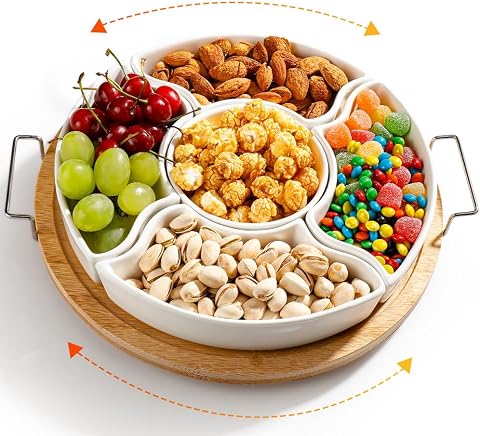
This serving set includes five removable ceramic dishes and a central dip bowl on an 11.2-inch rotating bamboo tray. The handled tray is convenient for serving appetizers, snacks, and dips at gatherings, while the dishes are microwave-, oven-, and dishwasher-safe.
Pros:
- Rotating tray makes the dishes accessible from different sides.
- Removable dishes can be refilled individually.
- Side handles make the tray easier to carry.
- Ceramic dishes are safe for microwave, oven, and dishwasher use.
Cons:
- The bamboo tray must be hand-washed.
- The 11.2-inch tray may offer limited capacity for larger gatherings.
Best for: Hosts serving several accompaniments together
Not ideal for: Tables with little space for a rotating tray
Bottom line: Check the tray footprint and compartment layout against your table and menu.
Build your list in menu-first order: decide what you plan to serve, then buy the rice, nori and rice vinegar that match your recipe. Add a rolling mat or knife only if it suits your preparation needs, and choose serving pieces after considering your table space.
A relaxed sushi night starts with a clear, manageable plan. Check labels, dimensions and care instructions as you shop, then prepare only the rolls and accompaniments you feel comfortable making. Enjoy the process and make the checklist your own.