Milling your own grains gives you fresh, flavorful flour that enhances your bread’s taste and texture. It also preserves essential nutrients, antioxidants, and fiber, making your baked goods healthier. Choosing the right grain mill depends on your space, budget, and baking needs—manual or electric models each have benefits. Store grains properly to keep flavor and nutrition, and experiment with milling techniques for best results. Keep exploring to discover how to optimize your home-milling experience and craft better bread.
Key Takeaways
- Home milling preserves nutrients, flavor, and aroma, resulting in fresher, more nutritious bread with richer taste profiles.
- Choosing the right grain mill depends on space, budget, and desired capacity; options include impact, burr, and stone mills.
- Proper grain storage and cleaning are essential to maintain flavor and prevent spoilage before milling.
- Milling techniques, such as adjusting grind size, influence bread texture, flavor complexity, and nutritional retention.
- Optimizing baking involves storing grains correctly, experimenting with particle size, and combining fresh and store-bought flours for best results.
Why Milling Your Own Grain Boosts Freshness and Flavor

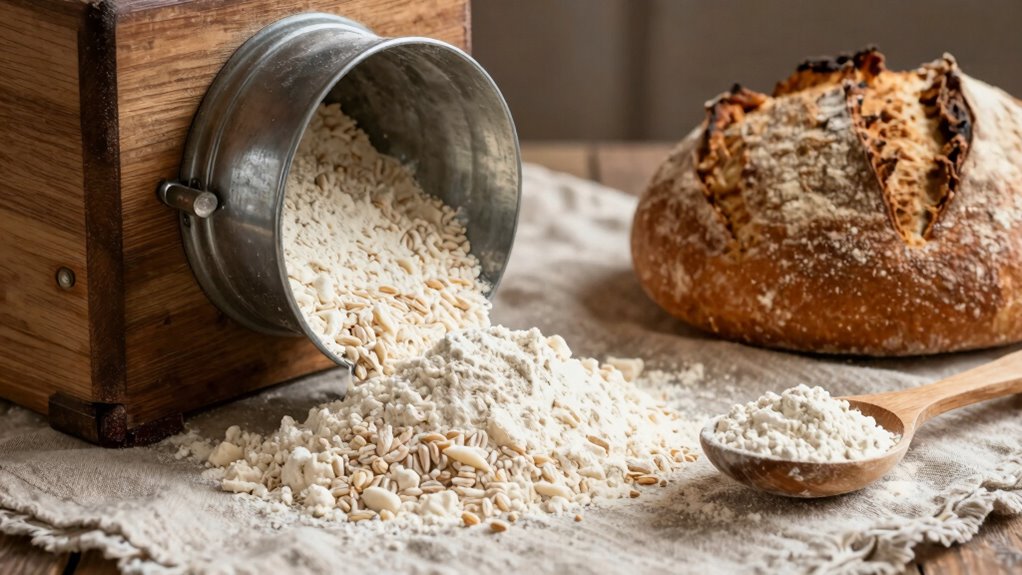
Milling your own grain guarantees that your baked goods are as fresh and flavorful as possible. When you mill your own flour, you control the grain texture, resulting in a finer or coarser grind depending on your recipe needs. Freshly milled flour retains more essential oils and natural flavors, which quickly degrade in store-bought options. The milling speed also plays a vital role; faster milling preserves more aroma and taste by minimizing heat buildup that can dull flavor. Plus, quick milling prevents oxidation, helping your flour stay vibrant longer. By adjusting your milling speed and controlling grain texture, you guarantee each batch of flour delivers maximum freshness and rich flavor, elevating your baking from ordinary to extraordinary.
How Milling Grain Improves Nutritional Value in Baking
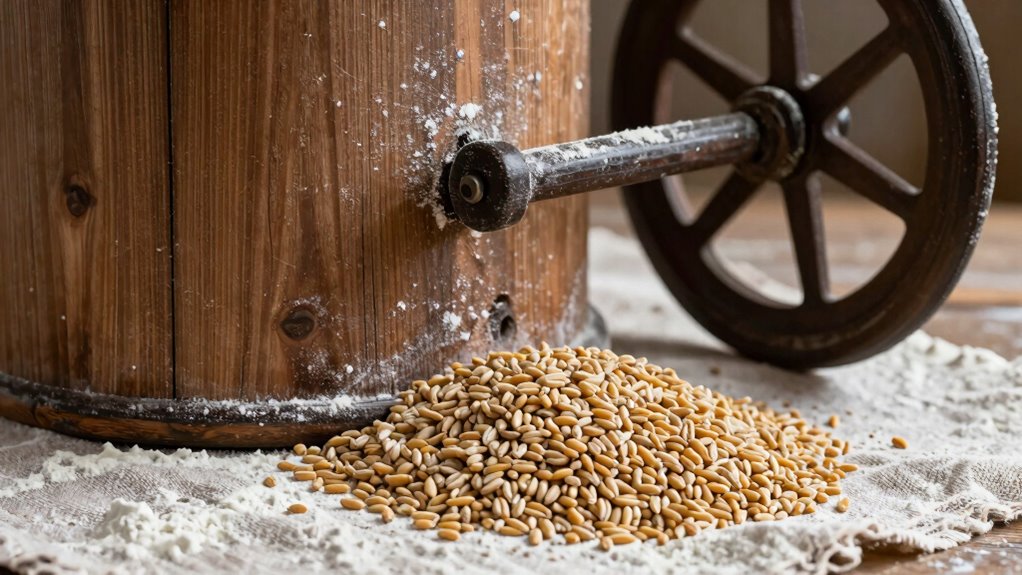
When you mill your own grain, you open more than just flavor—you also preserve essential nutrients that are often lost in commercial processing. Freshly milled flour retains grain phytochemicals and milling antioxidants that boost your bread’s nutritional profile. These compounds help fight free radicals and support overall health. Milling quickly minimizes nutrient degradation, ensuring you get maximum benefits. The table below highlights key nutrients preserved through home milling:
| Nutrient | Benefits | Loss in Commercial Flour |
|---|---|---|
| Grain Phytochemicals | Antioxidant effects, disease prevention | Reduced during refining |
| Milling Antioxidants | Protect cells, improve immunity | Often stripped away in processing |
| Vitamins | Support immune function | Degraded with storage and refining |
| Fiber | Improves digestion, satiety | Lower in refined flour |
Additionally, whole grain preservation ensures that you retain the full spectrum of nutrients that support long-term health benefits. Utilizing milling techniques can further enhance nutrient retention and prevent oxidation during processing. Proper storage methods also help maintain nutrient quality over time, preventing oxidation and spoilage. Incorporating nutrient-rich grains into your baking routine maximizes the nutritional value of your homemade bread and supports overall wellness. Using freshly milled flour also allows you to maximize nutritional retention, which is often compromised in commercial options.
Which Grain Mill Type Is Best for Your Kitchen?

Choosing the right grain mill depends on your kitchen space, baking needs, and budget. If you have limited storage, a compact mill might be best, while larger models offer more grain storage options. Consider milling speed; faster mills save time but may generate more heat, potentially affecting flour quality. For frequent baking, invest in a high-speed mill that can handle larger quantities efficiently. If space is tight, a manual or smaller electric mill can work well, but they may take longer to produce flour. Think about how often you’ll use it and the types of grains you’ll mill. Balancing grain storage capacity and milling speed helps ensure you pick a mill that fits your lifestyle and keeps your baking consistent and fresh. Additionally, noise levels and ease of cleaning are important factors to consider to maintain a quiet and hygienic kitchen environment. Understanding power requirements can also prevent issues related to your kitchen’s electrical capacity. Moreover, exploring field‑of‑view options can help you choose a mill that aligns with your workspace layout and workflow. Considering future upgrades or accessories might also enhance your milling experience as your needs evolve. Furthermore, assessing maintenance needs can help you select a mill that is easy to service and durable over time.
Choosing the Right Grain Mill for Home Use

When choosing a grain mill for home use, you need to contemplate the different types and features available to find the best fit for your needs. Your budget and how much capacity you require will also influence your decision. By balancing these points, you can select a mill that offers both performance and value. Additionally, considering easy document management can help you organize your research and paperwork related to your decision-making process. Understanding the weight of machines is also crucial, especially if you plan to move or install the mill frequently. Being aware of machine placement and setup can help optimize your workflow and ensure safety during operation. Moreover, familiarizing yourself with digital asset management best practices can streamline the organization of your purchase information and maintenance records. Incorporating content organization techniques can further assist in tracking your research and ensuring you have all necessary documentation readily accessible.
Mill Types and Features
Are you unsure which grain mill suits your home baking needs? Different mill types, like impact, burr, and stone mills, offer unique features. Impact mills grind quickly, making them ideal if you want fast milling speed, but they may produce slightly warmer flour. Burr mills provide a more consistent grind, better for preserving nutrients, and often include adjustable settings. Stone mills excel at mimicking traditional grinding, delivering flavorful, coarse flour, but they tend to be slower. Consider how you’ll handle grain storage—larger mills generally process more grain at once, reducing refilling frequency. Also, think about convenience: some mills have larger hoppers or easier cleaning features that suit your routine. Understanding market options can help you make informed decisions about investment in quality equipment. Additionally, researching different grain mill brands can reveal options that offer better durability and performance tailored to your baking style. Exploring grain mill features can further assist you in selecting the most suitable equipment for your needs. For example, paying attention to power consumption can help you choose a model that fits your energy preferences, especially when running larger mills frequently. Knowing noise levels is also important if you plan to use the mill in a shared or quiet environment.
Budget and Capacity Considerations
Budget plays a crucial role in selecting a grain mill, as prices can vary widely from affordable manual models to high-end electric units. When considering cost, think about your grain storage needs—larger capacity mills can handle more flour at once, saving time. Milling speed is also important; faster mills process grains quickly, increasing efficiency, but may come with a higher price tag. Balance your budget with your capacity requirements to find a mill that fits your daily use. If you plan to mill large quantities regularly, investing in a more powerful, high-capacity machine makes sense. Conversely, if you only need small amounts occasionally, a compact, economical manual mill could suffice. Prioritize features that align with your weekly flour production goals and storage space. High-quality materials can also impact the durability and longevity of your grain mill, making it a worthwhile consideration within your budget. Additionally, considering the sound levels of different models can be important if noise is a concern in your home environment. To ensure longevity and performance, selecting a mill made from robust construction materials is also advisable. Moreover, understanding the plant properties of different grains can help you choose the most suitable mill settings for optimal results. Selecting a mill with customizable milling adjustments can further enhance your flour quality and versatility.
What Grains Should You Start Milling for Great Bread?

When starting out, focus on common wheat varieties like soft and hard wheat for reliable bread results. You can also experiment with whole grain options such as rye or spelt to add flavor and nutrition. Additionally, trying specialty flours like einkorn or emmer can give your bread a unique touch.
Common Wheat Varieties
Choosing the right wheat variety is essential for making great bread, especially if you’re just starting out. Different wheat types influence flavor, gluten development, and milling ease. Common wheat varieties include hard red wheat, soft red wheat, and hard white wheat. Hard red wheat has high protein content, ideal for bread-making, while soft red wheat is better for pastries. Hard white wheat offers a milder flavor with strong gluten, suitable for versatile baking. When selecting wheat, consider wheat cultivation methods and how you’ll store grain to maintain freshness. Proper grain storage prevents spoilage and preserves quality. Here’s a quick overview:
| Wheat Type | Gluten Content | Best Use |
|---|---|---|
| Hard Red Wheat | High | Bread, rolls |
| Soft Red Wheat | Low | Pastries, cakes |
| Hard White Wheat | Moderate to high | Versatile baking |
Whole Grain Options
Starting with whole grains is the best way to elevate your bread baking. Whole grains retain their natural grain nutrition, offering more fiber, vitamins, and minerals than refined flours. Popular options include wheat, spelt, rye, barley, and oats—each bringing unique flavors and textures to your bread. When selecting grains, consider their milling techniques; some grains require specific adjustments to achieve *ideal* flour consistency and preserve nutrients. Milling whole grains fresh *guarantees* maximum flavor and nutritional value, giving your bread a richer taste and better health benefits. Experimenting with different grains lets you explore diverse flavors and textures, improving your skills and enjoyment in baking. Starting with these whole grain options sets a strong foundation for nutritious, flavorful bread that stands out.
Specialty Flour Types
To create exceptional bread, focus on milling specialty grains like spelt, einkorn, emmer, and kamut. These unique grain varieties offer rich flavor and nutritional benefits that elevate your baking. When milling these grains, use specific techniques to preserve their delicate proteins and natural oils, ensuring prime freshness. For example, some grains require coarser grinds for ideal texture, while others benefit from fine milling. Experiment with different milling techniques to discover what works best for each variety. Specialty flours can add complexity and depth to your bread, making it more interesting and flavorful. Incorporating these grains into your baking routine not only diversifies your bread but also introduces you to a world of traditional grain varieties that have been cultivated for centuries.
Step-by-Step: How to Mill Whole Grains at Home
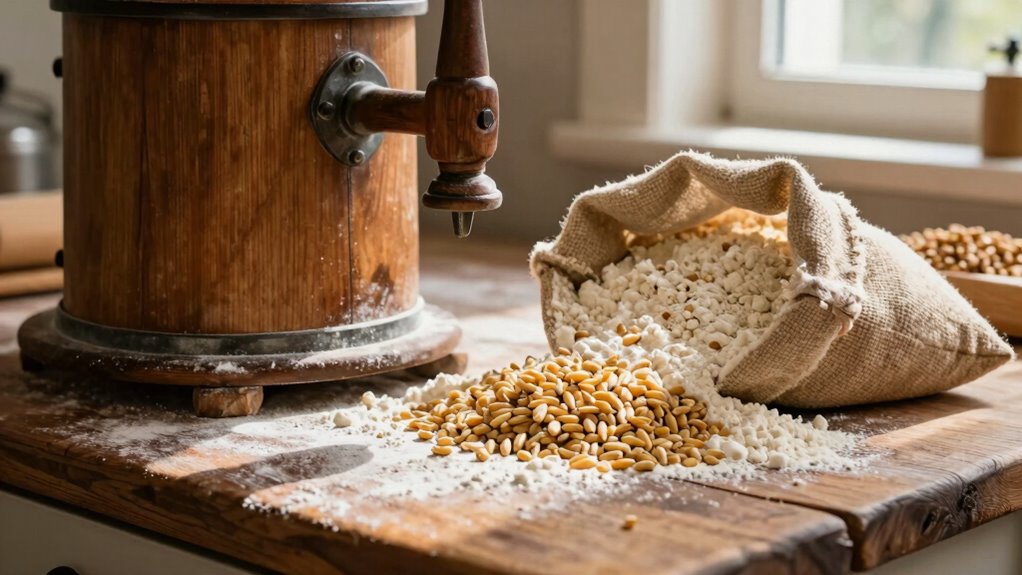
Grinding your own grains at home is a simple process that can substantially improve the freshness and flavor of your baked goods. First, choose quality grains and assure proper grain storage in a cool, dry place. When milling, start with small batches to maintain freshness and prevent spoilage. Use your mill according to its specific milling techniques, adjusting coarseness for different recipes. Freshly milled flour retains vital nutrients and enhances flavor. Here’s a quick overview:
| Step | Tip |
|---|---|
| Select grains | Store in airtight containers, keep away from moisture |
| Prepare mill | Clean mill parts before use |
| Adjust settings | Coarseness for bread or pastry |
| Mill grains | Feed grains gradually, avoid overloading |
| Store flour immediately | Use airtight containers, avoid prolonged exposure |
This ensures ideal results and preserves flour quality.
Storing and Preserving Your Freshly Milled Flour
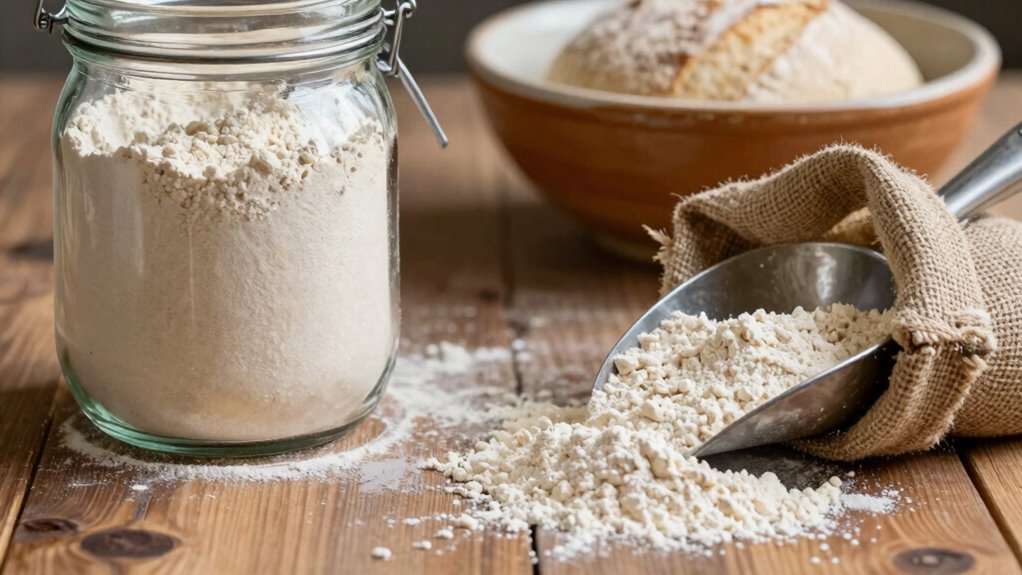
Proper storage is essential to keep your freshly milled flour at its peak freshness and nutritional value. To guarantee optimal grain storage, choose airtight containers that protect against moisture, light, and pests. Store flour in a cool, dark place, such as a pantry or a basement, to slow down the oxidation process and prevent spoilage. For longer-term flour preservation, consider refrigerating or freezing your flour, especially if it’s whole grain, as these contain oils that can turn rancid quickly. Always label your containers with the milling date to track freshness. Avoid exposing your flour to heat or humidity, which can diminish quality and nutritional content. Properly stored, your flour stays fresher longer, preserving flavor and nutrients for better baking results.
Common Mistakes to Avoid When Milling Grain at Home
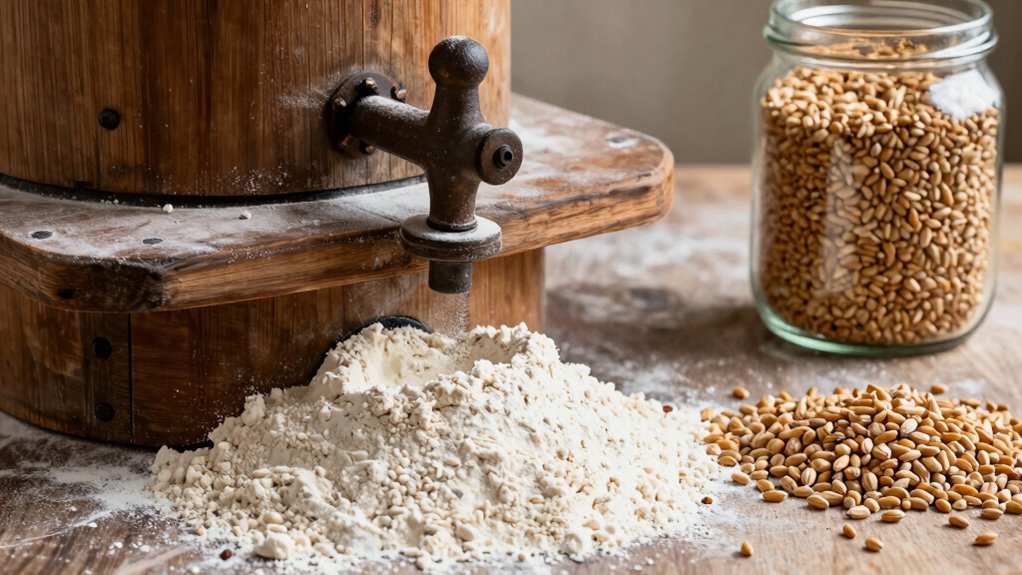
While storing your freshly milled flour properly helps maintain its quality, many home millers overlook common mistakes that can compromise their efforts from the start. One major mistake is neglecting equipment safety, which can lead to accidents or damaged appliances. Always ensure your mill is clean and well-maintained before use to prevent grain contamination. Using damaged or improperly assembled equipment increases the risk of contamination and inconsistent grind quality. Avoid milling grains that are too moist or dirty, as this can introduce mold or debris into your flour. Rushing the process or milling at the wrong settings might produce uneven textures or strain your equipment. Staying vigilant about cleanliness, equipment integrity, and grain quality helps you produce safe, high-quality flour every time.
Home-Milled Flour vs. Commercial: Which Is Better?
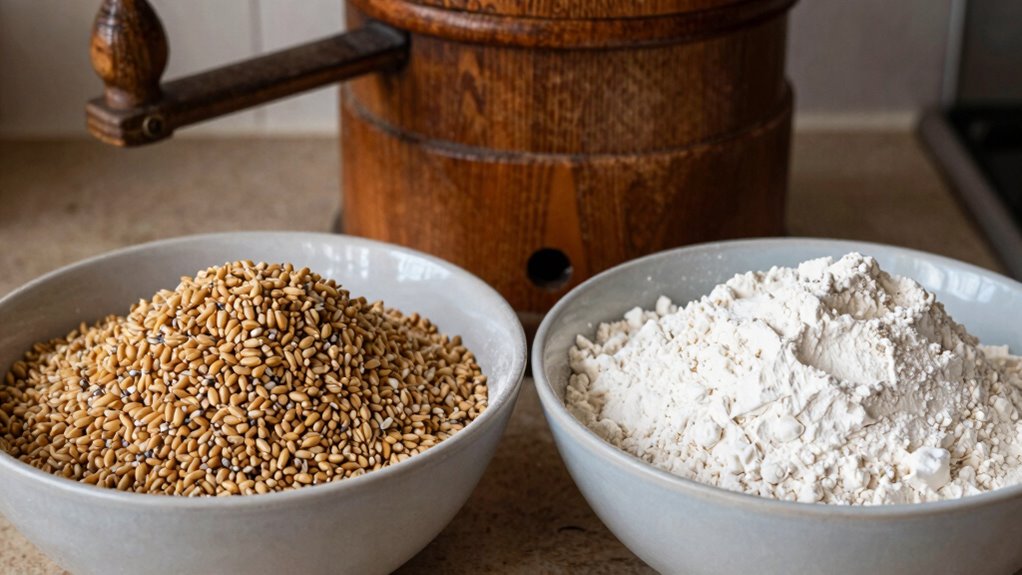
When choosing between home-milled and commercial flour, you’ll notice differences in nutritional value, freshness, and flavor. Home milling often preserves more nutrients and offers a richer taste, but it can be more costly and less accessible. Considering these factors helps you decide which option fits your needs best.
Nutritional Value Differences
Have you ever wondered whether home-milled flour retains more nutrients than commercial varieties? The answer is often yes. Home milling preserves a higher level of nutrient retention because the process minimizes exposure to heat, light, and air, which can degrade vitamins and minerals. This means your flour keeps more of its natural antioxidant levels, providing better protection against oxidative stress. Commercial flours are usually processed and refined, stripping away many nutrients and reducing antioxidant content. When you mill your own grains, you retain these essential nutrients, making your bread not only tastier but also more nutritious. By choosing home-milled flour, you’re maximizing the nutritional value, supporting your health with higher antioxidant levels and a richer array of essential nutrients.
Freshness and Flavor
Home-milled flour often offers a fresher and more vibrant flavor compared to commercial varieties. Since you mill your own grains, you retain more of the natural oils and aromas, which enhances the taste. Proper grain storage is essential; keep grains in a cool, dark place to prevent spoilage that can dull flavor. Milling techniques also play a big role—adjusting grind size can bring out different flavor notes and textures. When you mill fresh, you get a richer, more complex taste that commercial flours can’t match because they often sit on shelves for months. Plus, fresh flour preserves the inherent qualities of each grain variety. This means your baked goods will have a more pronounced, authentic flavor that truly reflects the grain’s character.
Cost and Accessibility
While fresh flavor is a major advantage of home-milled flour, considering the cost and accessibility is equally important. When you do a price comparison, home milling can seem more expensive upfront due to the cost of a good mill and fresh grains. However, over time, it may save you money compared to buying high-quality organic flour regularly. Accessibility challenges can also influence your decision; purchasing grains might be limited in some areas, and storing bulk quantities requires space. Commercial flours are more convenient and readily available at most grocery stores, making them a practical choice for many. Ultimately, weighing the initial investment against ongoing costs and your access to grains determines whether home-milled flour suits your lifestyle and budget.
Tips to Elevate Your Baking With Freshly Milled Grain

Using freshly milled grain can markedly boost the flavor and nutritional value of your baked goods, but to truly elevate your baking, you need to adapt your techniques. Start by paying attention to grain storage—keep your grains in a cool, dark place to preserve freshness. When milling, experiment with different techniques to control particle size, which impacts texture and rise. Incorporate these tips:
Enhance flavor and nutrition by storing grains properly and experimenting with milling techniques.
- Store grains properly to maintain ideal freshness and nutritional content
- Adjust hydration levels based on the flour’s fineness and moisture content
- Use a mix of freshly milled and store-bought flour to balance flavor and consistency
Frequently Asked Questions
How Long Does Freshly Milled Flour Stay Fresh?
Freshly milled flour stays freshest for about 1 to 2 weeks when stored at room temperature. To maximize storage longevity and preserve its freshness, keep it in an airtight container in a cool, dark place. For longer shelf life, consider refrigeration or freezing, which can extend freshness up to several months. Always check for any off smells or signs of spoilage before use to guarantee quality.
Can I Mill Gluten-Free Grains Effectively at Home?
Yes, you can mill gluten-free grains effectively at home using the right milling techniques. Focus on gluten-free options like rice, buckwheat, or quinoa, and choose a mill that handles these grains well. Grinding these grains fresh enhances flavor and nutrition, but guarantee you keep your mill clean to avoid cross-contamination. With proper techniques, you’ll get high-quality, gluten-free flour perfect for your baking needs.
What Maintenance Does a Grain Mill Require?
Think of your grain mill as a trusted companion that needs care to serve you well. You should follow regular cleaning routines to remove flour dust and prevent clogs. Keep blades sharp by periodically sharpening or replacing them to maintain efficiency. Also, check for any loose parts and lubricate moving components as needed. Proper maintenance guarantees your mill stays reliable, delivering fresh flour and better bread every time you use it.
Is Home Milling Cost-Effective Compared to Buying Pre-Milled Flour?
Home milling can be cost-effective over time, especially if you regularly buy high-quality flour. Your initial investment in a good grain mill might be higher, but it pays off by reducing ongoing costs. A careful cost comparison shows that milling your own flour saves money in the long run while providing fresher, more flavorful bread. If you bake often, the savings and quality make it a smart choice.
How Does Milling Affect Flour Shelf Life and Storage Options?
Imagine holding freshly milled flour; it’s vibrant and full of life, but it’s also more delicate. Milling reduces storage stability because it exposes the flour to oxygen, accelerating oxidation effects that can diminish flavor and nutritional value. To preserve its quality, store your flour in airtight containers in a cool, dark place, and use it within a few weeks. This way, you keep that rich, fresh flavor longer.
Conclusion
Milling your own grain opens vibrant flavor and nutrition, transforming simple ingredients into extraordinary bread. While store-bought flour offers convenience, it often lacks the depth and freshness only home-milled grains provide. By choosing to mill, you embrace tradition and control, blending simplicity with sophistication. In this contrast lies the true beauty: you craft not just bread, but a connection to the process, infusing every bite with authenticity and care that commercial flours can’t match.