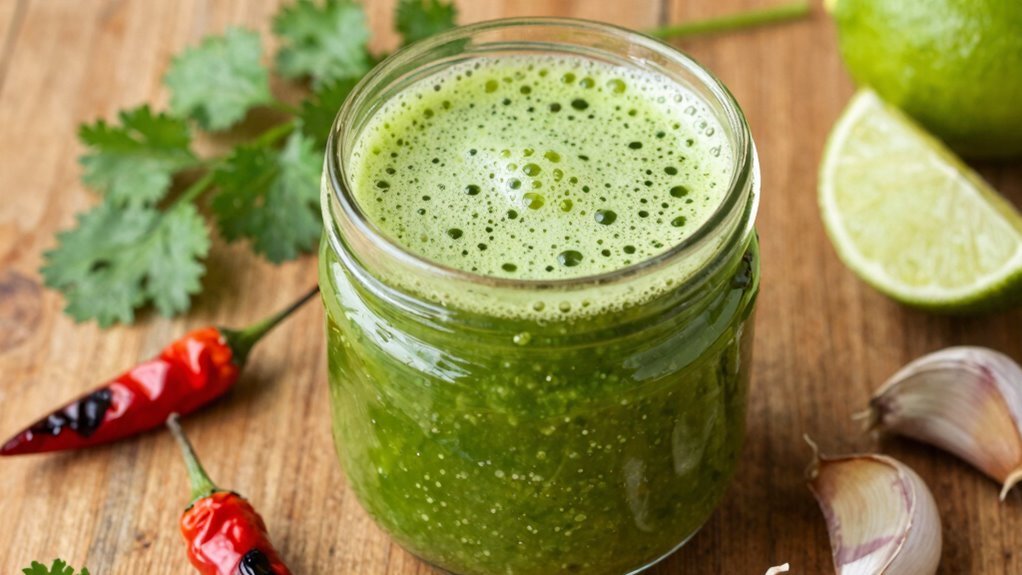

Fermented salsa verde is a simple, probiotic-rich condiment you can make at home using everyday ingredients like tomatillos, cilantro, garlic, and chili peppers. You blend these, pack them into a jar with salt and water, and let the mixture ferment at room temperature for a few days. As bacteria develop, your salsa gains a tangy, complex flavor and health benefits. If you keep exploring, you’ll discover how to perfect your fermentation skills and enjoy even more flavor.

Get kitchen staples and gadgets delivered free with Prime
- Fast, free delivery on millions of items
- Prime Video, Amazon Music and more included
- Member-only deals all year
Key Takeaways
- Use simple ingredients like tomatillos, cilantro, garlic, and chili peppers for easy fermentation.
- Pack blended ingredients into a jar with salt and water, then ferment at room temperature.
- Taste periodically and refrigerate once desired tanginess is reached to preserve flavor.
- Maintain proper fermentation conditions to ensure safety and prevent contamination.
- Fermentation develops complex flavors and probiotics, making it a healthy, beginner-friendly condiment.
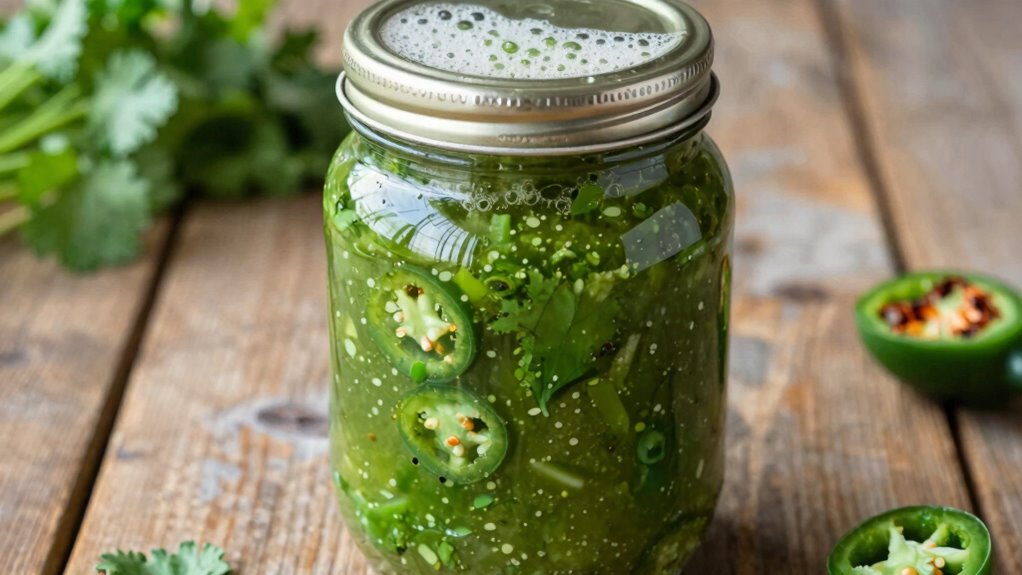
Have you ever wondered how to add a tangy, probiotic boost to your meals? Fermented salsa verde is a fantastic way to do just that. It offers a traditional flavor that’s rich and vibrant, bringing a homemade, authentic touch to your dishes. Plus, it’s incredibly easy to make, even if you’re new to fermentation. The process taps into age-old techniques, so you get that classic, familiar taste you crave, combined with the health benefits of probiotics. These beneficial bacteria support your digestion, boost your immune system, and can even improve your skin health. It’s like turning your kitchen into a mini fermentation lab, with a simple recipe that yields impressive results.
When you start making fermented salsa verde, you’ll notice how the flavors develop over time. Fresh tomatillos, cilantro, garlic, and chili peppers form the base, but the magic happens during fermentation. As the mixture sits at room temperature, good bacteria naturally multiply, transforming the salsa into a tangy, probiotic-rich condiment. Thanks to the natural fermentation process, the salsa gains a complex, layered flavor—slightly sour, with a depth that can’t be replicated with store-bought versions. The traditional flavor profile makes it perfect for spooning over tacos, eggs, grilled meats, or even dipping chips. It’s a versatile addition to your kitchen that elevates your meals with minimal effort.
The health benefits of fermented salsa verde go beyond just flavor. Because it’s fermented, it contains live probiotics that promote gut health and aid digestion. Unlike many condiments, which often contain preservatives or added sugars, this homemade version is all-natural. You control the ingredients, ensuring that you get a wholesome, nutritious product. Plus, the fermentation process enhances the bioavailability of certain nutrients in the ingredients, making them easier for your body to absorb. Understanding fermentation techniques can help you optimize the process and achieve the best flavor and health benefits. Additionally, learning about biodiversity can inspire you to experiment with different ingredients and strains of beneficial bacteria to customize your fermentations. Proper fermentation conditions are essential to ensure a safe and successful outcome.
Getting started is straightforward: blend your tomatillos, cilantro, garlic, and peppers, then pack them into a jar with some salt and water. Leave it to ferment at room temperature for a few days, tasting periodically until it reaches your preferred level of tanginess. Once done, refrigerate it to slow fermentation, and enjoy your homemade, probiotic salsa verde whenever you like. It’s a simple, satisfying way to incorporate traditional flavor and health benefits into your everyday meals, all while supporting your overall well-being. Understanding fermentation techniques can help you refine your process and explore new flavor profiles in future batches. Adding proper fermentation conditions can further ensure successful results and prevent undesirable microbial growth.
As an affiliate, we earn on qualifying purchases.
Frequently Asked Questions
How Long Does Fermented Salsa Verde Last in the Fridge?
You can enjoy fermented salsa verde in your fridge for about 2 to 3 weeks. To keep its flavor variations fresh, store it in an airtight container and always use a clean utensil to prevent contamination. Follow storage tips by keeping it consistently chilled and away from direct sunlight. If it develops an off smell or mold, discard it. Proper storage helps preserve the tangy flavor and probiotic benefits longer.
Can I Use Different Types of Peppers for Fermentation?
Yes, you can definitely use different types of peppers for fermentation. Experimenting with various pepper varieties allows you to create unique flavor variations in your salsa verde. For example, use jalapeños for a mild heat, habaneros for a fiery kick, or poblano peppers for smoky undertones. Just keep in mind that different peppers have varying heat levels and flavors, so adjust your recipe accordingly to achieve the desired taste.
Is It Safe to Ferment Salsa Verde at Home?
Yes, it’s safe to ferment salsa verde at home if you follow proper procedures. You’ll enjoy flavorful variations with different peppers, and storing your salsa properly keeps it safe and tasty. Keep everything clean, use the right salt ratio, and monitor fermentation for signs of spoilage. With careful cultivation, you’ll craft a colorful, probiotic-packed salsa that’s both delicious and safe, ensuring your fermentation fun stays fuss-free and fabulous.
What Are Common Signs of Fermentation Failure?
If your fermentation has failed, you’ll notice signs like mold, foul odors, or overly slimy textures, which compromise fermentation safety. Troubleshooting fermentation involves checking for these issues early and ensuring your jars and ingredients are clean. If you see any mold or strange smells, discard the batch. Always trust your senses; a safe ferment should smell fresh with bubbling activity, indicating active fermentation. When in doubt, it’s better to start fresh.
Can I Add Other Vegetables During Fermentation?
Like a savvy chef in a noir flick, you can definitely add other vegetables during fermentation. Just keep in mind flavor variations and ingredient substitutions may alter the process. Add crunchy peppers, radishes, or herbs to customize your salsa verde. However, make certain the added vegetables are fresh, cut uniformly, and submerged fully to prevent spoilage. Experimenting can bring delightful new twists, but stay observant to avoid fermentation mishaps.
Conclusion
Now that you’ve mastered making fermented salsa verde, you’re not just enjoying a delicious condiment—you’re also boosting your gut health with probiotics! Did you know that fermented foods can improve digestion and even strengthen your immune system? Just a small jar of this vibrant salsa can provide probiotics comparable to supplements, making it an easy, tasty way to support overall wellness. So, keep experimenting and savor the health benefits in every bite!
Halloween Picks
halloween
As an affiliate, we earn on qualifying purchases.