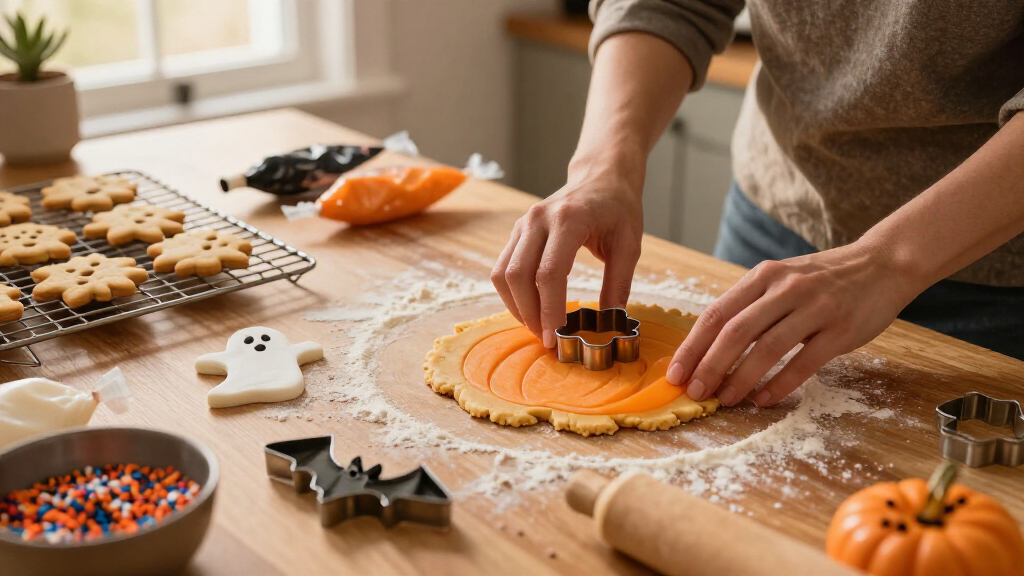
Every October, the same question appears in baking aisles and online carts alike: should you buy a cheap plastic tub of Halloween cookie cutters or spend more on a smaller set of metal ones? The comparison is rarely about a single brand — it is a materials decision, and it shapes how your ghost, pumpkin, and bat cookies actually turn out. Metal cutters, typically tinplate or stainless steel, press a razor-clean edge through dough. Plastic cutters, usually sold in large themed sets, offer variety and safety at a fraction of the price.

Get kitchen staples and gadgets delivered free with Prime
- Fast, free delivery on millions of items
- Prime Video, Amazon Music and more included
- Member-only deals all year

QtoiKce 9-Piece Stainless Steel Halloween Cookie Cutters Set
- ✔ Material: Stainless Steel
- ✔ Number of Pieces: 9
- ✔ Color: Silver

Halloween Cookie Cutters Set – 12 Pieces Stainless Steel, Pumpkin, Ghost, Bat and Cat Shapes
- ✔ Material: Stainless Steel
- ✔ Number of Pieces: 12
- ✔ Shapes: Pumpkin (3), Ghost (3), Bat (3), Cat (3)

HUINF 12-Piece Stainless Steel Halloween Cookie Cutter Set
- ✔ Brand: HUINF
- ✔ Material: Rust-resistant stainless steel
- ✔ Piece Count: 12
The real tension is this: Halloween baking is a once-a-year activity for most households, which argues for spending little, but it is also the one time of year when cookie appearance matters most, which argues for cutters that produce clean, sharp silhouettes worth decorating. Add children into the mix — Halloween baking is heavily a family activity — and the safety question of sharp metal edges becomes part of the decision too.
This guide compares the two types head-to-head across the criteria that actually affect your cookies and your wallet: cut quality, durability, safety, ease of use, variety and design detail, cleaning, and price. If you bake once with kids each October, plastic likely wins. If you bake seriously, sell cookies, or want cutters that outlive your kitchen, metal is the better buy. Read on to see exactly where each type wins and where the gaps are small enough to ignore.
At a Glance
| Criteria | Metal Halloween Cookie Cutters | Plastic Halloween Cookie Cutters | Winner |
|---|---|---|---|
| Cut quality | Sharp, clean edges; crisp silhouettes ideal for decorating | Softer edge; may drag dough and blur small details | A |
| Durability and lifespan | Decades if hand-washed; steel can bend but is re-bendable | Brittle with age; seams and tabs crack, typical life 2–5 seasons | A |
| Safety around kids | Sharp cutting edges require supervision with young children | Safe for children to use unsupervised | B |
| Design variety | Fewer designs per set; mostly simple classic shapes | Large sets with 20–50 shapes including licensed characters | B |
| Ease of use | Cuts chilled dough in one press; needs flouring | Easy for kids to press; struggles with thick or sticky dough | Depends |
| Cleaning | Hand-wash and dry immediately to prevent rust on tinplate | Dishwasher-safe in most cases; no rust risk | B |
| Price | Higher per shape, roughly $1–4 per cutter | Very low, often $0.25–1 per shape in bulk tubs | B |
| Storage | Thin and stackable but can deform under heavy stacking | Bulk tubs are compact but shapes tangle and get lost | Tie |
QtoiKce 9-Piece Stainless Steel Halloween Cookie Cutters Set
What immediately separates the QtoiKce 9-piece set from the other two is its shape-to-piece ratio. Where the generic 12-piece set gives you four designs repeated three times, QtoiKce delivers seven distinct shapes — pumpkin, ghost, bat, black cat, witch’s hat, skull, and coffin — in a single compact kit. For anyone decorating a cookie platter, that variety matters far more than raw cutter count, because a tray with seven different designs looks intentionally curated rather than repetitively stamped.The build quality holds up against both competitors. The smooth polished surfaces release dough cleanly with a gentle press, and the rolled top edge means you can press by hand without the wire-thin edge digging into your palm — a comfort detail shared by all three sets but executed well here. Compared with the HUINF set, QtoiKce trades two extra shapes for a tighter, more focused kit; we think that trade is worth it unless you specifically want designs like the spider web or tombstone.The honest drawbacks: the metal is on the thinner side, so levering it through dense dough or hard vegetables with excessive force can bend the cutter out of true. And like the other sets in this lineup, there’s no storage tin, so loose cutters in a crowded drawer are a bending hazard waiting to happen. Neither flaw is disqualifying at this scale, but both are worth knowing before you buy.
Pros:
- Seven distinct shapes — the best variety-per-piece ratio in this lineup
- Rolled top edges protect fingers during pressing
- Smooth surfaces release dough easily with gentle pressure
- Versatile enough for cookies, fruit, cheese, vegetables, and craft clay
Cons:
- Thin metal may bend under excessive pressure
- No storage tin or case included
Best for: Home bakers who want maximum design variety from a single affordable set
Not ideal for: Bakers cutting very large batches of identical shapes, or anyone who wants a storage case included
Bottom line: The most balanced choice in this comparison: real shape variety, safe handling, and broad versatility without the duplication of the 12-piece sets.
“The most balanced choice in this comparison: real shape variety, safe handling, and broad versatility without the duplication of the 12-piece sets.”
Halloween Cookie Cutters Set – 12 Pieces Stainless Steel, Pumpkin, Ghost, Bat and Cat Shapes
This 12-piece set takes the opposite approach to QtoiKce, and understanding that difference is the key to choosing between them. Rather than spreading its cutters across seven designs, it concentrates on four classic shapes — pumpkin, ghost, bat, and cat — with three cutters of each. If you’re baking alone, that duplication is wasted metal. But if you’re baking with kids, a classroom, or a party assembly line, having three ghost cutters means three people can work the same dough simultaneously without waiting turns. That’s why this set earns our value pick: it’s built for throughput, not novelty.On versatility, it matches or slightly exceeds the competition. The cutters handle fondant, fruit, bread, chocolate, cheese, pancakes, and vegetables in addition to cookie dough, making it a solid all-purpose option for Halloween-themed meals, not just desserts. The rolled top edges match QtoiKce’s safety standard, so younger helpers can press cutters without risk of cutting their palms.The tradeoffs are structural, though. With only four distinct shapes across twelve pieces, your decorating repertoire is inherently limited — no witch’s hat, skull, or coffin here. The set also likely requires hand washing to prevent rust, which is more tedious with twelve pieces than with nine, and like its rivals it ships without any storage solution. Choose this set when quantity and simplicity beat variety.
Pros:
- Duplicates of each shape allow parallel cutting with helpers
- Durable pure stainless steel construction
- Rolled top edges protect fingers during use
- Extremely versatile across fondant, fruit, bread, chocolate, cheese, and pancakes
Cons:
- Only 4 distinct shapes despite 12 pieces
- Hand washing likely required to prevent rust
- No storage case included
Best for: Families, classrooms, and party bakers producing large batches with helpers
Not ideal for: Anyone who values design variety or wants more than four spooky shapes on the plate
Bottom line: The right pick when batch size matters more than design range — four familiar shapes, three cutters each, built for group baking sessions.
“The right pick when batch size matters more than design range — four familiar shapes, three cutters each, built for group baking sessions.”
HUINF 12-Piece Stainless Steel Halloween Cookie Cutter Set
The HUINF 12-piece set is the most ambitious of the three on paper: its shapes run to roughly ten distinct designs, including a spider, a spider web, a tombstone, a coffin, and a witch’s hat alongside the usual bats, ghosts, and pumpkins. No other set in this comparison gives you the spider web or tombstone, and those two designs alone open up decorating ideas — web-iced cookies, graveyard scene platters — that the other sets simply can’t deliver. If creative range is your priority, this is the clear leader.Build-wise, HUINF makes the strongest material claims of the trio: rust-resistant stainless steel with a double-mirror polish. That finish isn’t just cosmetic — a smoother surface releases sticky dough and fondant more cleanly, which reduces the tearing and re-rolling that plague cheaper cutters. Compared with the generic 12-piece set, HUINF wins decisively on design count (ten versus four) while matching its versatility across sandwiches, fondant, and craft clay.The catch is a surprising one for a baking product: no size dimensions are specified for any cutter. If you’re planning cookies to fit specific gift boxes, sandwich shapes sized to particular bread, or a precisely arranged platter, you’re buying blind. The Halloween-only theme also limits year-round usefulness, whereas the pumpkin and cat cutters in the other sets at least stretch into autumn baking more generally. Pair that with the same no-storage-case omission as its rivals, and HUINF is best treated as a specialty set for decorators who prize variety above all.
Pros:
- Widest shape range of the three sets — around ten distinct designs
- Unique shapes like spider web and tombstone enable scene-style decorating
- Rust-resistant stainless steel with a double-mirror polish for clean release
- Rolled top edges keep pressing safe and comfortable
Cons:
- No cutter dimensions provided, complicating planning
- Strictly Halloween-themed with limited off-season use
- No storage case included
Best for: Creative bakers and decorators who want the widest range of Halloween designs in one set
Not ideal for: Planners who need exact cutter dimensions, or anyone wanting year-round utility
Bottom line: The variety champion of this lineup — unmatched design range and a slick polished finish, held back only by vague sizing and narrow seasonal appeal.
“The variety champion of this lineup — unmatched design range and a slick polished finish, held back only by vague sizing and narrow seasonal appeal.”
As an Amazon Associate we earn from qualifying purchases.
Key Differences
The most consequential difference is cut quality, and it shows up on the finished cookie. A metal cutter presses through chilled dough with one firm push, leaving a defined outline — critical for shapes like spiders and skeletons where legs and ribs are what make the design recognizable. Plastic cutters rely on a molded edge that is duller by necessity; on well-floured, chilled dough they perform acceptably, but on soft or sticky dough they drag, deform the shape, and blur exactly the fine details that make a Halloween cookie read as a bat rather than a blob. For decorators who plan to pipe royal icing outlines, this gap matters. For cookies destined to be frosted in a single swipe and eaten by six-year-olds, it barely registers.
The second major difference is lifespan versus variety. A $3 tin ghost cutter, hand-washed and dried, can last twenty years and become a small family tradition. A $15 plastic tub delivers forty shapes — bats, witches, skulls, pumpkins, cats, haunted houses — but the plastic fatigues, tabs snap, and thin features like broom handles crack within a few seasons of regular use. Metal buys longevity and precision; plastic buys breadth and novelty. Neither is objectively better; they optimize for different kinds of Halloween bakers.
Safety is the third real difference, and it favors plastic decisively. Metal cutting edges are genuinely sharp, and the folded construction of cheaper tinplate cutters can pinch skin at the seam. Children can use plastic cutters on their own, which for many families is the entire point of the activity. Metal cutters demand either adult-only cutting or close supervision — a fair trade for households with teens or adult-only baking, an annoying limitation for those baking with young kids.
Detailed Comparison
Metal cutters produce visibly crisper shapes. The thin steel or tinplate edge shears dough cleanly, preserving narrow features like spider legs, cat ears, and skeleton ribs. Plastic edges are thicker and duller, so they compress dough before cutting it, which drags fine details and leaves a slightly rounded outline. The gap is major on detailed shapes and minimal on simple ones — a plastic pumpkin cutter performs nearly as well as a metal one, but a plastic spider is noticeably worse. If you decorate with royal icing and want defined borders, metal is the clear winner. If your cookies get a smear of frosting and sprinkles, the difference will not survive the decorating stage.
Metal cutters, especially stainless steel, are close to a buy-once purchase. Tinplate versions can rust if left wet but will still outlast plastic by years with basic care. Metal can bend out of shape, but a bent cutter can usually be bent back. Plastic fatigues with use: hinges and tabs crack, thin features snap off, and older plastic becomes brittle, especially if stored in a cold garage or hot attic between seasons. A plastic set typically survives two to five Octobers of moderate use. The gap is major — metal wins this criterion by a wide margin, and it is the strongest argument for paying more.
Plastic wins this outright. Its edges are blunt enough for children to press safely without help, which matters because Halloween cookie baking is one of the most kid-centered kitchen activities of the year. Metal cutters have genuinely sharp rims, and cheap tinplate models add pinch points at the folded seam. A responsible adult can still bake with children using metal — the adult cuts, the kids decorate — but if the plan is for kids to do the cutting themselves, plastic is the practical choice. This is a moderate-to-major difference depending entirely on whether young children are involved.
Plastic dominates on breadth. Bulk tubs commonly include twenty to fifty shapes — ghosts, bats, witches, skulls, cats, pumpkins, coffin shapes, and sometimes licensed characters — at a per-shape cost of well under a dollar. Metal sets are typically sold in sets of three to twelve classic shapes, with novelty and licensed designs scarce or expensive. For a Halloween party where you want a whole spooky tableau of different cookies, plastic delivers variety that would cost $40 or more to replicate in metal. The gap is major for variety-seekers and minor if you only need the two or three iconic shapes — metal covers the classics well.
Ease of use (minor difference)
This one splits by user and dough. Metal cuts through chilled, well-handled dough in a single confident press, which experienced bakers find faster and more consistent. But it requires flouring to prevent sticking and a firm hand. Plastic is easier for small hands to manage and more forgiving of half-hearted pressing, but it struggles with thick or sticky dough, sometimes requiring a wiggle-and-lift technique that distorts the shape. For adult bakers working with properly chilled dough, metal is easier. For children or casual bakers with soft store-bought dough, plastic is easier. A genuine ‘depends.’
Plastic wins. Most plastic cutters survive the dishwasher, and even hand-washing carries no risk. Metal cutters must be hand-washed, and tinplate versions need to be dried immediately or they will rust — a real annoyance after a long baking session with dough stuck in the seams. Stainless steel metal cutters are more forgiving but still should not go through the dishwasher long-term. The gap is moderate: rust spots do not ruin a cutter immediately, but they are ugly and, once started, progressive. If you know you will not hand-dry your tools, this criterion alone justifies plastic.
Plastic costs dramatically less per shape — a $12–18 tub delivers dozens of designs, while the same money buys three to six metal cutters. Per-shape, plastic runs roughly $0.25–1 versus $1–4 for metal. But price per shape is not the whole value story: a metal cutter amortized over fifteen years can be cheaper per use than a plastic set replaced twice. For once-a-year bakers, plastic is unambiguously better value. For repeat or serious bakers, metal’s durability narrows the gap considerably. Plastic wins on sticker price; the value verdict depends on usage frequency.
Storage (minor difference)
Roughly a tie. Plastic tubs keep everything in one lidded container, which is tidy, but small shapes tangle, vanish into the pile, and the tub takes up drawer space. Metal cutters are thin and flat, stacking efficiently, but they can deform if something heavy is stacked on them, and loose cutters rattle. Both are manageable with a dedicated box or a ring clip through the metal cutters’ holes. Not a deciding factor either way.
Pros:
- Crisp, clean cuts that hold fine detail — the best base for icing and decorating
- Near buy-once durability; stainless versions last decades
- Cuts chilled dough in one press with consistent results
- Classic shapes stay true year after year and can become family keepsakes
Cons:
- More expensive per shape, typically $1–4 each
- Sharp edges require supervision around young children
- Must be hand-washed and dried immediately or tinplate rusts
- Far fewer novelty and licensed designs available
Pros:
- Extremely cheap per shape; large themed sets with 20–50 designs
- Safe for children to use independently
- Dishwasher-safe with no rust risk
- Great for variety — ideal for party platters with many different cookies
Cons:
- Duller edges drag dough and blur fine details like spider legs
- Plastic fatigues and cracks within a few seasons
- Struggles with thick, sticky, or soft dough
- Bulk tubs become a jumbled mess; shapes get lost
Who Should Choose What
Choose Metal Halloween Cookie Cutters if:
- You decorate cookies with royal icing and need crisp, defined outlines
- You bake for Halloween every year and want a buy-once purchase
- You bake with teens or adults rather than young children
- You sell cookies or bake for events where appearance is judged
- You are happy to hand-wash and dry your tools
Choose Plastic Halloween Cookie Cutters if:
- You bake with young children who do the cutting themselves
- You bake Halloween cookies once a year and it is not a tradition yet
- You want maximum design variety for a party spread on a small budget
- You want dishwasher-safe tools with zero maintenance
- You are testing whether Halloween baking is your thing before committing
Skip both if: You only bake flat, free-form cookies or prefer drop cookies entirely — cutters of any material would sit unused. Also skip both if you need highly detailed imprint designs (embossed patterns); stamp-style cutters or cookie stamps are the right tool there, not plain outline cutters.
Value for Money
Value splits cleanly by frequency of use. If Halloween baking is a once-a-year afternoon with kids, a $15 plastic tub is the better value by any measure: dozens of shapes, safe independent use, no maintenance, and if the set dies in three years, replacing it still costs less than one metal set. The durability advantage of metal is wasted on occasional use — a cutter that lasts fifteen years but is used fifteen times has no edge over three plastic sets used the same number of times.
Paying more for metal pays off when usage is heavier or expectations are higher. The baker who makes decorated Halloween cookies for a school fundraiser, sells at a market, or simply wants professional-looking results year after year will extract real value from stainless cutters that cut cleanly and never need replacing. In that scenario, spending $25–40 on a quality metal set of six to ten shapes is cheaper over five years than buying two plastic tubs, and the output quality is visibly better.
The middle path is also legitimate: buy a small metal set for the two or three shapes you actually decorate carefully — usually a ghost, a pumpkin, and a skull — and a cheap plastic tub for the kid-friendly variety shapes. That hybrid gets you precision where it matters and cheap abundance where it does not, often for under $30 total.
Final Verdict
For most households, plastic Halloween cookie cutters are the right call. The typical use case — one or two festive baking sessions a year with children, soft dough, and a frosting-and-sprinkles finishing style — plays directly to plastic’s strengths: safety, variety, low cost, and zero maintenance. Plastic’s weaknesses, dull cuts and short lifespan, barely matter at that usage level.
Choose metal if cookies are a craft project, not just a snack: if you pipe royal icing, bake hundreds of cookies each season, or run a small baking side business, the crisp cuts and decades-long lifespan of stainless cutters justify the higher price. The single biggest deciding factor is what happens after cutting — if your cookies get decorated in detail, buy metal; if they get devoured in the kitchen while still warm, buy plastic.
And if you genuinely cannot decide, do not agonize: start with a small metal set of the two or three shapes you will actually decorate, add a cheap plastic tub for variety, and you will have covered both use cases for less than the cost of most single kitchen gadgets.
Frequently Asked Questions
Can metal cookie cutters rust, and how do I prevent it?
Tinplate metal cutters can rust if left wet; stainless steel ones essentially cannot. To prevent rust, hand-wash metal cutters, dry them immediately with a towel, and store them somewhere dry. Never put tinplate cutters in the dishwasher. If rust spots do appear on tinplate, a scrub with baking soda and thorough drying usually removes surface rust, but repeated exposure will pit the metal.
Why do my plastic cutters drag the dough instead of cutting it?
Usually the dough is too warm, soft, or sticky. Chill the dough for at least 30 minutes, flour the cutter edge before each press, and press straight down without twisting. A firm, single downward press with a quick lift gives the best results. Metal cutters tolerate imperfect dough better thanks to their sharper edges, which is why experienced bakers often prefer them for detailed shapes.
Is it safe for kids to use metal cookie cutters?
With supervision, yes — but not unsupervised. Metal cutting edges are genuinely sharp, and cheaper tinplate models can pinch skin at the folded seam. A common arrangement is that adults do the cutting and children handle the decorating and dough stamping. If children cutting their own shapes is part of the plan, plastic cutters are the appropriate choice.
How many Halloween cookie cutter shapes do I actually need?
Fewer than you think. Three to five shapes — a ghost, a pumpkin, a bat, and maybe a cat or skull — cover nearly every Halloween platter, because variety usually comes from decorating differences rather than different cutters. Large 40-piece tubs are fun but most people use the same handful of shapes repeatedly. Buy a curated set of shapes you will actually decorate rather than the biggest tub available.
Are stainless steel cutters worth the extra cost over tinplate?
For most buyers, yes, if the price difference is small. Stainless steel will not rust, is usually sturdier, and often has a smoother folded edge, which means less maintenance and a longer effective life. Tinplate is fine for light use and cuts equally well when new, but it demands careful drying and will eventually rust at seams. If you bake every year, the small premium for stainless pays for itself in avoided maintenance.
Halloween Picks
halloween
As an affiliate, we earn on qualifying purchases.