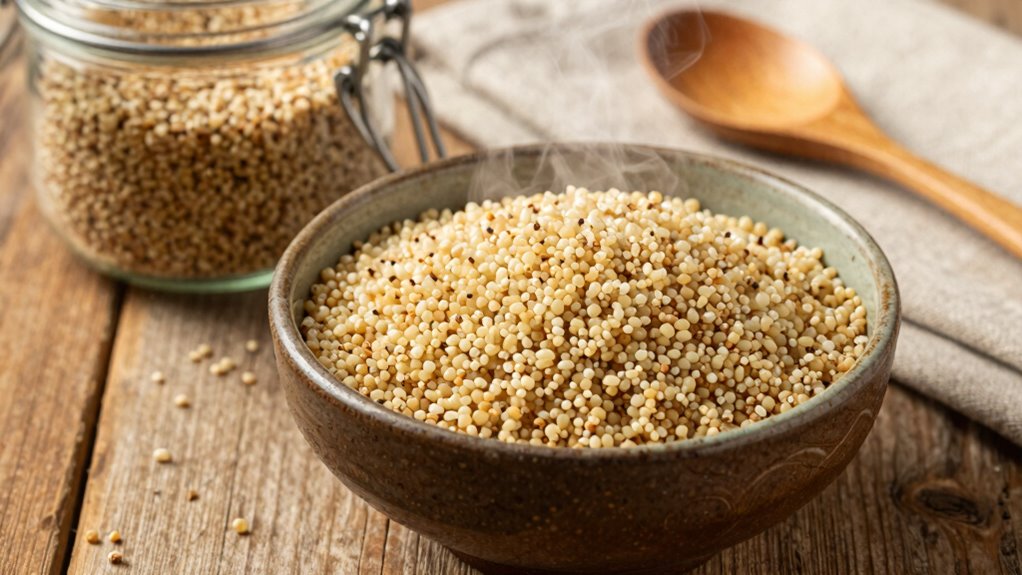

To cook whole grains perfectly, start by rinsing them thoroughly with cold water to remove debris and improve texture. Use about 2 parts water to 1 part grain, and bring the water to a boil before adding the grains. Lower the heat, cover, and simmer until tender, usually 30 to 45 minutes. Let them sit off heat for 5 minutes before fluffing. If you’re enthusiastic to master each step, you’ll discover simple tips that make cooking whole grains easier and tastier.

Get kitchen staples and gadgets delivered free with Prime
- Fast, free delivery on millions of items
- Prime Video, Amazon Music and more included
- Member-only deals all year
Key Takeaways
- Rinse grains thoroughly with cold water to ensure cleanliness and improve texture.
- Use about 2 parts water to 1 part grain, adjusting based on specific grain type.
- Bring water to a boil, then add grains, reduce heat, cover, and simmer gently without lifting the lid.
- Cook until grains are tender with a slight bite, typically 30-45 minutes, then let sit covered for 5 minutes.
- Fluff with a fork after resting, and store properly to maintain freshness and nutrients.
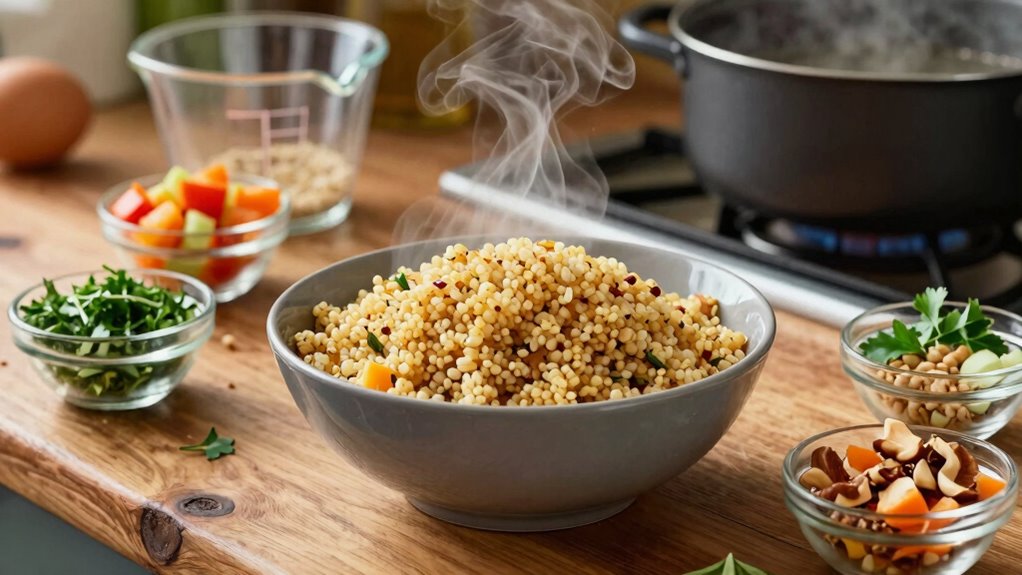
Cooking whole grains can seem intimidating at first, but with a few simple tips, you’ll be able to prepare them perfectly every time. Whole grains are packed with essential nutrients like fiber, vitamins, and minerals, making them a healthy addition to your diet. Understanding grain nutrition helps motivate you to incorporate these foods into your meals regularly. To start, learning the right cooking techniques is key to unlocking their best flavor and texture.
First, rinse your grains thoroughly before cooking to remove any dust or debris. This step is especially important for grains like quinoa or bulgur. Next, pay attention to the water-to-grain ratio. Typically, most whole grains require about two parts water to one part grain, but this can vary depending on the type. Using too much water can make grains mushy, while too little can leave them undercooked. To avoid this, follow the specific instructions on the package or trusted recipes, and measure carefully.
Bring the water to a boil, then add the grains, stirring briefly to prevent sticking. Once boiling, reduce the heat to low and cover the pot with a tight-fitting lid. Cooking techniques here matter a lot; keeping the heat low allows the grains to simmer gently, ensuring even cooking without burning. Resist the urge to lift the lid during cooking, as this releases steam and can disrupt the process. Most whole grains take around 30 to 45 minutes to cook, but some, like brown rice, may take longer. Check for tenderness toward the end of cooking; grains should be soft but still retain a slight bite. Incorporating proper cooking methods also helps preserve the nutritional value of the grains, ensuring you get the maximum health benefits from your efforts. Using quality grains can make a noticeable difference in texture and flavor, so selecting good-quality products is beneficial. Additionally, storing grains properly ensures they stay fresh and retain their nutritional content for longer periods.
Once cooked, remove the pot from heat and let it sit, covered, for about 5 minutes to allow steam to finish the job. Fluff the grains with a fork to separate the kernels and prevent clumping. This step helps achieve a light, fluffy texture rather than a sticky clump. Additionally, using appropriate cooking techniques can help prevent overcooking or undercooking grains, which impacts both texture and nutrition. Proper cooking methods also help preserve the nutritional value of the grains, ensuring you get the maximum health benefits from your efforts.
Mastering these cooking techniques not only ensures your whole grains are cooked to perfection but also preserves their nutritional value. Properly cooked grains retain their grain nutrition, offering you sustained energy and digestive benefits. With practice, you’ll get a feel for the right water ratios, cooking times, and methods for each type of grain. Incorporate a variety of whole grains into your meals—like quinoa, barley, farro, or bulgur—and enjoy their diverse flavors and health benefits. Once you understand these fundamental techniques, cooking whole grains will become an easy, enjoyable part of your healthy eating routine.
As an affiliate, we earn on qualifying purchases.
Frequently Asked Questions
Can I Cook Whole Grains in a Microwave?
Yes, you can cook whole grains in a microwave. Microwave cooking is quick and convenient, but it may affect the grain texture, making it softer or unevenly cooked if not monitored carefully. Use a microwave-safe bowl, add water, and cover loosely. Stir occasionally and check for doneness. Adjust cooking time as needed to guarantee the grains are tender without becoming mushy, achieving the desired grain texture.
How Do I Store Cooked Whole Grains Safely?
Think of storing cooked whole grains like safeguarding a delicate treasure—your goal is freshness. Transfer leftovers into airtight storage containers to lock in moisture and prevent contamination. Always refrigerate within two hours of cooking, as bacteria can grow quickly at room temperature. Use airtight containers for refrigeration tips, and consume within 3-4 days for maximum safety and flavor. This way, your grains stay tasty and safe to enjoy later.
Are There Any Grains I Should Avoid for Allergies?
You should be cautious with grains like wheat, barley, and rye if you have allergies or gluten sensitivities. Opt for allergy-friendly grains such as rice, quinoa, or certified gluten-free oats as safe grain substitutions. Always read labels carefully, especially with processed products, to avoid cross-contamination. If you’re unsure, consult with a healthcare professional to identify suitable grain options and prevent allergic reactions.
Can I Cook Multiple Grains Together?
Sure, you can cook multiple grains together, but don’t expect a harmonious blend without some finesse. Grain blending can produce interesting textures and flavors, but it’s tricky to get the timing right since each grain has its own cooking time. For a successful flavor pairing, choose grains with similar cooking times and complementary flavors. Otherwise, you might end up with a mushy mess or undercooked bits.
How Do I Tell When Whole Grains Are Fully Cooked?
To tell when whole grains are fully cooked, do some texture testing by tasting a few grains. They should be tender yet slightly chewy, not hard or crunchy. Keep an eye on the cooking time, but remember it varies for different grains. Once they reach the desired texture and have absorbed enough liquid, your grains are ready. If they’re still firm, continue cooking and check again in a few minutes.
Conclusion
Cooking whole grains might seem tricky at first, but with a little practice, you’ll master it in no time. Remember, whole grains are packed with nutrients—studies show they can reduce the risk of chronic diseases by up to 20%. So, keep experimenting, and soon you’ll be enjoying delicious, healthy meals that boost your wellness. With just a bit of patience, you’ll turn simple grains into impressive, nutritious dishes every time. Happy cooking!
NFL season / tailgating Picks
team gear
As an affiliate, we earn on qualifying purchases.