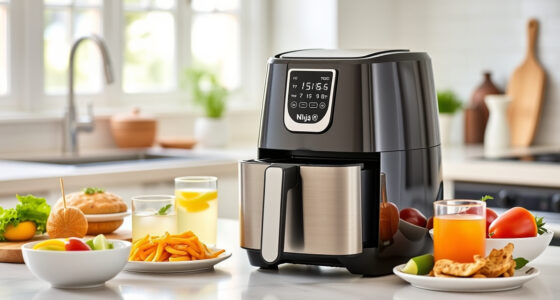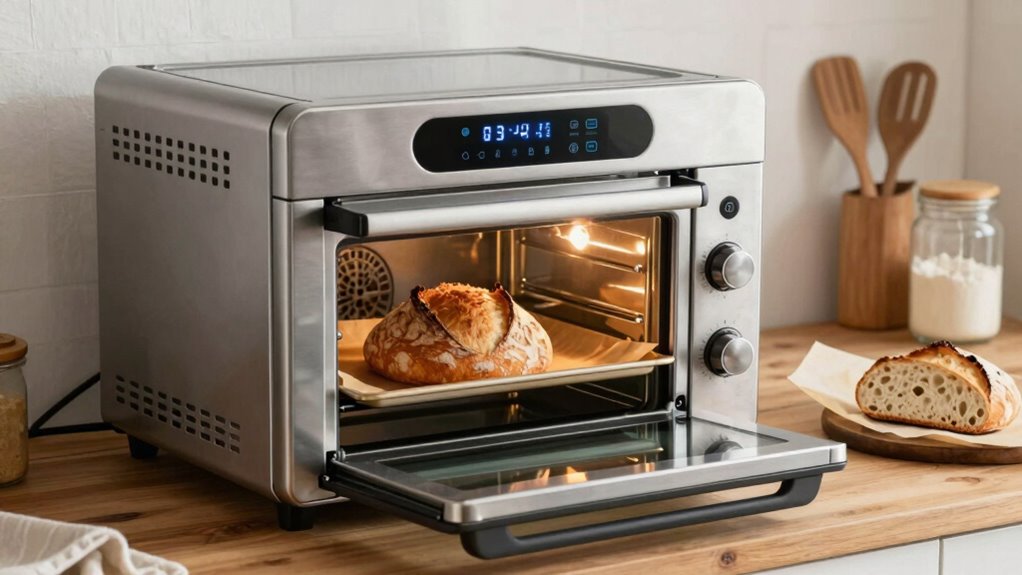

To prevent your sourdough from drying out, make sure your countertop oven is properly calibrated with an accurate oven thermometer. Avoid setting the temperature too high initially, as it can cause a tough crust and dry interior; instead, preheat thoroughly and adjust mid-bake if needed. Monitor baking time closely to prevent overbaking, and trust visual cues like crust color and the hollow sound when tapped. Keep these tips in mind to improve results, and you’ll find out how to perfect your bake.
Listen free for 30 days with Audible
Thousands of audiobooks and originals — cancel anytime.
As an affiliate, we earn on qualifying purchases.
Key Takeaways
- Regularly calibrate your oven and use an oven thermometer to ensure accurate temperature settings.
- Avoid setting the oven too high initially; bake at lower temperatures for a moister, softer crumb.
- Monitor baking time closely; overbaking can cause dryness—use visual cues like crust color and hollow sound.
- Adjust for hot spots and uneven heat distribution; rotate bread during baking if necessary.
- Trust sensory cues—check crust color and texture, and avoid rushing the baking process to maintain moisture.
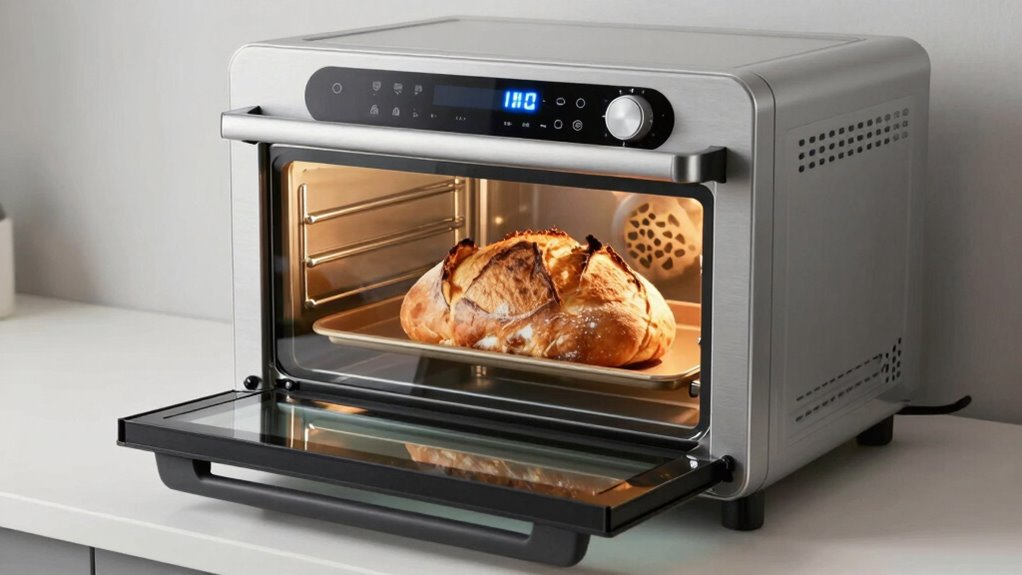
Baking sourdough in a countertop oven can be convenient, but it’s easy to make mistakes that leave your bread dry and crumbly. One of the most common issues stems from improper oven temperature. If your oven runs too hot, your bread’s crust becomes thick and tough, while the interior dries out quickly. Conversely, if the temperature is too low, the bread may not develop that desirable crust, resulting in a dense, undercooked center. To avoid these problems, always check your oven’s calibration, especially since countertop ovens can vary in accuracy. Use an oven thermometer to ensure the temperature you set matches the actual heat inside. A common mistake is setting the oven too high for the entire bake, then trying to compensate by lowering it mid-way, which can cause inconsistent results. Instead, preheat your oven thoroughly to the correct temperature before baking, and maintain that setting throughout the process. Regularly calibrating your oven can help maintain consistent baking conditions and prevent issues like dry bread. Baking duration is equally critical. If you leave your sourdough in the oven for too long, it can lead to excessive drying, making the bread brittle. On the other hand, removing it too early can leave the loaf underdone or doughy inside. To get it just right, keep a close eye on the baking time recommended in your recipe, but also use visual cues. Your bread should develop a deep, golden-brown crust, and when tapped, it should sound hollow. Many bakers underestimate how quickly sourdough can go from perfectly baked to overdone, especially in a smaller countertop oven, which may heat unevenly. Use a timer, but also trust your senses. If you notice the crust darkening too fast, lower the oven temperature slightly or extend the baking time. Conversely, if it looks pale after the suggested baking duration, give it a few more minutes, but be cautious not to overbake. Additionally, understanding your oven’s calibration accuracy can help you make more precise adjustments for consistently moist and flavorful sourdough. Regularly checking and adjusting your oven’s calibration can prevent dry bread and ensure consistent results. Being aware of oven temperature variations is crucial, especially since many countertop ovens have hot spots or uneven heat distribution. Adjusting oven temperature and baking duration based on your specific countertop oven’s quirks is key to preventing dry sourdough. Every oven is different, and understanding how yours behaves can save you from ending up with a dry, crumbly loaf. Remember, success comes down to patience and paying attention to details. By ensuring the oven temperature is accurate and sticking to the right baking time, you’ll produce a moist, flavorful sourdough with a perfect crust every time.
As an affiliate, we earn on qualifying purchases.
Frequently Asked Questions
Can I Use a Convection Setting for Sourdough Baking?
Yes, you can use a convection setting for sourdough baking, but be aware of convection myths that suggest it’s always better. Convection can help with even browning and crust formation, but it may cause moisture retention issues, making your bread dry if not managed properly. To prevent this, try reducing the temperature slightly and keep an eye on baking time. Properly adjusting these settings ensures your sourdough stays moist and delicious.
What’s the Ideal Oven Temperature for Moist Sourdough Bread?
Set your oven to around 450°F (232°C) for moist sourdough. Imagine a baker who struggled with dry bread—by adjusting the oven insulation and maintaining proper dough fermentation, they kept moisture locked in. This temperature crisps the crust while preserving the crumb’s moisture. Keep the oven well-insulated and avoid over-fermentation, which can cause dryness. Monitoring these factors guarantees your sourdough stays tender and flavorful.
How Does Humidity Affect Sourdough Baking in a Countertop Oven?
Humidity considerably impacts sourdough baking in your countertop oven. When humidity control is low, your bread can dry out quickly, losing moisture and resulting in a crust that’s too hard. To improve moisture retention, consider adding a water pan or misting the dough during baking. Maintaining ideal humidity helps keep your sourdough moist, tender inside, and develops a perfect crust, ensuring your bread turns out delicious every time.
Should I Preheat My Oven Before Baking Sourdough?
Yes, you should preheat your oven before baking sourdough. Proper oven preheating guarantees the baking temperature is consistent, which is essential for developing a good crust and proper rise. It also helps with even baking and timing, preventing your bread from being under or overcooked. Make certain to give your oven enough time to reach the desired temperature before placing your dough inside, optimizing your baking timing for the best results.
How Long Should I Bake Sourdough in a Countertop Oven?
They say “patience is a virtue,” and it’s true for baking sourdough in a countertop oven. Bake your sourdough for about 20-30 minutes at 450°F, but keep an eye on the crust and dough fermentation. Proper bread scoring allows steam to escape, preventing a tough crust. Check for a deep golden color and hollow sound when tapped. Adjust time if needed for your oven’s heat consistency.
Conclusion
Now that you know the common pitfalls that dry out your sourdough, think of your countertop oven as a trusty garden hose—adjusting the settings is like watering just enough to keep your bread moist and lively. With a few tweaks, your baking will bloom like spring flowers, fragrant and tender. Embrace these fixes, and watch your sourdough rise to perfection, turning your kitchen into a cozy bakery where every loaf is a masterpiece, bursting with flavor and life.
Flea & tick season Picks
flea and tick prevention
As an affiliate, we earn on qualifying purchases.